Concrete4U | Concrete Admixtures, Tools, and Production Machines

Why Sodium Silicate Binder is the Strategic Choice for High-Temperature Monolithic Refractory Integrity
When Your Refractory Lining Fails Prematurely
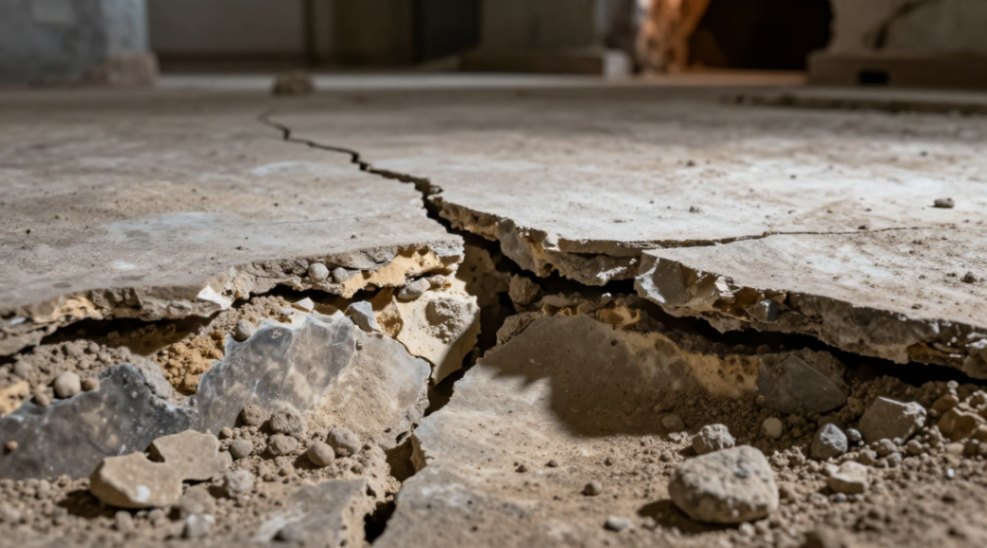
You installed a monolithic refractory lining with confidence. The specification looked right. Yet, within weeks or a few thermal cycles, you notice surface dusting, a loss of mechanical strength, or even spalling. The high-temperature integrity you designed for is compromised. The culprit often traces back to the binder system. Organic resins can burn out unpredictably. Some inorganic binders introduce unwanted chemical interactions. You need a binder that sets reliably, bonds tenaciously, and performs consistently from ambient temperatures to operational extremes. This is the domain of sodium silicate binder for refractory materials.
The Chemistry of a Cold-Setting Inorganic Bond
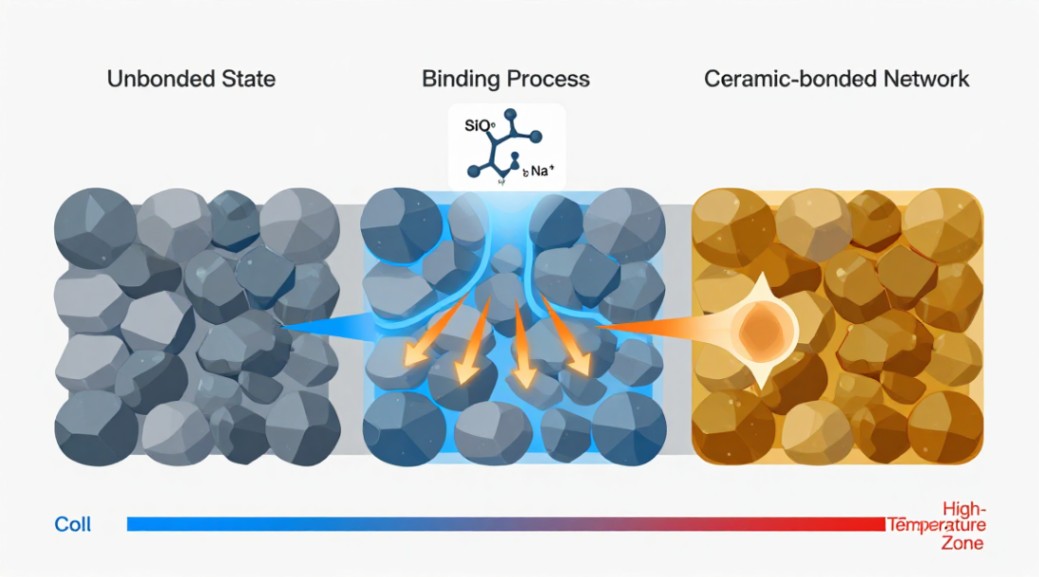
Sodium silicate binder, commonly called water glass, is not a mere adhesive. It is an inorganic polymer precursor. Its aqueous solution consists of sodium oxide (Na₂O) and silicon dioxide (SiO₂) in a specific ratio, known as the modulus. This ratio dictates its reactivity and final properties. The binding mechanism is elegantly simple and robust. When mixed with refractory aggregates, it remains workable. As water evaporates, the silicate solution concentrates. Further dehydration, accelerated by applied heat or chemical hardeners, prompts the soluble silicates to polymerize. They form a continuous, three-dimensional silica gel network that physically encapsulates and chemically bonds to aggregate particles. This process creates a rigid, ceramic-like bond at room temperature.
Advantages Over Organic and Competing Inorganic Binders
Understanding this mechanism reveals key advantages. Unlike organic binders (phenolics, resins), sodium silicate does not pyrolyze. It does not produce combustible gases or leave a porous carbon char upon first heat-up. Instead, its bond transforms and sinters, strengthening with initial temperature exposure. Compared to other inorganic binders like phosphates, sodium silicate is generally more cost-effective and offers superior green strength development. It provides a purely inorganic matrix, eliminating concerns about volatile organic compounds (VOCs) and ensuring the refractory’s final chemistry remains predictable and clean.
Strategic Application in Monolithic Refractories
The properties of sodium silicate binder make it uniquely suited for specific refractory installation and repair methods. Its rheology can be adjusted for different techniques.
- Gunning and Spraying: A properly formulated sodium silicate mix exhibits excellent adhesion to vertical and overhead surfaces. It sets quickly, reducing slumping and enabling rapid build-up of thickness in repair scenarios.
- Casting and Ramming: For precast shapes or dense linings, the binder provides excellent flow and packing density before setting. It ensures uniform density and minimizes air pockets.
- Coatings and Washes: As a binder for refractory paints or protective washes, it offers strong substrate adhesion and forms a hard, abrasion-resistant surface layer upon drying and curing.
Performance Drivers: Modulus, Density, and Curing
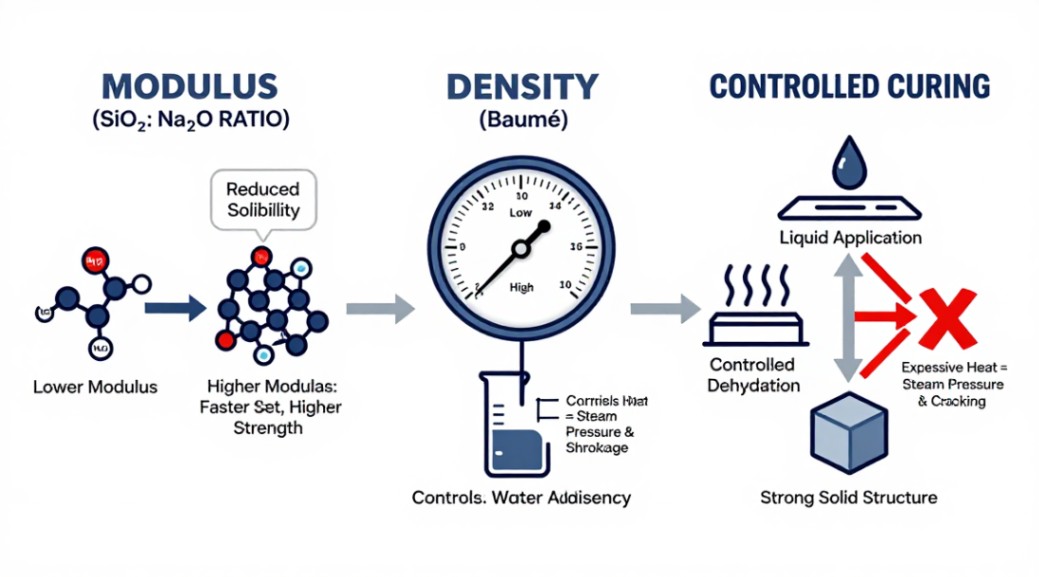
Successful use is not automatic. It requires control. The silicate modulus (SiO₂:Na₂O ratio) is critical. A higher modulus typically yields a faster set and higher final strength but can reduce solubility and workability. The binder density (Be’ or Baume) controls the solids content and water addition, directly impacting the mix’s consistency and drying shrinkage. Most critically, proper curing through controlled dehydration is essential. Rushing this stage with excessive heat can cause steam pressure build-up and cracking, while insufficient drying leaves a weak, water-sensitive structure.
Navigating the Limitations for Robust Performance
No material is perfect. Sodium silicate-bonded refractories exhibit moisture sensitivity before final heat cure. They require protection from atmospheric humidity during storage and after installation until the first firing. Their set time can be sensitive to ambient temperature and humidity. These are not weaknesses but parameters to manage. The solution lies in precise formulation, controlled installation environments, and strict adherence to a defined drying and firing schedule. When handled correctly, the result is a refractory lining with exceptional thermal shock resistance, high hot strength, and excellent adhesion to steel shells and existing refractory substrates.
The Logical Choice for Predictable High-Temperature Performance
The trends in refractory technology point towards greater demand for reliability and environmental compliance. Sodium silicate binder answers this call. It provides a proven, inorganic, and environmentally benign binding solution. Its performance is based on straightforward chemical and physical principles, making it predictable and engineerable. For applications where organic burnout is a liability, where a purely ceramic bond is required, or where cost-effective monolithic installation is key, sodium silicate is not just an option; it is the logical, high-performance choice. It transforms the challenge of bonding refractory grains into a controlled, chemical process that builds integrity from room temperature to operational extremes.
Implement the Sodium Silicate Advantage in Your Next Project
Specifying the right binder is the foundation of refractory performance. Stop compromising with binders that introduce uncertainty. Adopt the proven chemistry of sodium silicate for your gunning mixes, castables, and ramming compositions. To leverage this technology effectively, you need a formulation engineered for your specific aggregate system and application method. Consult with a specialist who understands the intricacies of modulus selection, hardener compatibility, and curing kinetics. Request sample formulations and conduct pilot trials to validate performance under your plant conditions. Make the strategic shift to sodium silicate binder for refractory materials. Your next lining should not just be installed; it should be engineered to last. Contact our technical team today to begin the specification process.
Supplier
We are the global leader in lightweight concrete and advanced engineered foam solutions. Known globally for its commitment to research, innovation, and applied expertise, we have been providing engineered foam solutions since the early 2012’s.
We can supply high-quality concrete admixture and foam concrete related products all over the world.
The company has a professional technical department and quality supervision department, a well-equipped laboratory, and equipped with advanced testing equipment and after-sales customer service center.
If you are interested, please feel free and contact us.