Concrete4U | Concrete Admixtures, Tools, and Production Machines

Mastering Texture Paints: The Definitive Guide to Hydroxyethyl Cellulose (HEC)
The Texture Puzzle: A Formulator’s Turning Point
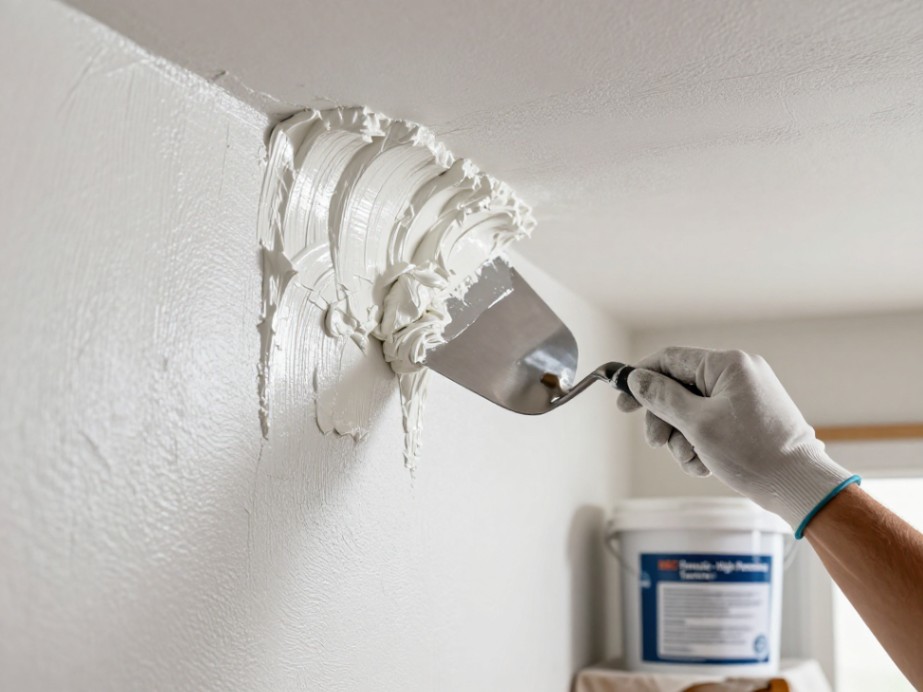
Early in my career, a textured paint project was failing. The compound sagged. It dried too fast for trowel work. Pigments settled in the drum. We cycled through additives. Finally, we optimized the hydroxyethyl cellulose for texture paints and coatings. The change was immediate. The material held its shape on a ceiling. The crew had ample open time. That experience cemented my understanding: HEC isn’t just an ingredient; it’s the structural backbone of high-performance texture.
Core Questions on HEC for Texture Paints and Coatings
What exactly does hydroxyethyl cellulose do in a texture paint?
Hydroxyethyl cellulose (HEC) performs three non-negotiable functions. First, it is a primary rheology modifier. It builds viscosity, giving the paste its bodied, non-runny consistency. Second, it provides exceptional water retention. This slows water evaporation, which is critical for application techniques like knifing or rolling. Third, it suspends fillers and pigments. This prevents hard settling and ensures batch-to-batch uniformity.
Why is water retention from HEC so critical for texture work?
Texture application is a physical, time-consuming process. Without controlled water retention, the surface skins over. The underlying material then lacks the plasticity for tooling. You get tearing, poor adhesion, and weak peaks. HEC’s hydrophilic nature forms a hydration shell around water molecules. This mechanism directly translates to longer open time. It allows artisans to perfect stucco, swirl, or knockdown effects without fighting a drying film.
How does HEC improve anti-sag performance on vertical surfaces?
HEC generates high low-shear viscosity. In simple terms, this is the paint’s resistance to flow under its own weight. When a heavy texture is applied to a wall, this viscosity provides immediate anti-sag support. The material stays in place while remaining workable. Other thickeners may offer viscosity, but often at the expense of this crucial balance between structure and malleability.
Is HEC compatible with other common paint additives?
Yes, HEC exhibits broad compatibility. It works predictably with dispersants, surfactants, and most glycols. This is a key advantage. You can build a robust formulation around HEC without fear of negative interactions. However, introduce it correctly. You must disperse HEC powder into the water phase before adding salts or highly ionic materials. Premature exposure can inhibit hydration and cause lumping.
How does HEC contribute to the final durability of the textured film?
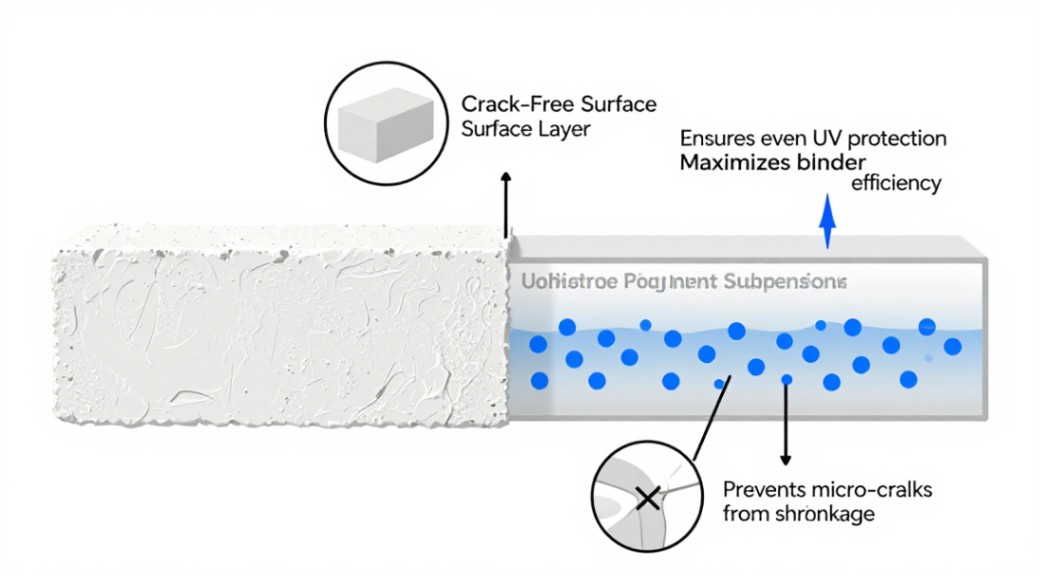
This contribution is indirect but profound. By enabling proper application and film formation, HEC prevents defects that compromise durability. Adequate water retention minimizes shrinkage stresses and micro-cracks. Uniform pigment suspension ensures consistent UV protection and colour fidelity. A well-suspended system also maximizes the efficiency of binders and additives, leading to a tougher, more cohesive final film.
What are the best practices for incorporating HEC to avoid lumps?
Lumping is a processing error, not an inherent flaw. Follow this sequence. Use high-speed dispersion. Add HEC powder to the vortex of vigorously agitated water. Ensure the water is at neutral pH and below 40°C. The powder must separate and hydrate individually. Adding HEC to a still tank or into a viscous mixture guarantees gel-coated lumps that never fully dissolve.
How do you determine the right dosage of HEC for a texture paint?
Dosage is dictated by the texture’s density and application method. A lightweight spray texture may require only 0.2% to 0.5% (actives). A heavy trowel-applied stucco might need 0.8% to 1.5%. Start low. Measure the viscosity profile-particularly the low-shear viscosity-and adjust upward until the wet profile holds the desired peaks without being too stiff for tooling. Exceeding the optimal dose wastes money and can hinder adhesion.
How does HEC compare to other thickeners like HPMC or associative types?
Each has a distinct role. HEC offers predictable, robust thickening and water retention with minimal sensitivity to surfactants. HPMC provides similar benefits but often with slightly different gelling temperatures. Associative thickeners (HASE, HEUR) excel at film build and flow in thin films but often lack the sheer structuring power needed for heavy textures. In texture paints, HEC is typically the primary rheology modifier. Associative types may be used as complements for specific flow characteristics.
Where is HEC most applicable in interior vs. exterior texture systems?
HEC is a versatile workhorse in both domains. For interior textures, its clean water retention and workability are paramount. For exterior systems, its contribution to stability in the can and during application is critical. The key for exterior use is pairing HEC with high-performance binders and additives that provide UV resistance and flexibility. HEC itself does not degrade from sunlight, making it a stable foundation for demanding exterior formulations.
The Logical Path Forward for Formulators
Consider hydroxyethyl cellulose for texture paints and coatings as a system enabler. Its logic is simple: control water, control rheology, ensure stability. Begin your next formulation with a high-quality HEC grade as the structural anchor. Test its interaction with your specific filler package. Measure open time and sag resistance objectively. When these fundamentals are locked in, you have a reliable platform. Then, and only then, layer in specialized additives for fine-tuning. Master this sequence, and texture formulation shifts from an art to a predictable, repeatable science.
Supplier
We are the global leader in lightweight concrete and advanced engineered foam solutions. Known globally for its commitment to research, innovation, and applied expertise, we have been providing engineered foam solutions since the early 2012’s.
We can supply high-quality concrete admixture and foam concrete related products all over the world.
The company has a professional technical department and quality supervision department, a well-equipped laboratory, and equipped with advanced testing equipment and after-sales customer service center.
If you are interested, please feel free and contact us.