Concrete4U | Concrete Admixtures, Tools, and Production Machines

Why Over 70% of Industrial Floors Fail Prematurely: A Technical Guide to Sodium Silicate Concrete Densification
The Counterintuitive Truth About Concrete Floors
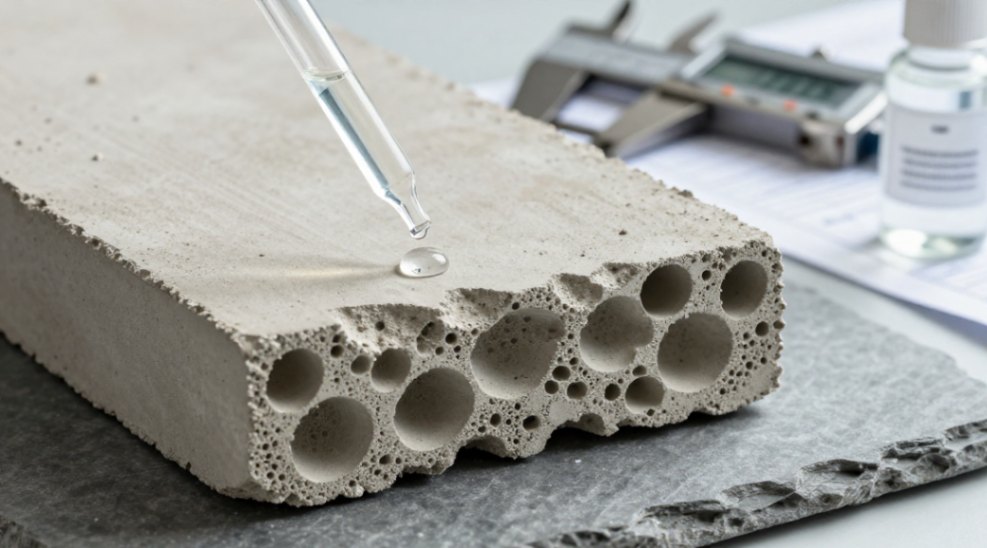
Most concrete is weaker than we think. Despite its rock-solid reputation, a typical slab is actually porous and full of microscopic voids. This is why over 70% of industrial floor problems-dusting, wear, surface degradation-stem not from heavy loads, but from a surface that wasn’t properly densified. We spend fortunes on coatings that wear off. The smarter approach is to treat the concrete itself. That’s the role of sodium silicate solution for concrete densification. It doesn’t coat the surface. It transforms it from within.
1. What exactly is sodium silicate solution, and how does it function as a densifier?
Sodium silicate solution, often called water glass, is a clear, viscous liquid. As a concrete densifier, its job is to create a permanent, integrated seal. Think of it as a chemical catalyst, not a topical treatment. It penetrates the concrete’s pores and reacts with a key byproduct of cement hydration: free lime (calcium hydroxide). This reaction forms calcium silicate hydrate (C-S-H) crystals. These are the same crystals that give concrete its inherent strength. We are simply growing more of them, filling the voids from the inside out.
2. What are the primary benefits of using this method?
The benefits are direct results of the chemical reaction.
- Dustproofing: It locks in the loose, sandy fines that cause concrete dust.
- Surface Hardening: The new C-S-H crystals significantly boost surface hardness and abrasion resistance.
- Improved Moisture Resistance: By filling pores, it reduces the capillary pathways for liquids and water vapor. It’s a sealer, not a waterproof membrane.
- Enhanced Polishability: For polished concrete, a sodium silicate densifier is the foundational step. It creates a uniformly dense surface that grinds and polishes to a consistent, high-gloss finish.
3. How does sodium silicate compare to lithium or potassium silicate densifiers?
This is a critical distinction. All are silicate-based, but their behavior differs. Sodium silicate is the most reactive and cost-effective. However, if used improperly on fresh concrete, it can sometimes leave a white, powdery residue (efflorescence) as it reacts. Lithium silicates are more expensive but are less prone to efflorescence and often provide a slightly harder finish. Potassium silicates fall in between. Our rule? For most existing, cured industrial floors, sodium silicate solution for concrete densification provides the best balance of performance and value. We use lithium variants for highly sensitive architectural polished concrete or problem substrates.
4. What is the step-by-step application process?
Success depends on precision. Here is our proven, detailed methodology for existing concrete slabs.
Step 1: Surface Preparation (Non-Negotiable)
The concrete must be clean, sound, and open. Remove all coatings, sealers, dirt, and oils. We typically start with mechanical scarification (diamond grinding) to expose a clean, fresh matrix. The surface must be completely dry. Any moisture will block penetration.
Step 2: Solution Application
We apply the sodium silicate solution at a consistent, controlled rate. The industry standard is to apply the first coat at a rate of 200 square feet per gallon (approx. 5 square meters per liter). Use a low-pressure sprayer or a microfiber mop. The goal is uniform saturation, not puddling. The concrete should darken as it absorbs the liquid.
Step 3: Curing & Re-application
Let the first coat react for 20 to 45 minutes. A tacky film will form on areas where the solution has fully reacted. Lightly mist the surface with clean water and scrub with a floor machine and a white polishing pad. This reactivates and distributes unreacted silicates. Then, apply a second coat at the same rate. The total target consumption is typically 300 to 400 square feet per gallon for both coats.
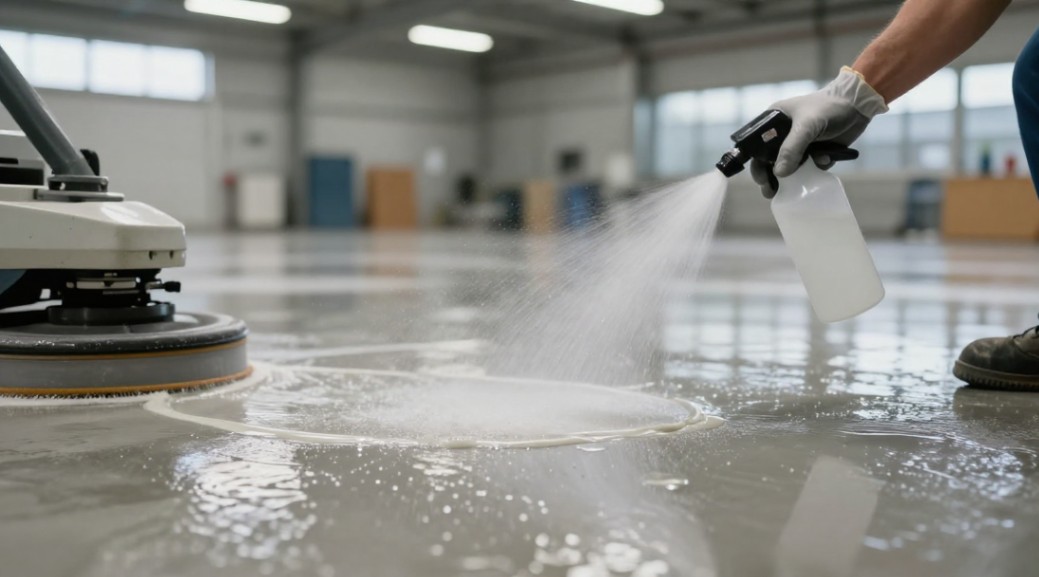
Step 4: Final Curing and Cleanup
Allow the slab to cure for a minimum of 24 hours. Keep it dry. After curing, remove any residual hazy film with a clean buffer and water. The floor is now ready for use or further polishing steps.
| Phase | Action | Key Metric / Detail |
|---|---|---|
| 1. Prep | Mechanical Grinding & Cleaning | Expose clean aggregate; surface must be bone-dry. |
| 2. First Coat | Apply Sodium Silicate Solution | Apply at ~200 sq ft/gal. Achieve uniform saturation. |
| 3. Reaction | Wait, then Scrub | Wait 20-45 min, mist with water, scrub with floor machine. |
| 4. Second Coat | Re-apply Solution | Apply at same rate. Target 300-400 sq ft/gal total. |
| 5. Cure | Final Dry Cure | Minimum 24-hour dry cure. Buff off any residue. |
5. Where is sodium silicate densification the ideal choice?
It excels in high-traffic, functional environments. Warehouses, distribution centers, manufacturing plants, and retail backrooms are perfect. It’s the essential first chemical step for any polished concrete system in these settings. We do not recommend it as a standalone solution for exterior slabs subject to freeze-thaw cycles with deicing salts, or for areas requiring true hydrostatic pressure waterproofing.
6. What are the key limitations I must understand?
Managing expectations is part of our job. Sodium silicate solution for concrete densification is not a magic fix. It will not bond cracks together or restore structural integrity. It does not create a glossy film; it creates a denser, harder matrix. It improves moisture resistance dramatically but cannot stop liquid water under pressure (hydrostatic pressure). It works on the surface paste layer; if the concrete is weak throughout, results will be limited.
7. How do we handle it safely, and what about the environment?
The solution is water-based and has a high pH (alkaline). Wear gloves and eye protection. Contain spills-it can be slippery. Once reacted and cured inside the concrete, it is inert and stable. There are no volatile organic compounds (VOCs) to off-gas, making it a sound choice for occupied facilities.
The Logical Conclusion for Facility Managers
The data and chemistry are clear. If you are managing a concrete floor that needs to last, a topical coating is a temporary, high-maintenance fix. A true concrete densifier like a sodium silicate solution addresses the root cause. It makes the concrete itself better. The process is logical, the results are measurable in increased hardness and reduced maintenance costs. For over two decades, this has been our first recommendation for durable, low-maintenance industrial floors.
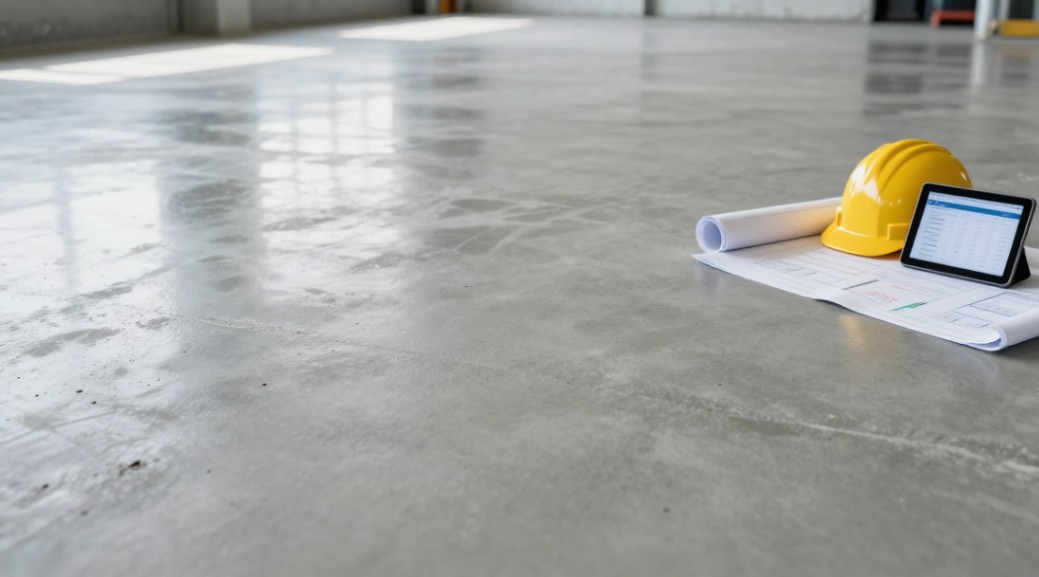
Stop patching and recoating. Transform your substrate. To specify the correct sodium silicate densification system for your project, request a technical consultation and sample demonstration from our team today. Let’s test it on your worst floor.
Supplier
We are the global leader in lightweight concrete and advanced engineered foam solutions. Known globally for its commitment to research, innovation, and applied expertise, we have been providing engineered foam solutions since the early 2012’s.
We can supply high-quality concrete admixture and foam concrete related products all over the world.
The company has a professional technical department and quality supervision department, a well-equipped laboratory, and equipped with advanced testing equipment and after-sales customer service center.
If you are interested, please feel free and contact us.