Concrete4U | Concrete Admixtures, Tools, and Production Machines

What is Soap Based Concrete Formwork Oil? A Clear Guide for Smoother, Cleaner Demolding
Introduction: The Stuck Form Nightmare
Have you ever spent hours prying and hammering a concrete form, only to damage the fresh surface or the form itself? You’re not alone. Sticking concrete is a universal headache on site. It wastes time, ruins finishes, and drives up costs. That’s the precise problem soap based concrete formwork oil was engineered to solve. We’ve all wrestled with messy, oily, and sometimes ineffective release agents. This guide cuts through the confusion. We’ll explain what this product is, how it works on a chemical level, and why it might just be the upgrade your crew needs.
Soap Based Formwork Oil: Your Questions Answered
What exactly is soap based concrete formwork oil?
Soap based concrete formwork oil is a specialized release agent, also known as a mold oil or form oil. Its core active ingredients are metal salts of fatty acids, like calcium or lithium stearate. Think of them as high-tech, super-concentrated soap. Unlike traditional petroleum oils, this soap chemistry is specifically designed to react with the calcium hydroxide in wet concrete. The reaction creates a microscopically thin, insoluble soap barrier on the form face. This barrier is your release layer. It prevents the cement paste from bonding to the formwork material, whether that’s wood, steel, or fiberglass.
How is it different from old-school petroleum form oils?
The difference is chemical, not just cosmetic. Petroleum oils rely on creating a physical, oily film. This film can be uneven, attract dirt, and stain concrete. Soap based concrete formwork oil creates a chemical barrier through a controlled reaction. This leads to several key advantages:
- Cleaner Release: Concrete slips away, often with an audible ‘pop’. Prying is minimized.
- Superior Finish: It dramatically reduces surface defects like bugholes and sand streaks because the liquid agent doesn’t trap air against the form.
- Cleaner Forms & Site: No oily residue means forms stay cleaner, and the job site is safer without slippery surfaces.
- Worker & Environmental Safety: It’s typically low-VOC, non-toxic, and biodegradable. Workers aren’t breathing heavy solvent fumes.
Is a soap-based oil strong enough for heavy-duty work?
This is a common misconception. In our decades on-site, we’ve seen the shift firsthand. As one industry expert put it, ‘The data from independent labs shows modern soap formulations match or exceed the release performance of traditional oils on complex, high-pressure pours.’ The chemistry is not about being ‘gentle’; it’s about being precise. It forms a tougher, more uniform barrier that doesn’t break down under heat from curing concrete.
How do I apply it correctly for the best results?
Application is critical. The goal is a thin, even, complete coat. Here’s our field-proven method:
- Clean the Form: Remove all old concrete, dirt, and previous release agent residue. A clean surface is non-negotiable.
- Choose Your Tool: Use a low-pressure sprayer, roller, or brush. For large steel forms, an airless sprayer set to a fine fan pattern is ideal.
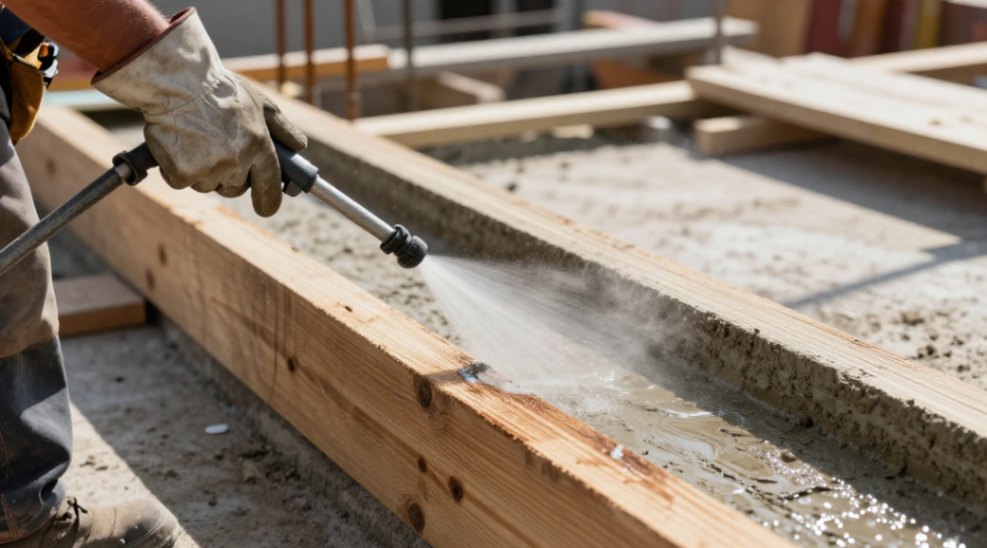
- Apply the Oil: Hold the sprayer 30 to 45 cm (12 to 18 inches) from the form surface. Apply a consistent, wet coat. You should see a uniform sheen, not heavy drips or puddles.
- Coverage Rate: A typical coverage is between 15 to 25 square meters per liter (150 to 250 sq ft per quart), depending on form porosity. One light coat is almost always better than one heavy coat.
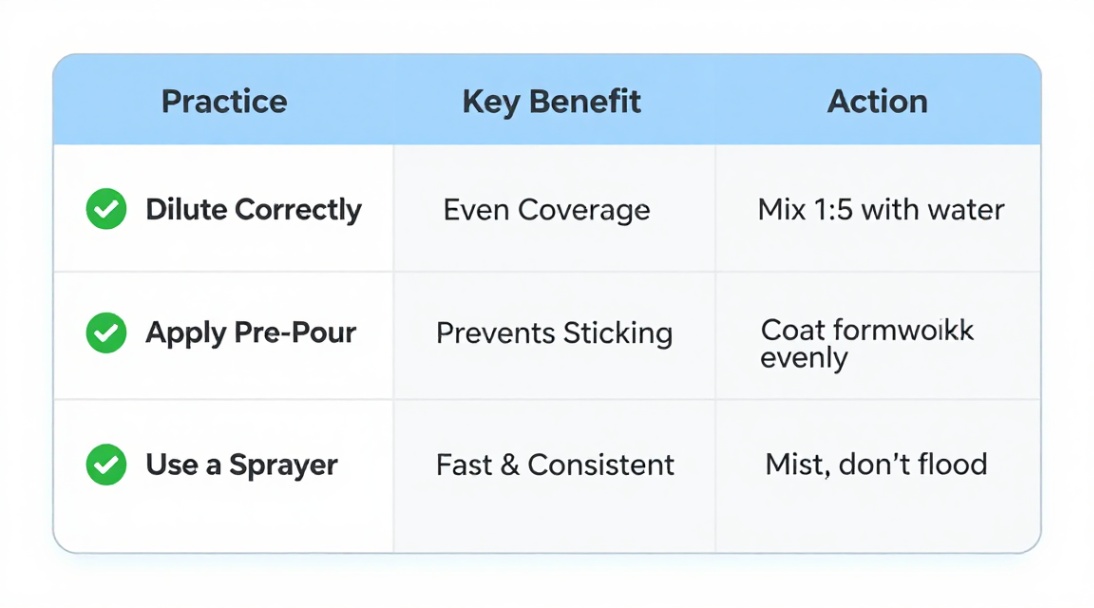
Here’s a quick-reference table to summarize the best practices:
| Step | Action | Key Detail |
|---|---|---|
| 1. Preparation | Form Cleaning | Remove all debris for optimal barrier formation. |
| 2. Application | Tool Selection & Use | Sprayer at 30-45 cm; aim for a uniform sheen. |
| 3. Measurement | Coverage Cheque | 15-25 m²/L. Avoid over-application. |
What about cost? Isn’t it more expensive?
Initially, the unit price might be higher than cheap diesel or basic oil. But total cost isn’t about price per gallon. It’s about cost per perfect square metre of finished concrete. You save on labor (faster demolding, less cleaning), form life (no petroleum degradation of wood or rubber seals), and remediation (fewer surface repairs). Over a large project, the value proposition becomes very clear.
How do I clean my forms after using it?
It’s straightforward. Because it’s water-emulsifiable, a simple pressure wash with water is usually sufficient for routine cleaning. For tougher buildup, a mild detergent solution works well. This contrasts sharply with petroleum oils, which often require harsh solvents.
What should I look for when selecting a product?
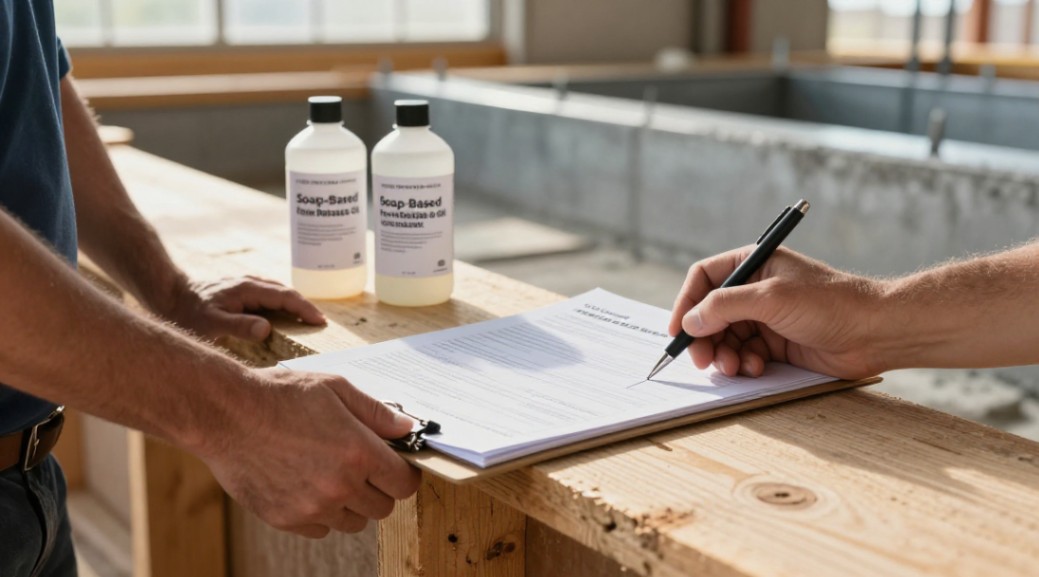
Don’t just grab any bottle labeled ‘form oil.’ Look for a true soap based concrete formwork oil. Check the safety data sheet for low VOC content. Ensure it’s compatible with your form material-most quality products work on steel, wood, aluminum, and fiberglass. Look for a manufacturer that provides clear technical data on coverage and curing compatibility.
Conclusion: The Clear Choice for Modern Building
The industry is moving toward safer, more sustainable solutions without sacrificing performance. Soap based formwork oil sits squarely in that trend. It solves the core problem of form release with clever chemistry, not just messy oil. If you’re tired of the old ways and want a cleaner site, a better finish, and a happier crew, the next step is simple. Get a sample from a reputable supplier. Test it on a section of your next pour. Compare the demolding effort and the surface quality side-by-side with your current method. Your own experience will be the most convincing data point of all.
Supplier
We are the global leader in lightweight concrete and advanced engineered foam solutions. Known globally for its commitment to research, innovation, and applied expertise, we have been providing engineered foam solutions since the early 2012’s.
We can supply high-quality concrete admixture and foam concrete related products all over the world.
The company has a professional technical department and quality supervision department, a well-equipped laboratory, and equipped with advanced testing equipment and after-sales customer service center.
If you are interested, please feel free and contact us.