Concrete4U | Concrete Admixtures, Tools, and Production Machines

A Practical Guide to Using Redispersible Powder for Flexible Cementitious Coatings
The Problem with Rigid Thinking
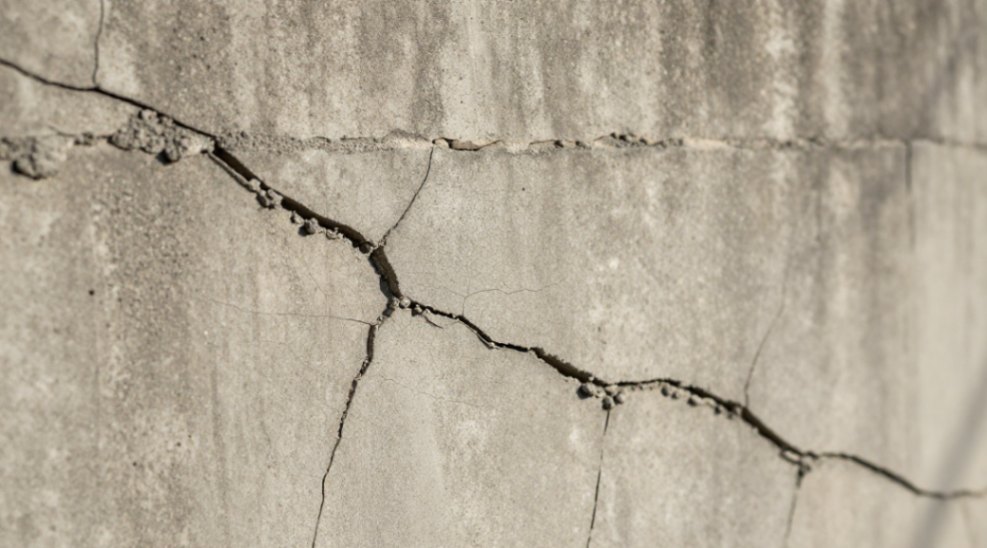
Let me tell you about a project from my early days. We had to coat a concrete facade system in a high-wind, temperature-switching environment. The initial mortar mix was strong, but too brittle. It looked perfect for about six months. Then the first major seasonal shift hit. Hairline cracks appeared. Within a year, they had propagated into a visible network, compromising the waterproofing and aesthetics. The client was frustrated. We had to redo it. That failure taught me a critical lesson: in the real world, substrates move. Your coating must move with them. This is where the magic of redispersible powder for flexible cementitious coatings comes in. It transforms a rigid, brittle system into a flexible, durable skin.
What Exactly is This Powder, and What Does it Do?
Redispersible Polymer Powder (RPP) is a factory-made, free-flowing powder. It contains polymer resins (like VAE or acrylic) and protective colloids. When you add water to your dry-mix mortar, this powder redisperses back into a stable polymer emulsion. As the cement hydrates and the mortar dries, this polymer forms a continuous, flexible film that interlocks with the cement matrix. Think of it as a microscopic, elastic glue network. It binds everything together while providing the “give” needed to absorb stresses. Its primary role is to provide flexibility and crack-bridging ability. Without it, the coating relies solely on the rigid cement structure, which will fail under tensile stress.
The Core Benefits: More Than Just Flexibility
Adding the right redispersible powder for flexible cementitious coatings does more than prevent cracks. It upgrades the entire system. Let’s break down the key properties.
- Adhesion: The polymer film physically and chemically bonds to the substrate. It dramatically improves pull-off strength on concrete, brick, EPS, and XPS boards.
- Water Resistance: The polymer film reduces porosity and creates a hydrophobic barrier. Water absorption drops, protecting the substrate and improving freeze-thaw durability.
- Workability: The powders act as a lubricant. They improve the mortar’s spreadability, open time, and anti-sag properties, making application smoother.
- Cohesion & Toughness: The internal polymer network increases tensile strength and abrasion resistance. The mortar becomes tougher, not just harder.
How to Choose the Right Polymer Powder: A Step-by-Step Guide
Not all powders are the same. Your choice dictates performance and cost. Here is your decision framework.
Step 1: Match the Polymer Type to Your Application
This is your most critical choice. Each polymer family brings a different balance of properties. As industry expert Dr. Lena Schmidt noted in a recent polymer construction additives report, “The Tg (glass transition temperature) of the polymer backbone is the single most influential factor determining the flexibility and minimum film-forming temperature of a coating.” Let’s translate that into practical terms.
| Polymer Type | Key Characteristics | Ideal For | Cost Consideration |
|---|---|---|---|
| Vinyl Acetate-Ethylene (VAE) | Excellent adhesion, good flexibility, cost-effective. Standard for many applications. | General-purpose exterior insulation mortars, tile adhesives, repair mortars. | Most economical. A great starting point. |
| VAE-VeoVa Copolymer | Superior hydrophobicity, better alkali resistance, enhanced durability. | Waterproofing slurries, exterior coatings in wet climates, high-performance base coats. | Moderate premium. Worth it for critical water protection. |
| Pure Acrylic | Outstanding UV stability, excellent flexibility and elasticity, very durable. | Thin-layer finishing coats, elastomeric coatings, decorative renders exposed to intense sun. | Higher cost. Use where top-tier weatherability is non-negotiable. |
Step 2: Determine the Correct Dosage
More powder is not always better. It’s about finding the optimal point for your specific performance and budget targets.
- Low Dosage (1-2% by weight of total dry mix): Primarily improves workability and cohesion. Provides minor flexibility enhancement.
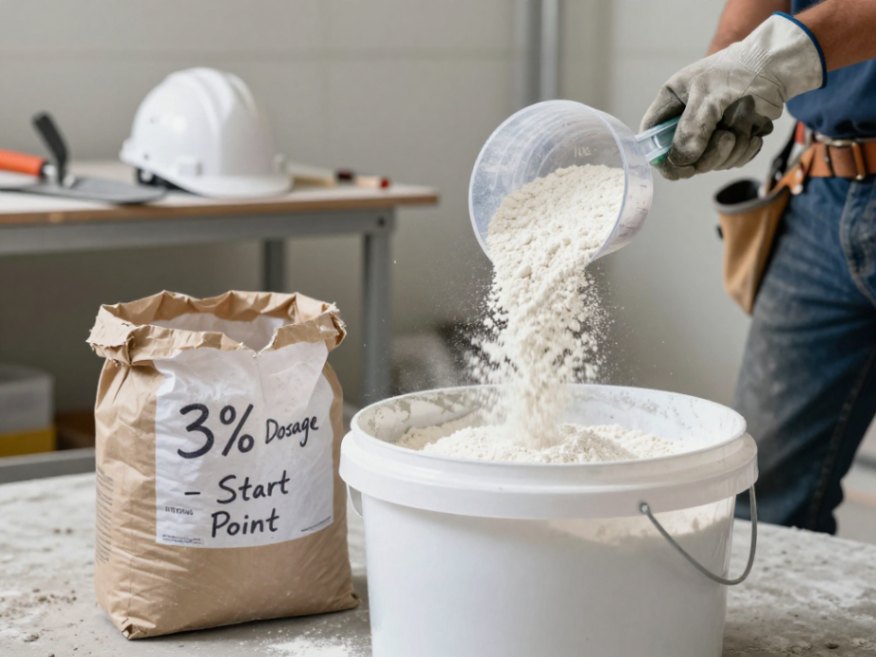
- Standard/Recommended Dosage (2-4%): This is the sweet spot for most flexible cementitious coatings. It delivers a strong balance of adhesion, flexibility, and water resistance. This range is supported by typical formulator guidelines.
- High Dosage (4-6%+): Creates highly elastomeric, crack-bridging mortars. Used for membranes and movement joints. Costs increase significantly, and setting time may be affected.
Start with a 3% dosage of a VAE powder for a standard base coat. Test. Adjust up for more flexibility, down for cost-saving in non-critical areas.
Mixing and Application: Get the Process Right
Even the best powder will fail if mishandled. Follow this sequence.
Step 1: Dry Mixing
Add all dry components (cement, sand, fillers, cellulose ether, other additives) to the mixer. Include the redispersible polymer powder. Mix thoroughly for 3-5 minutes until the powder is evenly distributed. A uniform dry mix is non-negotiable.
Step 2: Wet Mixing
Add the clean, measured water. Mix at a medium speed until a lump-free, homogeneous mortar forms. Avoid over-mixing after this point, as it can entrap excessive air. Let the mortar “slake” for 5 minutes, then give a brief final mix. This ensures complete powder redispersion and hydration.
Step 3: Application Best Practices
- Apply to a sound, clean, and properly primed substrate.
- Maintain ambient and substrate temperatures above 5°C (41°F), and ideally above the minimum film-forming temperature (MFFT) of your chosen polymer.
- Apply the coating in the recommended thickness. Too thin, and the film can’t form properly; too thick, and drying stresses increase.
- Protect fresh application from rain, rapid drying, and freezing for at least 24-48 hours.
Validating Your Work: The Key Tests
Don’t guess. Test. Reputable labs and your own QC should verify performance against established standards. These are the core tests for a flexible cementitious coating:
- Adhesion: EN 1542 (Pull-off test on substrate).
- Flexibility & Crack Bridging: EN 1062-7 (Crack-bridging ability test on a moving crack substrate).
- Water Impermeability: EN 1062-3 (Test for liquid water permeability).
- Water Vapor Permeability: EN ISO 7783-2 (Ensures the wall can “breathe”).
Looking Forward: Smarter, Greener Formulations
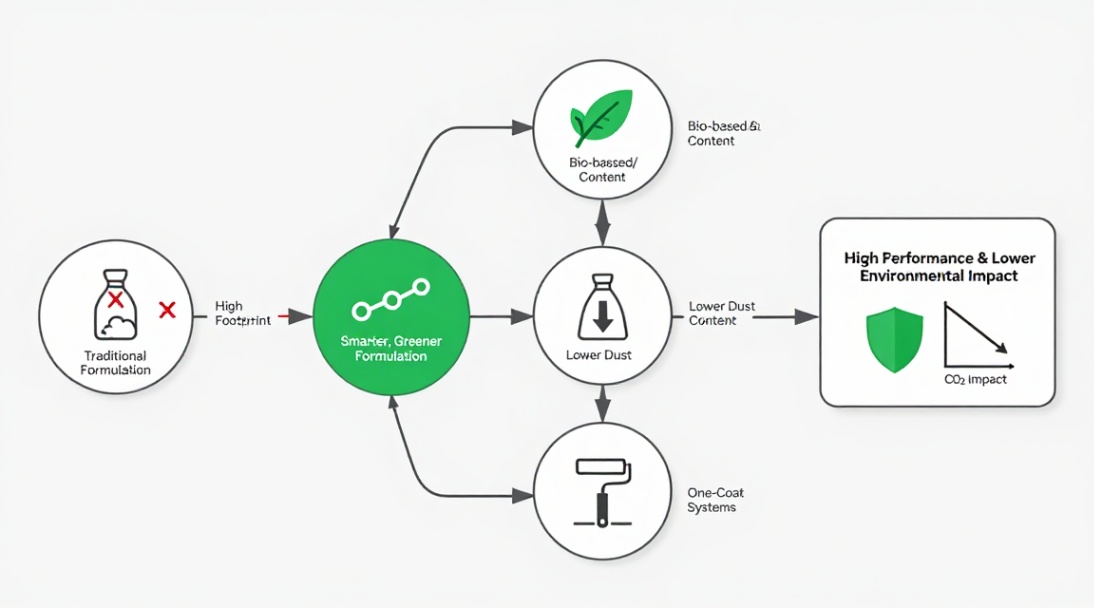
The market is shifting. Formulators now ask for powders with lower dust content for worker safety. There is a growing demand for bio-based or recycled content in polymer chains to reduce the carbon footprint. Furthermore, powders that enable one-coat systems or low-density mortars are gaining traction, as they save material and labor. The goal is high performance with lower environmental impact.
Your Path Forward
The theory is solid. Now, put it into practice. Start with a small batch. Use the selection table to choose your first polymer type. Weigh your components precisely, especially that crucial powder dosage. Mix with care. Apply your test panel and let it cure properly. Then, challenge it. Try to bend a sample. Check its adhesion. See the flexibility difference for yourself. This hands-on experience will teach you more than any article. You have the knowledge. Now go build something that lasts.
Supplier
We are the global leader in lightweight concrete and advanced engineered foam solutions. Known globally for its commitment to research, innovation, and applied expertise, we have been providing engineered foam solutions since the early 2012’s.
We can supply high-quality concrete admixture and foam concrete related products all over the world.
The company has a professional technical department and quality supervision department, a well-equipped laboratory, and equipped with advanced testing equipment and after-sales customer service center.
If you are interested, please feel free and contact us.