Concrete-mesa | Concrete Admixtures, Tools, and Production Machines

HEC as Thickener for Cement Grouts: The Overlooked Key to Controlling Water and Cost
The Inconvenient Truth About Your Grout’s Water
95% of grout failures are water-related. You fight for structural integrity, yet the most common cause of segregation, bleed, and poor placement isn’t cement quality. It’s uncontrolled water movement. That’s where the unassuming HEC (Hydroxyethyl Cellulose) as thickener for cement based grouts becomes a critical tool. It isn’t just a thickener. It’s a water retention agent, a rheology modifier, and your primary defense against a slurry that refuses to perform.
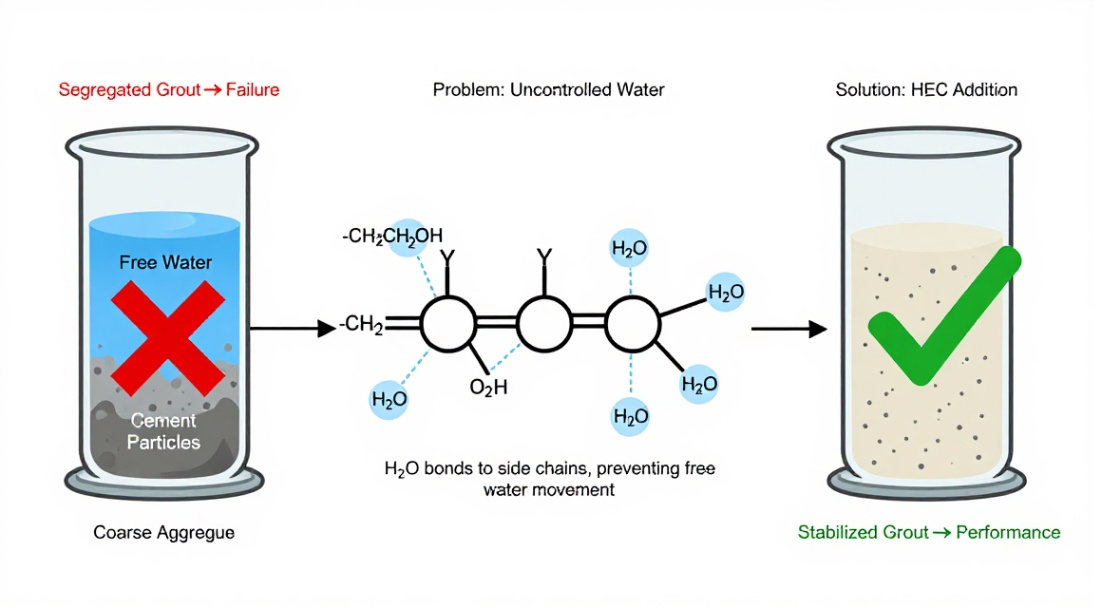
What is HEC (Hydroxyethyl Cellulose) in Grout?
HEC (Hydroxyethyl Cellulose) is a non-ionic, water-soluble polymer derived from cellulose. Its role as a thickener for cement based grouts is fundamental. HEC physically traps free water within its polymer network, dramatically increasing the viscosity of the mix water before it contacts cement. Think of it as a microscopic sponge network dispersed throughout the grout. This action doesn’t just make the grout thicker-it fundamentally alters its rheological profile to prevent water from escaping, which is the root cause of bleed and sag.
Mechanism: How HEC Modifies Grout Behavior
HEC works through physical, not chemical, interaction. Its long-chain molecules hydrate rapidly in water, uncoiling and creating a 3D network of polymer chains. This network has two immediate effects. First, it immobilizes free water, preventing it from rising to the surface (bleed). Second, it imparts a cohesive, shear-thinning viscosity to the grout. The grout flows under applied shear (pumping, mixing) but holds its shape once static. This is the precise behavior needed for vertical or overhead placements where sag resistance is non-negotiable.
Primary Benefits for Cement Based Grouts
- Eliminates Bleed Water: By locking water in the matrix, HEC prevents the formation of a weak, water-rich layer at the surface that compromises bond and durability.
- Sag Resistance for Vertical/Overhead Work: The yield stress imparted by HEC allows the grout to cling to substrates without slumping, enabling precise cavity fills and tiling applications.
- Consistency Control: It provides a predictable, creamy consistency that is pumpable yet non-segregating, independent of minor water dosage fluctuations.
- Enhanced Workability: Contrary to belief, proper HEC dosage improves lubrication between particles, reducing friction and improving placement ease.
Key Performance Metrics HEC Influences
Using HEC as a thickener directly controls three make-or-break metrics. Viscosity developmentOpen time can be extended as the polymer network slows water consumption by cement, but this requires precise dosage. Most critically, HEC ensures stability-the grout remains homogeneous from the mixer to the point of setting. Ignoring these metrics guarantees field problems.
HEC Compatibility and Mix Design
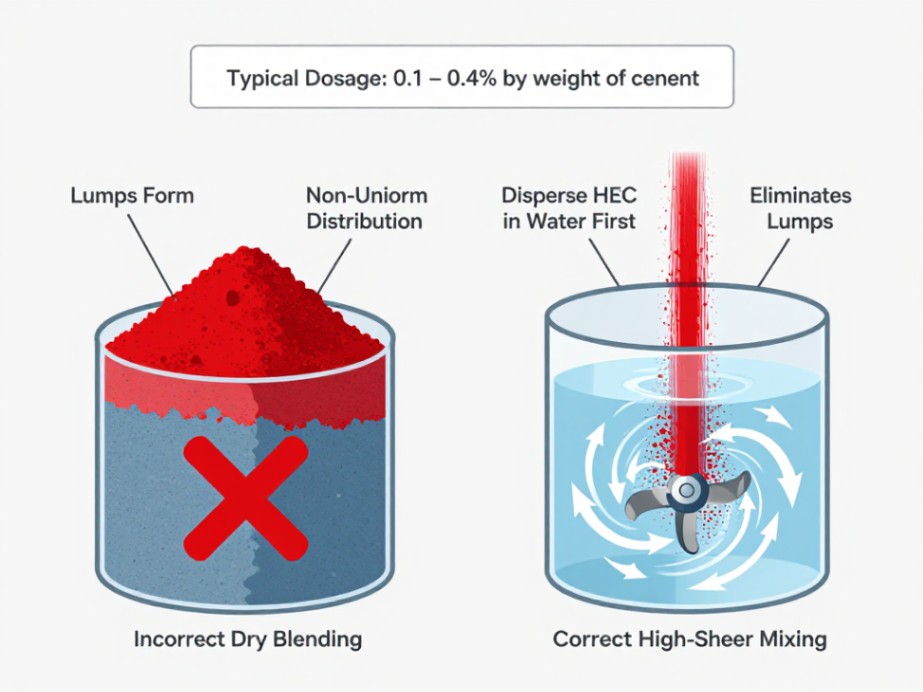
HEC’s non-ionic nature makes it universally compatible with Portland cement and most common admixtures like superplasticizers (PCE/PNS). This is a major advantage. You can design a high-flow, low-water grout with a superplasticizer and still use HEC to provide the cohesive body that prevents segregation. The sequence of addition matters. For optimal performance, disperse HEC into the mix water and allow full hydration before adding cement and other powders.
Dosage and Incorporation: A Practical Guide
More HEC is not better. Typical effective dosage ranges from 0.1% to 0.4% by weight of cement. Exceeding this range risks excessive water retention, entrained air, and a drastic reduction in final strength. The proper method is to use high-shear mixing to incorporate HEC powder into water, avoiding lump formation. For dry-mix products, blend HEC thoroughly with other fine powders (like silica fume or filler) to ensure uniform distribution during site mixing.
HEC vs. Alternatives: A Clear Comparison
Many specify HPMC (Hydroxypropyl Methylcellulose) without question. This is often a mistake. HPMC offers superior water retention but can significantly retard set-a disaster for productivity. Welan gum provides excellent suspension but is costly and can over-thicken. HEC strikes the ideal balance for most grout applications: strong water retention, minimal retardation at correct dosages, predictable rheology, and cost-effectiveness. For grouts where set time is critical, HEC is the logical first choice.
Addressing Strength Myths and Overdosing Risks
A persistent myth claims HEC reduces final strength. This is only true of poor mix design. If you use HEC to simply allow more water in the mix, strength drops. But if you use HEC to stabilize a low-water, high-cement content mix designed with a superplasticizer, you achieve maximum density and strength. The real risk is overdosing. Too much HEC creates a gummy, difficult-to-place grout that traps excessive air and never fully densifies, leading to permanent strength loss.
Environmental and Durability Profile
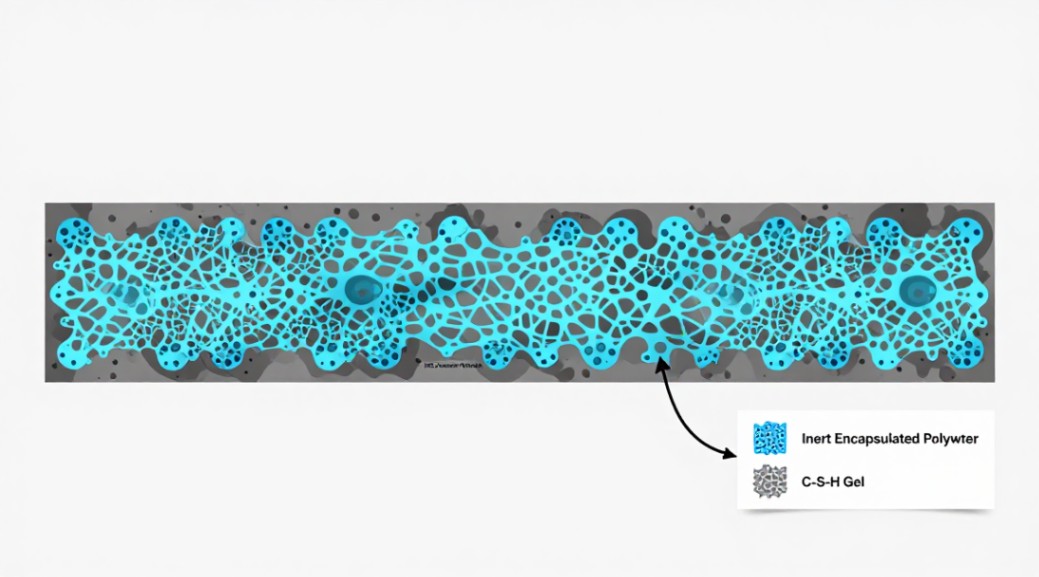
HEC is inert in the hardened cement matrix. Once the cement hydrates, the polymer network is encapsulated within the calcium silicate hydrate gel. It does not degrade or leach out, and it does not promote corrosion. Its function is complete once the grout sets, leaving behind a more homogeneous, bleed-free microstructure. This directly translates to improved long-term durability, reduced permeability, and better resistance to freeze-thaw cycles.
Optimizing Your Grout Performance
Stop treating HEC as a simple thickener. Treat it as a system component for water management. Begin your mix design with the end rheology in mind. For a stable, non-bleeding, sag-resistant grout, start with a dosage of 0.2% HEC by cement weight in your lab trials. Combine it with a polycarboxylate-based superplasticizer to maintain flow. Test for bleed, flow rate, and static sag. The right combination delivers a grout that performs predictably under pressure-quite literally. To achieve this level of control in your formulations, you need a consistent, high-purity HEC thickener for cement based grouts. Sourcing a product with reliable particle size and viscosity grade is the first step to eliminating water-related failures for good.
Supplier
We are the global leader in lightweight concrete and advanced engineered foam solutions. Known globally for its commitment to research, innovation, and applied expertise, we have been providing engineered foam solutions since the early 2012’s.
We can supply high-quality concrete admixture and foam concrete related products all over the world.
The company has a professional technical department and quality supervision department, a well-equipped laboratory, and equipped with advanced testing equipment and after-sales customer service center.
If you are interested, please feel free and contact us.