Concrete-mesa | Concrete Admixtures, Tools, and Production Machines

High-Range Water Reducer Superplasticizers: Your Guide to Stronger, More Workable Concrete
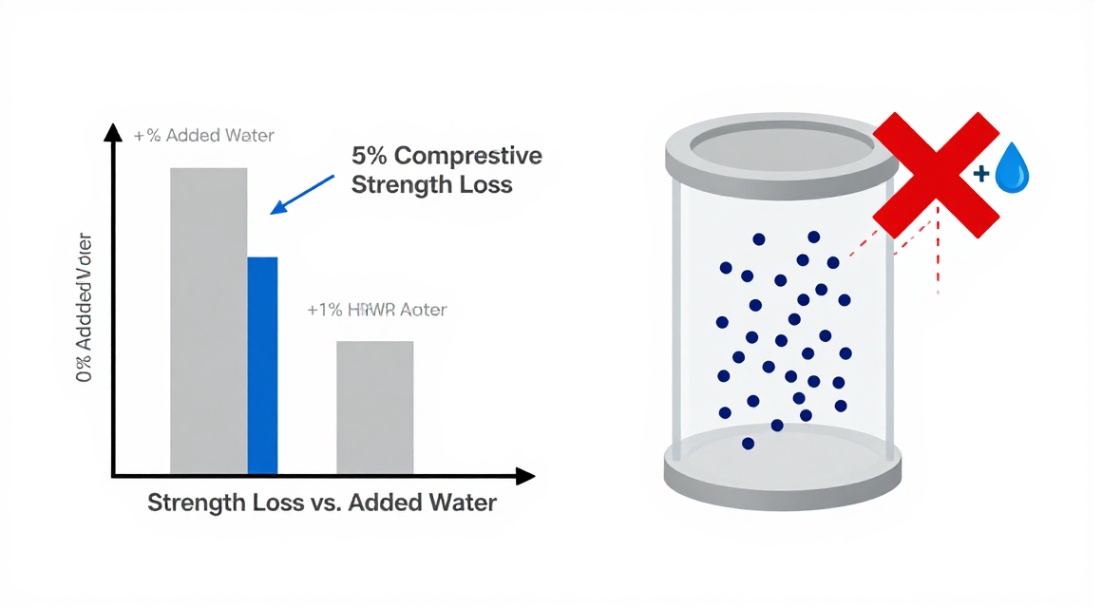
You might think adding water is the only way to make concrete easy to place. You’re not alone. But here’s a jarring fact: for every 1% of unnecessary water added, you can lose up to 5% of your concrete’s final strength. That’s the massive problem high-range water reducer superplasticizers are designed to solve. We use them to break that compromise. Let’s get into the details.
What is a high-range water reducer superplasticizer?
A high-range water reducer superplasticizer is a type of concrete chemical admixture. Its primary job is simple yet transformative: it disperses cement particles in the mix. This allows for a dramatic reduction in the water content needed to achieve a given level of workability. Think of it as a powerful surfactant for cement and aggregates.
How does a superplasticizer work in concrete?
It works by changing the forces between cement grains. In plain water, cement particles clump together. A high-range water reducer superplasticizer adsorbs onto these particles. This creates a negative charge, causing particles to repel each other (electrostatic repulsion). Modern types also use long polymer chains that physically keep particles apart (steric hindrance). The result is a fluid, flowing mix with far less water.
What are the main chemical types of superplasticizers?
We generally work with three families, each with a different mechanism and history.
- Sulfonated Naphthalene Formaldehyde (SNF): An older, common type. It provides excellent water reduction through electrostatic repulsion. It’s cost-effective but can cause more rapid slump loss.
- Sulfonated Melamine Formaldehyde (SMF): Similar to SNF in mechanism. It often gives a slightly better finish and is known for producing very flowable concrete with a lower risk of air entrainment.
- Polycarboxylate Ether (PCE): This is the current generation. PCE molecules use both electrostatic and steric hindrance. They offer superior water reduction, longer workability retention, and better dosage control. We consider them the most advanced option for demanding applications.
What’s the difference between mid-range and high-range water reducers?
Think of it as a spectrum of power. A standard or mid-range water reducer might reduce water needs by 5-10%. It’s good for everyday workability improvement. A true high-range water reducer superplasticizer is in another league. It can reduce water demand by 12-30% or more. We use the high-range type when we need to make high-strength concrete, self-consolidating concrete (SCC), or place concrete in highly congested reinforcement.
What are the key benefits of using a superplasticizer?
The benefits cascade from that core function of water reduction.
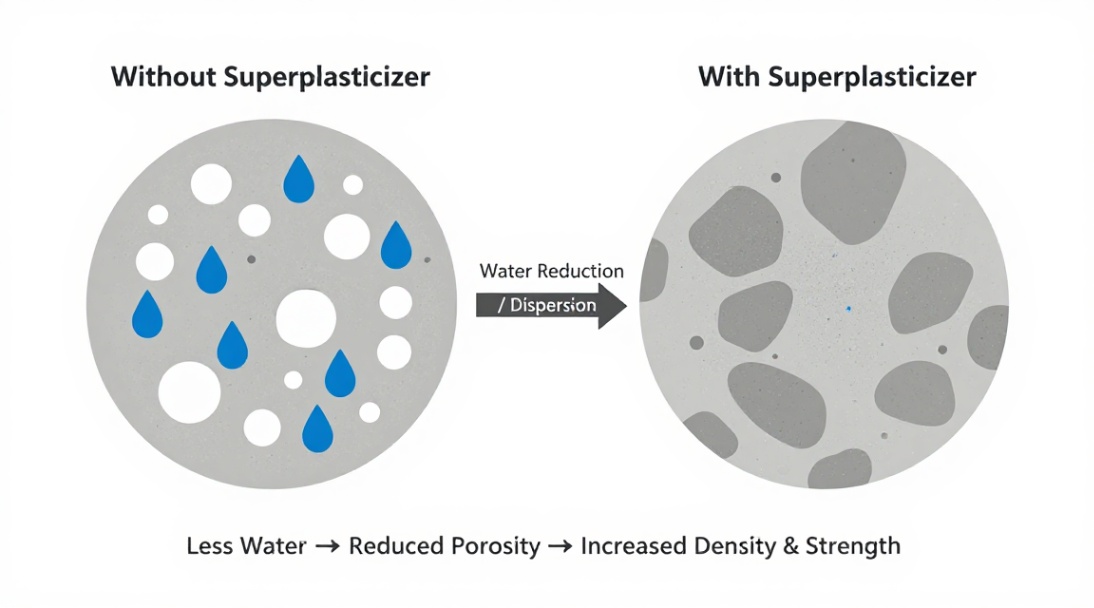
- Higher Strength: Less water means a lower water-cement ratio. This directly translates to significantly higher compressive and flexural strength.
- Improved Workability: You get a very fluid, pumpable concrete without sacrificing strength. This makes placement faster and easier.
- Enhanced Durability: A denser, less porous concrete matrix is the result. This dramatically improves resistance to chloride ingress, sulfate attack, and freezing-thawing cycles.
- Construction Efficiency: Concrete flows into every corner of the formwork. Vibration effort is reduced or eliminated. Surface finish quality improves.
What is the most critical application for superplasticizers?
The game-changing application is Self-Consolidating Concrete (SCC). SCC flows under its own weight and fills forms without mechanical vibration. It’s impossible to make without a high-range water reducer superplasticizer. The other critical use is in producing high-performance concrete (HPC) with strengths exceeding 10,000 psi, where every drop of water counts.
Can you add too much superplasticizer?
Absolutely. Overdosing is a common site error. Excessive dosage can lead to severe segregation, where the coarse aggregate separates from the paste. It can also cause excessive retardation, delaying set times by hours or even days. The mix may also bleed excessively. We always follow manufacturer dosage guidelines and conduct trial mixes first.
Why is cement compatibility so important?
Not all cements and superplasticizers get along. Factors like the cement’s C3A content, sulfate levels, and fineness can drastically change how the admixture performs. An incompatible combination can lead to rapid slump loss, flash set, or poor dispersion. We never assume universal compatibility. A simple mortar flow test in the lab before the pour saves immense headache on site.
What are the best practices for using superplasticizers on site?
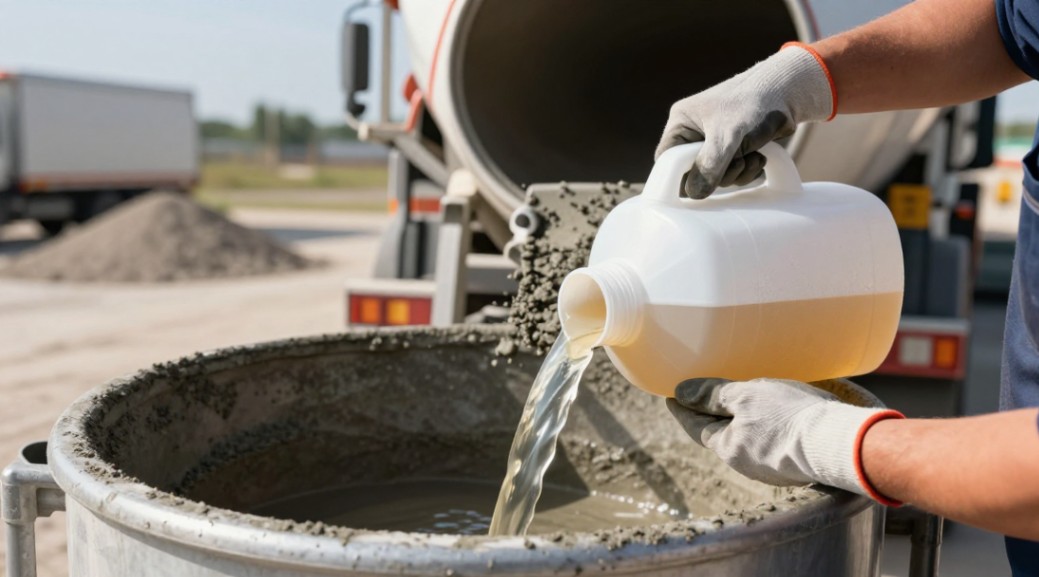
- Batching Order: Add the high-range water reducer superplasticizer to the mixing water, not directly onto dry cement. This ensures even distribution.
- Mixing Time: Ensure adequate mixing time for full dispersion. Modern PCE types often work faster than older SNF/SMF.
- Delayed Addition: For certain types, adding most of the superplasticizer after 1-2 minutes of mixing can improve workability retention. Check the product data sheet.
- Temperature Awareness: Hot weather accelerates reactions. You may see faster slump loss. Cold weather can exacerbate retardation effects.
- Avoid Re-tempering: If slump is lost, consult the supplier. Simply adding more water defeats the purpose. A controlled addition of a slump-retaining admixture or a follow-up dose of superplasticizer (per the supplier’s advice) is the professional solution.
To effectively manage slump loss and maintain the precise water-cement ratio, many of us rely on advanced, compatible admixture systems designed for this exact purpose. The right system gives you control back on the jobsite.
How do superplasticizers affect long-term concrete performance?
The long-term impact is overwhelmingly positive, provided you avoid segregation. The lower permeability is the biggest win. Denser concrete means aggressive agents like chlorides from de-icing salts take much longer to reach the reinforcing steel. This extends service life by decades. The increased strength also provides a higher factor of safety against structural loads over time.
Supplier
We are the global leader in lightweight concrete and advanced engineered foam solutions. Known globally for its commitment to research, innovation, and applied expertise, we have been providing engineered foam solutions since the early 2012’s.
We can supply high-quality concrete admixture and foam concrete related products all over the world.
The company has a professional technical department and quality supervision department, a well-equipped laboratory, and equipped with advanced testing equipment and after-sales customer service center.
If you are interested, please feel free and contact us.