Concrete4U | Concrete Admixtures, Tools, and Production Machines

The Foam Generator: Your Key to Consistent, Profitable Cellular Concrete
Most Cellular Concrete Failures Start Here
Industry studies suggest over 60% of inconsistencies in lightweight concrete-from density variations to weak compressive strength-stem from unstable foam. The foam generator is not just another tool. It is the heart of your mix. You can have the perfect cement blend, but poor foam collapses your entire design. This article cuts through the noise. We provide a direct, actionable guide to foaming equipment for cellular concrete. You will learn how to select, operate, and maintain the right system for guaranteed results.
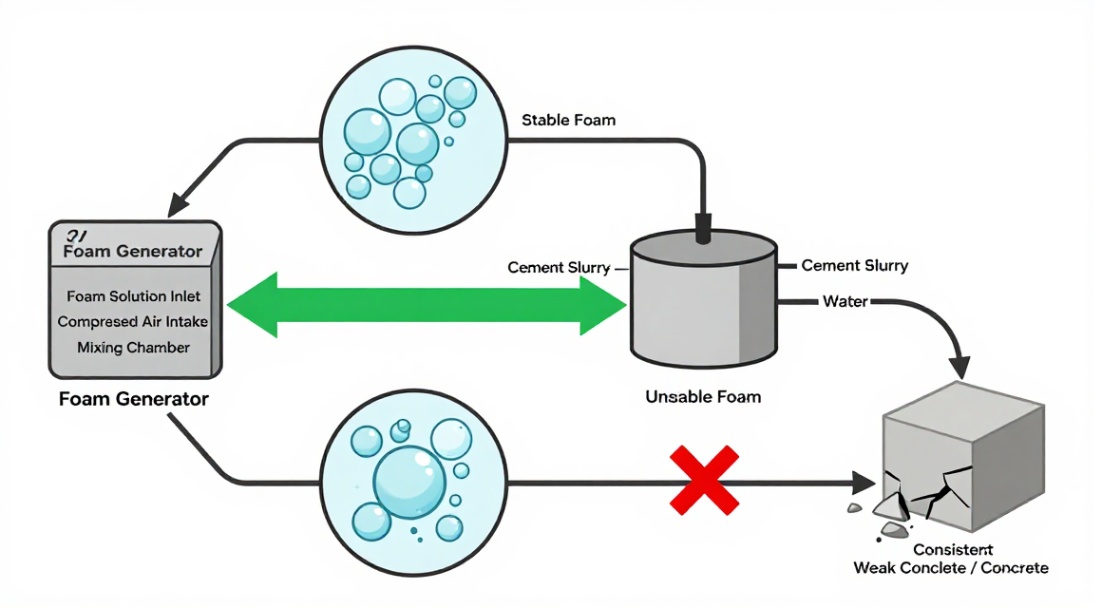
Your First Step: Understanding the Foam Generator System
Forget complicated jargon. A foam generator’s job is simple: mix a foaming agent concentrate with water and air to create billions of stable, uniform bubbles. The system’s quality dictates your concrete’s final properties. Think of foam as your lightweight aggregate. Its stability is non-negotiable.
Core Components You Must Cheque
Every reliable system has these parts:
- Proportioning Pump: Precisely meters the foaming agent concentrate into the water stream. Inaccuracy here wastes chemical and ruins foam quality.
- Mixing Chamber/Nozzle: This is where the magic happens. Water, air, and agent collide under pressure to generate foam. The design controls bubble size.
- Air Compressor & Regulator: Delivers clean, dry air at a constant pressure. Fluctuations create wet, sloppy foam that will not last.
- Foam Output Hose: Delivers the finished foam to your mixer. It must be smooth-bore to prevent bubble shearing.
Step-by-Step: How to Generate Perfect Foam
Follow this procedure every time. Consistency is your greatest asset.
- Step One: Calibrate Your Equipment. Before any production run, cheque your pump’s flow rate. Use a graduated cylinder and a stopwatch. Verify your air pressure regulator holds steady. Many users on contractor forums note this 10-minute check prevents hours of troubleshooting later.
- Step Two: Prepare Your Solutions. Dilute the foaming agent concentrate with clean water to the manufacturer’s specified ratio, typically between 1% and 3%. Use a dedicated, clean tank. Contamination kills foam.
- Step Three: Start the Sequence. Begin water flow first. Then start the air compressor. Finally, engage the proportioning pump to inject the agent. This sequence prevents blowback and ensures immediate foam formation.
- Step Four: Test and Adjust. Direct the first foam into a 1-litre container. Weigh it. If your target density is 50 kg/m³, that liter should weigh 50 grams. Adjust the agent dosage or air pressure to hit your target. Do this until the weight is consistent three times in a row.
Choosing Your System: A Critical Comparison
Your project scale dictates your best choice. Here is a clear breakdown to guide your decision.
| System Type | How It Works | Best For | Key Advantage | Watch Out For |
|---|---|---|---|---|
| Compressed Air (Inline) | Mixes pre-diluted agent solution with compressed air in a nozzle. | High-volume production, ready-mix plants, large pours. | High output (50-200+ m³/hr), robust, simple mechanics. | Requires a powerful, dedicated air compressor. More sensitive to water pressure changes. |
| Proportioning Pump (Direct Injection) | Pumps concentrated agent directly into a pressurized water/air stream. | Precise low-volume work, roofing, insulation, retrofits. | Extreme precision, less waste of concentrate, excellent for tight density control. | Higher initial cost. Pumps require more maintenance if concentrates are viscous. |
Integrating Foam into Your Concrete Mix
Foam generation is only half the battle. Introduction into the mortar base is the other. You have two main methods.
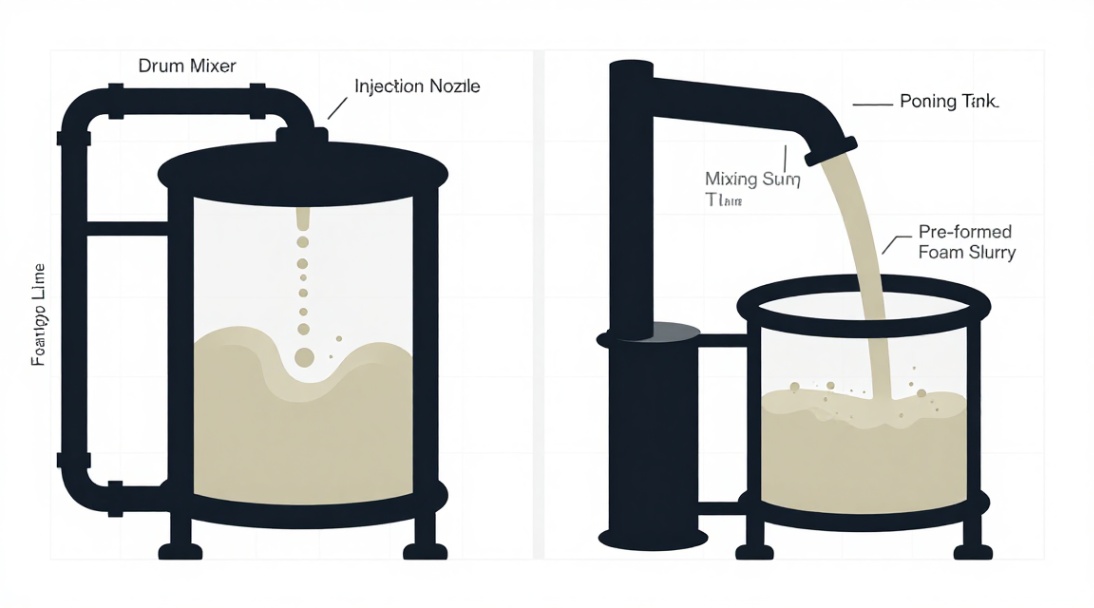
- Direct Mixer Introduction: Pump foam directly into a high-shear mixer containing your cement, sand, and water slurry. This is the most common and effective method for consistent results.
- Inline Injection: For continuous production lines, inject foam into a flowing stream of mortar in a mixing chamber or pump line. This requires precise synchronization of flow rates.
Pro Tip from the Field: On Reddit, a seasoned contractor shared, ‘We run the mixer dry for 30 seconds after adding foam. It ensures every bubble is coated in paste. Our compressive strength results improved by 15% overnight.’
Operational Truths You Need to Know
Your equipment is an investment. Protect it.
- Flush the System Daily: Run clean water through the pump and lines for 5 minutes after use. Dried foaming agent will clog everything.
- Monitor Air Quality: Install a basic filter-dryer on your compressor line. Oil and moisture from the compressor are foam killers.
- Record Your Settings: When you achieve perfect foam for a specific density, write down the pump speed, air pressure, and water pressure. This logbook becomes your most valuable tool.
Stop Guessing, Start Controlling
The difference between a profitable project and a callback nightmare often sits on your equipment trailer. Choosing the right foaming equipment for cellular concrete is not an expense. It is your primary quality control point. It determines your material costs, your structural performance, and your professional reputation.
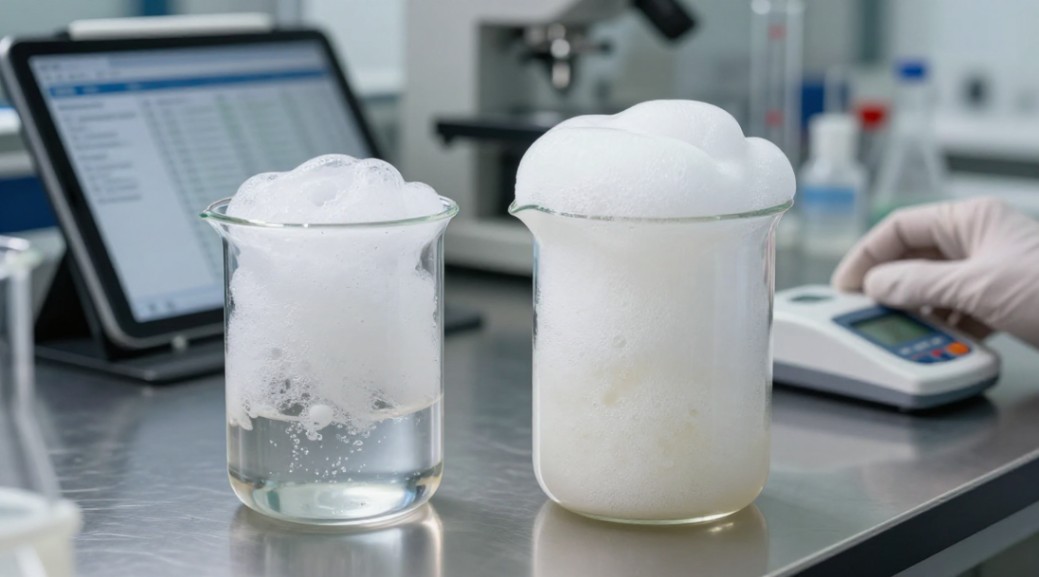
Do not compromise on the core of your process. Request a live demonstration from a reputable supplier. Test their equipment with your local materials and your target mix design. See the foam stability for yourself. Measure the density. Compare the results to your current method. The right system pays for itself by eliminating waste and ensuring your lightweight concrete performs exactly as specified, every single time.
Take the next step for your business. Contact us today to schedule a no-obligation demo and calculate your potential ROI with professional-grade foaming equipment.
Supplier
We are the global leader in lightweight concrete and advanced engineered foam solutions. Known globally for its commitment to research, innovation, and applied expertise, we have been providing engineered foam solutions since the early 2012’s.
We can supply high-quality concrete admixture and foam concrete related products all over the world.
The company has a professional technical department and quality supervision department, a well-equipped laboratory, and equipped with advanced testing equipment and after-sales customer service center.
If you are interested, please feel free and contact us.