Concrete4U | Concrete Admixtures, Tools, and Production Machines

How to Select, Operate, and Optimize a Foam Generator for Precast Concrete
Solving the Density Dilemma in Precast Production
Have you ever struggled with inconsistent lightweight concrete density, leading to panels that crack under load or fail to meet thermal specifications? Do you face unpredictable material costs when using traditional lightweight aggregates? Many precast producers encounter these exact issues. On industry forums, users often report batch-to-batch variations that compromise product integrity. A well-calibrated foam generator for precast concrete production directly addresses these core problems. This equipment provides the control and repeatability you need.
The Core Purpose of a Foam Generator in Precast
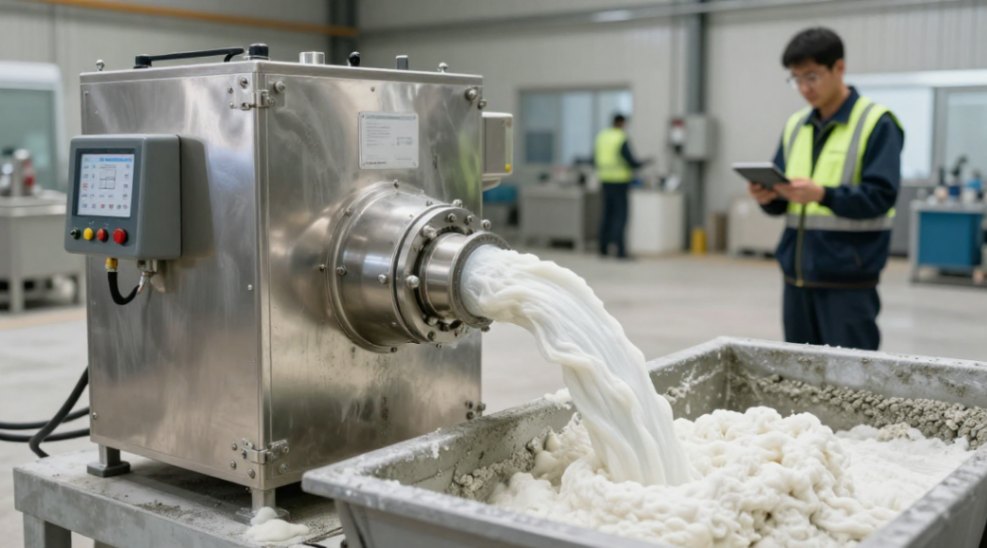
A foam generator is a specialized device that introduces microscopic air bubbles into concrete mixes. Its purpose is singular: to produce a controlled, stable cellular structure. This process creates Cellular Lightweight Concrete (CLC). Unlike using porous aggregates, the foam generator synthesizes the lightweight element directly. The result is a homogeneous material with predictable density, strength, and insulating properties.
Key Components and Operating Principle
Understanding how a foam generator for precast concrete production works is the first step to mastering it. A standard system consists of three primary components:
- Foaming Agent Tank: Holds the concentrated surfactant solution.
- Proportioning & Dosing Pump: Precisely meters the foaming agent into a water stream.
- Foaming Chamber/Nozzle: The heart of the system, where air, water, and agent are violently mixed under pressure to generate foam.
The operating principle is mechanical aeration. Compressed air and the diluted foaming agent solution are forced through a specialized chamber. Turbulence and shear forces create billions of uniform, resilient bubbles. The foam exits the generator with a specific wet density, ready for immediate batching.
Step-by-Step: Integrating and Operating Your System
Follow these steps to implement a foam generator effectively into your precast concrete batching plant.
Step 1: System Selection and Positioning
First, choose between inline and batch systems. An inline foam generator injects foam directly into the mixer truck or pan mixer during the mixing cycle. A batch system produces a measured volume of foam in a separate chamber, which is then added to the mixer. For high-volume precast lines with continuous mixers, inline systems offer superior integration. For tilting-pan or planetary mixers common in precast yards, batch systems often provide better control.
Step 2: Plumbing and Control Integration
Install the generator close to the primary batching point. Minimize hose length between the generator outlet and the mixer inlet. Long hoses degrade foam quality. Integrate the generator’s controls with your plant’s batching software. This allows for automatic density adjustment based on the concrete recipe.
Step 3: Calibration and Parameter Setting
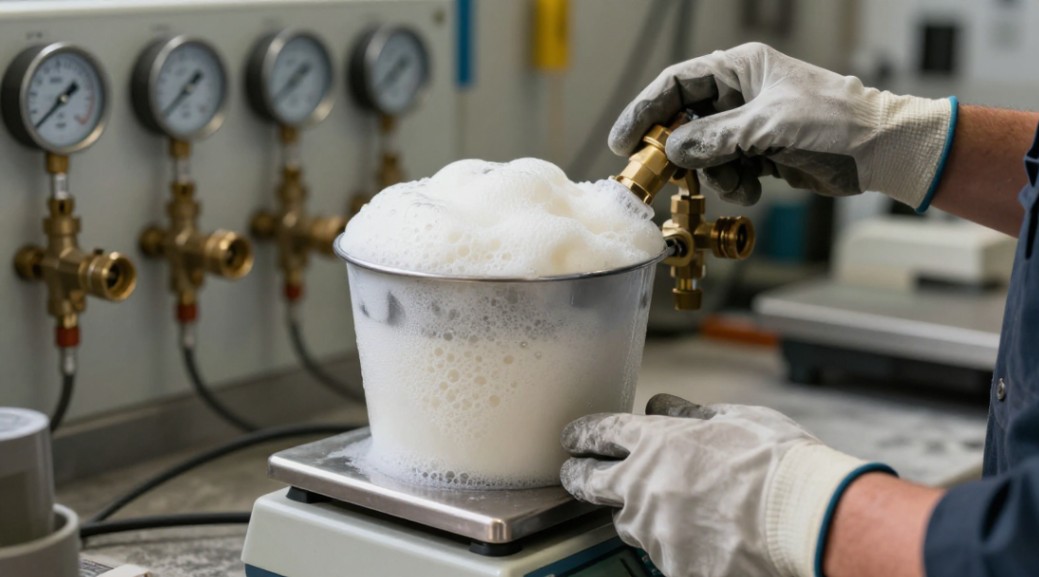
This is the most critical phase. You must calibrate for two parameters: foam density stability and bubble size distribution. Start by producing foam into a calibrated liter container and weighing it to establish the wet density (typically 40-80 kg/m³). Adjust the air-to-liquid ratio to hit your target. Assess bubble size visually; you want a uniform, sub-millimeter distribution resembling shaving cream. Document the pressure and flow settings that achieve this.
Step 4: Foam Agent Selection and Batching
Not all foaming agents are equal. Select a synthetic, protein-based, or synthetic-protein hybrid agent based on your needs. Synthetic agents offer high stability and lower cost. Protein-based agents create stronger bubble walls, enhancing the final concrete’s compressive strength. Consult your supplier for the correct dilution ratio, typically between 1:20 and 1:40. Never guess. The agent’s quality directly dictates foam stability and, consequently, the hardened concrete’s properties.
Step 5: Mixing and Pouring Protocol
Introduce the foam during the final 2-3 minutes of the mixing cycle, after all other aggregates, cement, and water are thoroughly blended. This minimizes foam collapse. Mix just long enough to achieve a homogeneous, flowable mixture-typically 60-90 seconds. Overmixing destroys the cellular structure. Pour or pump the CLC mixture into molds gently to avoid trapping large voids.
Advantages Over Traditional Lightweight Methods
Why shift from traditional expanded clay, shale, or slate aggregates? The foam generator offers distinct advantages. It provides unparalleled density control, allowing you to produce blocks and panels with precise target densities from 400 to 1800 kg/m³. Material costs become more predictable, as you use standard sand and cement, eliminating volatile aggregate pricing. The product is lighter and easier to handle, reducing logistics strain. Most importantly, the thermal insulation performance of fine, closed-cell foam concrete surpasses that of most lightweight aggregates.
Operational Best Practices and Maintenance
Consistency requires discipline. Daily, cheque and clean the foam generator’s nozzle or screen for buildup. Weekly, verify the calibration of dosing pumps and pressure gauges. Monitor compressed air quality; moisture and oil contamination will ruin foam. Keep detailed logs for every batch: foam density, agent lot number, and final concrete density. This data is invaluable for troubleshooting.
Impact on Final Precast Product Quality
A properly managed foam generator for precast concrete production directly enhances your product line. The uniform cellular structure improves thermal performance, a key selling point for insulated wall panels. The reduced density lowers dead load in structural elements without a proportional loss in strength. Properly cured CLC exhibits excellent durability and freeze-thaw resistance because the closed bubbles do not interconnect to form capillary channels.
Making the Financial Case
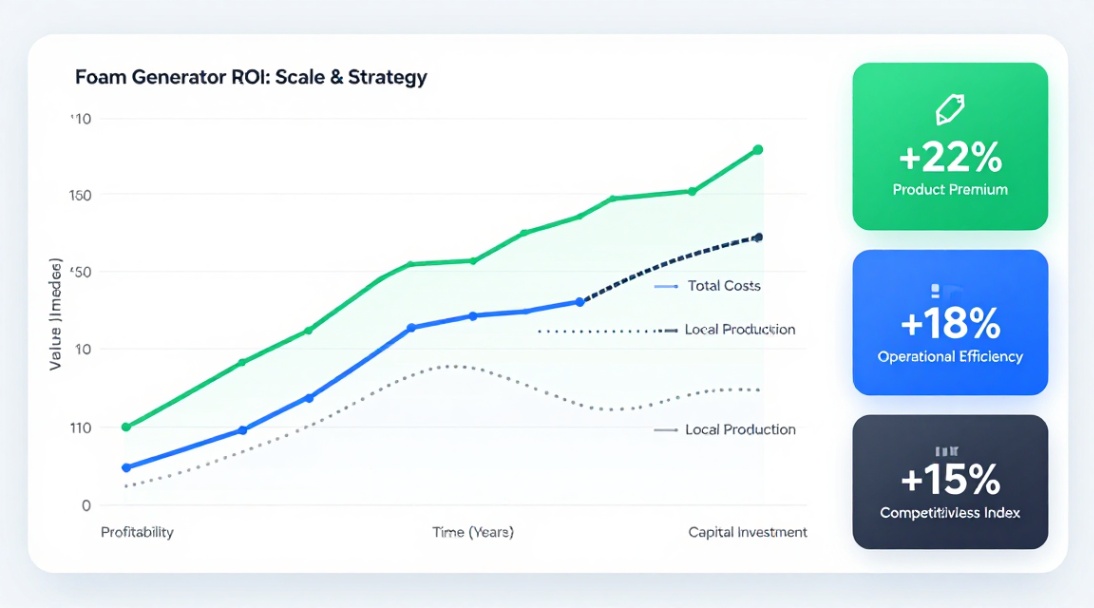
The cost-benefit analysis for precast manufacturers hinges on scale and product strategy. The initial capital expenditure for a robust foam generator system is offset by several factors: lower raw material costs versus imported lightweight aggregates, reduced transportation costs for finished products, and the ability to command a premium for high-performance insulated panels. For producers focusing on energy-efficient building systems, the investment is not just justified; it’s essential for competitiveness.
Your Path to Consistent, High-Quality CLC
Mastering foam generation is a technical skill that pays dividends in product quality and plant efficiency. Start by auditing your current lightweight concrete challenges. Then, apply the step-by-step integration and calibration process outlined here. Focus relentlessly on the stability of your foam density and the consistency of your bubble structure. This disciplined, data-driven approach transforms the foam generator from a mere piece of equipment into the core of your lightweight precast concrete production strategy.
Supplier
We are the global leader in lightweight concrete and advanced engineered foam solutions. Known globally for its commitment to research, innovation, and applied expertise, we have been providing engineered foam solutions since the early 2012’s.
We can supply high-quality concrete admixture and foam concrete related products all over the world.
The company has a professional technical department and quality supervision department, a well-equipped laboratory, and equipped with advanced testing equipment and after-sales customer service center.
If you are interested, please feel free and contact us.