Concrete4U | Concrete Admixtures, Tools, and Production Machines

How to Use Micro Fibers for Shrinkage Reduction in Concrete: A Practical Guide
The Crack That Started It All
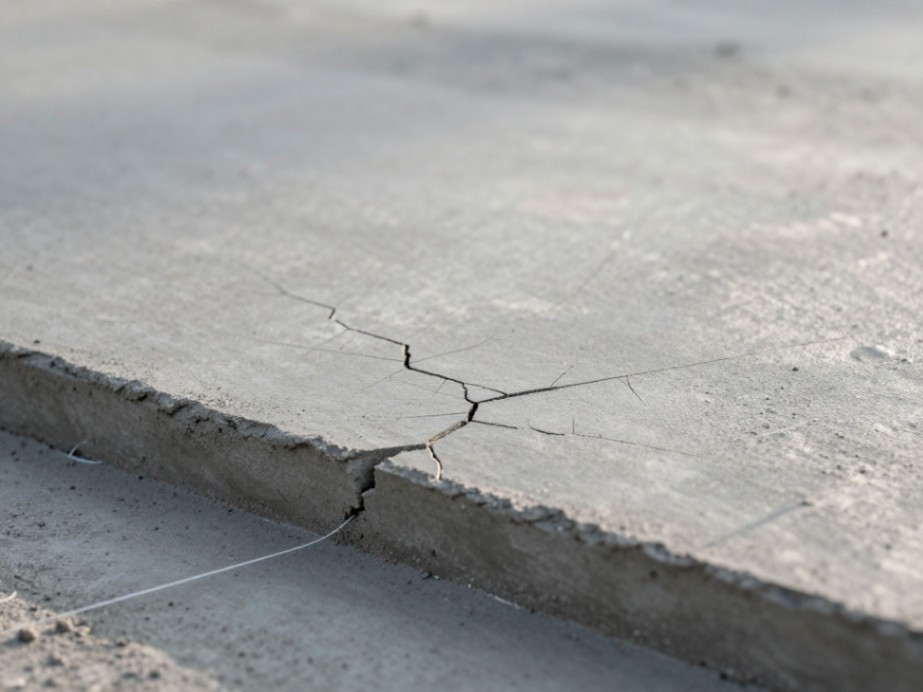
I remember my first major slab-on-grade project. We followed the specs, used good materials, and cured it diligently. Three days later, a network of fine, spider-web cracks appeared. It wasn’t structural, but the client wasn’t happy. We spent weeks repairing, grinding, and resurfacing. That’s when I truly understood the relentless challenge of plastic shrinkage. The solution that changed our approach? Micro fibers for shrinkage reduction in concrete. They don’t replace good practice, but they provide a critical safety net during concrete’s most vulnerable hours.
What Are Microfibers and How Do They Work?
Microfibers are short, fine, discrete filaments we add to the concrete mix. They’re typically 6mm to 20mm long. Their primary job is to control plastic shrinkage during the first 6 to 24 hours after placement. Here’s the simple mechanics: as water evaporates from the surface, the paste wants to shrink. This creates microscopic tensile stresses. Without reinforcement, these stresses open up into visible cracks. Microfibers create a three-dimensional network within the mix. They bridge these incipient micro-cracks. They distribute the stress. Think of it as giving the concrete matrix a tiny, internal reinforcement grid at a scale traditional steel can’t match.
Choosing the Right Fiber: A Side-by-Side Comparison
Not all microfibers are the same. Your choice depends on the project’s specific needs-cost, chemical exposure, or performance requirements. Here’s a breakdown of the most common types.
Performance Comparison of Common Micro Fibers for Shrinkage Reduction in Concrete
| Fiber Type | Primary Material | Best For | Key Consideration |
|---|---|---|---|
| Synthetic (Polypropylene/Nylon) | Plastic Polymers | Plastic shrinkage control, general slabs, overlays | Excellent dispersion, chemically inert, most common for shrinkage. |
| Glass | Alkali-Resistant Glass | Architectural precast, thin panels | Requires special coating (AR-glass) to resist concrete’s alkalinity. |
| Steel | Carbon Steel | Combined plastic & long-term shrinkage, impact resistance | Higher stiffness, can influence magnetic fields, requires rust protection. |
| Natural (Cellulose) | Processed Wood Pulp | Shotcrete, fire-resistant coatings | Biodegradable, often used for green building credits. |
The Step-by-Step Guide to Using Microfibers
Success with microfibers isn’t automatic. It requires a deliberate process. Skip a step, and you might not get the full benefit.
Step 1: Determine Your Dosage
Dosage is measured in pounds per cubic yard (lb/yd³) or kilograms per cubic meter (kg/m³). For plastic shrinkage reduction alone, a typical synthetic microfiber dosage ranges from 0.5 to 1.5 lb/yd³ (0.3 to 0.9 kg/m³). For enhanced toughness and long-term drying shrinkage mitigation, you might go to 3.0 lb/yd³ (1.8 kg/m³). Always consult the manufacturer’s data sheet. ACI 544.3R provides excellent guidance. My rule of thumb: standard slabs get 0.9 lb/yd³; exterior overlays or severe conditions get 1.5 lb/yd³.
Step 2: The Correct Mixing Sequence
Uniform dispersion is non-negotiable. Clumped fibers are worse than useless.
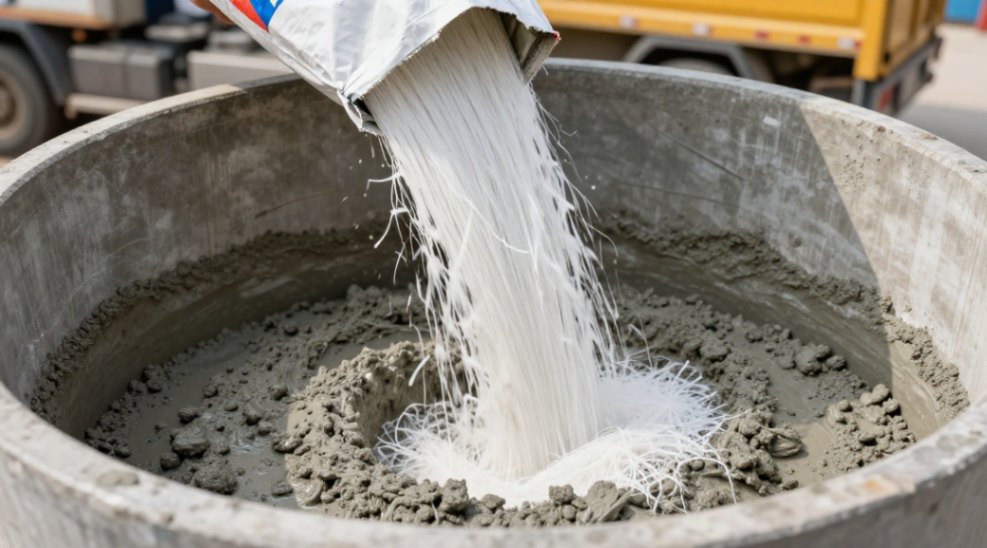
- Charge the mixer with 80% of your total mixing water and all aggregates. Mix for 30 seconds.
- Add the cement and supplementary materials (like fly ash). Mix for another 60 seconds.
- Now, add the micro fibers for shrinkage reduction. The remaining 20% of water helps wash them off the mixer blades and into the mix. Mix for a minimum of 5 minutes at high speed. The mix should look homogeneous. No visible fiber balls.
Step 3: Placement and Finishing Adjustments
Microfibers can slightly increase the mix’s viscosity. It feels “hairier.”
- Place normally. Vibrate as you usually would to consolidate.
- Wait for the bleed water. Do not start finishing while water is on the surface. The fibers can trap it, leading to a weak surface layer.
- Time your finishing. You may need to wait slightly longer for the concrete to support a bull float. Start finishing when you make a ¼-inch (6mm) deep footprint. Use a magnesium or aluminum straightedge. Avoid overworking the surface, which can bring fibers up.
- Final finish. A power trowel is fine. For a broomed finish, wait until the concrete is harder than usual to avoid pulling fibers out.
Where Microfibers Shine: Application Spotlight
We specify micro fibers for shrinkage reduction in concrete for specific high-risk scenarios. The return on investment is clear.
- Slabs-on-Grade & Floors: This is the classic application. They combat early thermal and plastic shrinkage from wind, sun, and low humidity. They also reduce long-term curling at joints.
- Overlays & Toppings: Thin sections (2 inches or less) are extremely crack-prone. Microfibers are essential here for bonding and minimizing reflective cracking.
- Architectural Concrete: For smooth, colored, or exposed finishes where any crack is a major defect. Glass or fine synthetic fibers are preferred.
- Shotcrete: Fibers dramatically reduce rebound and cracking in both wet and dry process shotcrete, improving build-up thickness and durability.
Beyond Shrinkage: The Added Benefits
While we add them for shrinkage control, microfibers improve other properties. They increase abrasion resistance by up to 30% in some tests. They enhance post-crack toughness, meaning the concrete can absorb more energy after it cracks. This improves durability against freeze-thaw cycles and impact. It’s not just about preventing cracks. It’s about making the concrete more resilient when cracks eventually occur.
The Real Cost: An Honest Look
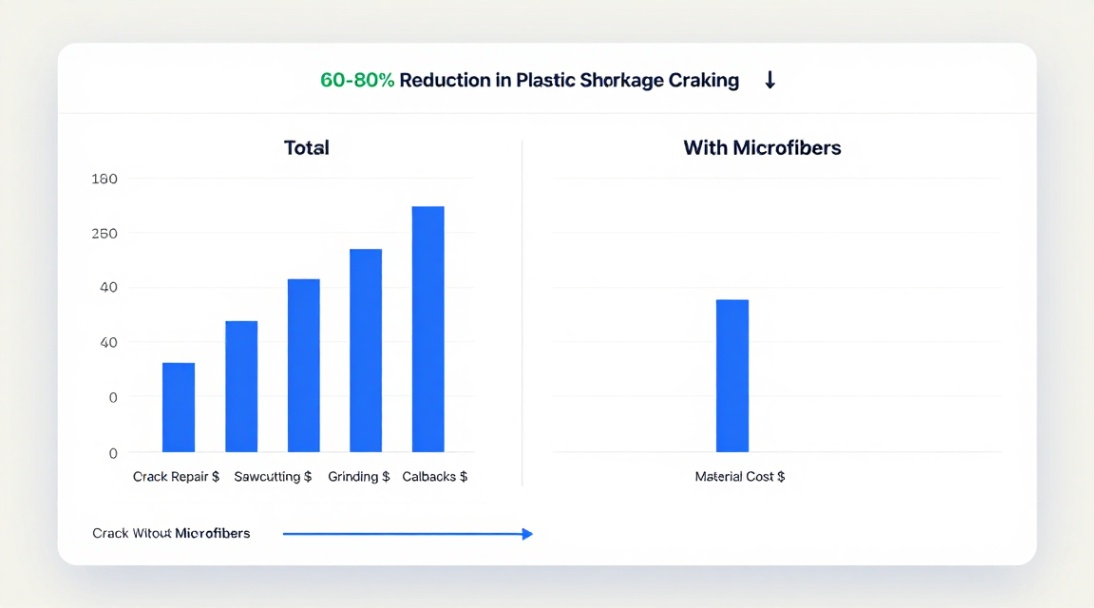
Yes, microfibers add to your material cost-anywhere from $0.50 to $2.50 per square foot of a 4-inch slab, depending on dosage and type. Compare that to the cost of crack repair, sawcutting failed joints, grinding, or customer callbacks. The National Ready Mixed Concrete Association (NRMCA) has case studies showing a 60-80% reduction in plastic shrinkage cracking. That translates directly to labour savings and preserved reputation. For us, it’s an insurance policy with a proven payoff.
Your Next Step
Don’t wait for the next cracked slab to act. The process is straightforward. Start with a test batch on a small, non-critical project. Get a feel for the mix and finish. Talk to your ready-mix supplier-most now carry polypropylene microfibers. Specify them on your next slab-on-grade or overlay drawing. The goal isn’t perfection, but a massive reduction in risk. That’s a win for everyone-the engineer, the contractor, and the owner. Let’s build more durable concrete, from the inside out.
Supplier
We are the global leader in lightweight concrete and advanced engineered foam solutions. Known globally for its commitment to research, innovation, and applied expertise, we have been providing engineered foam solutions since the early 2012’s.
We can supply high-quality concrete admixture and foam concrete related products all over the world.
The company has a professional technical department and quality supervision department, a well-equipped laboratory, and equipped with advanced testing equipment and after-sales customer service center.
If you are interested, please feel free and contact us.