Concrete-mesa | Concrete Admixtures, Tools, and Production Machines

Mid-Range Water Reducers for Concrete: The Practical Guide to Smoother, Stronger, and More Reliable Mixes
The Mid-Range Water Reducer: Your Most Balanced Concrete Tool
The mid range water reducer for concrete is the industry’s most versatile and reliable admixture. It bridges the gap between standard water reducers and high-range superplasticizers, offering substantial water reduction and slump improvement without the cost or handling complexity of stronger chemicals.
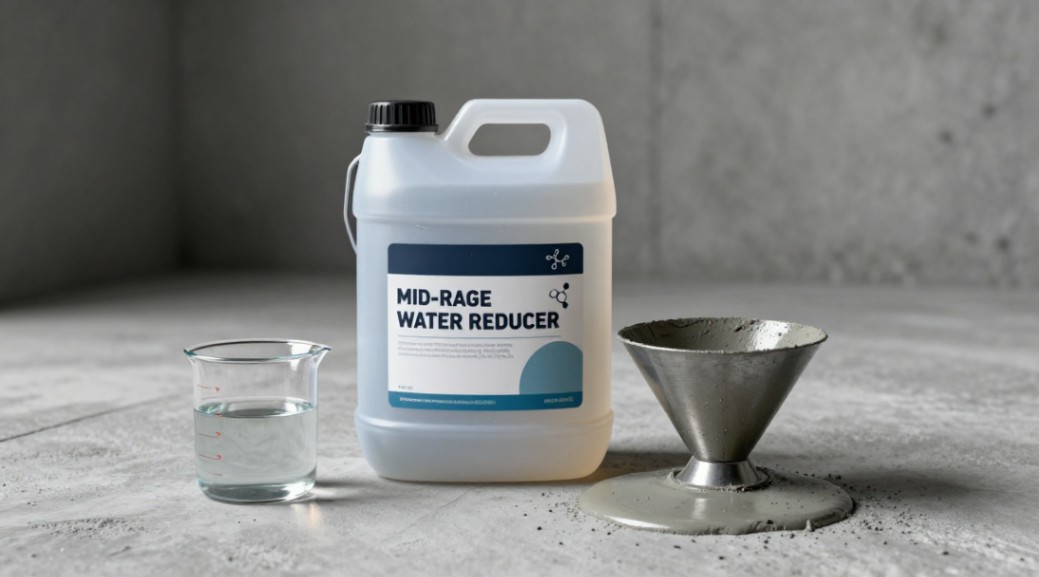
Let’s break down exactly why this tool has become indispensable.
1. What a Mid-Range Water Reducer Does (And What It Doesn’t)
A mid range water reducer is a chemical admixture designed to disperse cement particles more effectively. This allows you to achieve one of three primary goals.
- Increase Slump without Adding Water: You can boost workability by 3 to 5 inches (75-125 mm) without compromising your water-cement ratio.
- Reduce Water for Strength: Cut your mix water by 8% to 15%, directly increasing compressive and flexural strength.
- Optimize the Mix for Cost: Maintain the same slump and strength while lowering your cement content, saving money and reducing heat of hydration.
The key distinction? It achieves this with minimal to zero retardation. Unlike some standard reducers, a properly formulated mid range water reducer won’t significantly delay your finishing schedule.
2. The Chemical Logic: How It Differs From Other Reducers
The performance of a mid-range admixture stems from its specific chemical family.
- Composition: Primarily based on polycarboxylate ether (PCE) or advanced polynaphthalene sulfonate (PNS) polymers. These are not the low-end lignosulfonates or the pure-PCE superplasticizers.
- Molecular Design: The polymer chains have a balanced architecture. They provide good dispersion but don’t “overpower” the mix like some superplasticizers can.
- Key Difference: The dosage window is wider and more forgiving than a superplasticizer. It’s engineered for predictable results, not extreme, rapid-flow performance.
This chemical logic provides a safety margin that contractors value on complex sites.
3. Unmatched Benefits: Why You Get a Better Balance
Choosing a mid-range admixture isn’t a compromise. It’s a strategic decision for superior overall project outcomes.
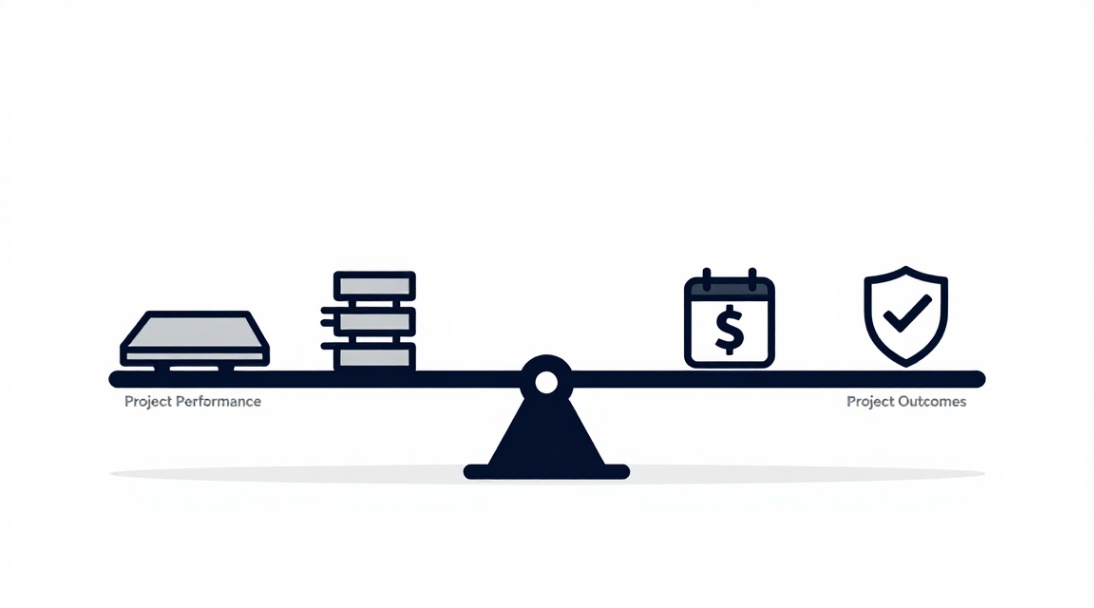
- Enhanced Workability: Concrete flows more easily into forms and around rebar, reducing honeycombing and labour for vibration.
- Improved Surface Finish: Better particle dispersion leads to a denser, more uniform paste, resulting in smoother architectural finishes.
- Increased Strength & Durability: A lower water-cement ratio directly translates to higher ultimate strength and reduced permeability, which fights chloride ingress and freeze-thaw damage.
- Predictable Set Times: Minimal retardation keeps your crews on schedule. You get workability where you need it, and strength gain when you expect it.
- Cost-Effective Performance: It delivers 80% of a superplasticizer’s benefit at a fraction of the cost, making it the sweet spot for most general construction.
4. Perfect Use Cases: Where This Admixture Shines
This tool is not for every job. Its value is highest in specific, common scenarios.
- Slab-on-Grade and Floors: For achieving a workable, finishable mix that doesn’t bleed excessively and gains strength quickly for early traffic.
- Architectural Precast: Where surface quality is critical, and controlled workability is needed for mold filling without segregation.
- Tilt-Up Panels: Provides the extended workability for casting large panels without the rapid slump loss that can occur with some superplasticizers.
- Pumping Applications: Reduces friction in the pump line without the risk of over-lubrication and segregation that high-range admixtures can sometimes cause.
- High-Strength Mixes (Moderate): An excellent choice for mixes targeting 5,000 to 7,000 psi (35-50 MPa) where a reliable, consistent water reducer is the foundation.
5. Dosage and Compatibility: The Non-Negotiables for Success
Success with any admixture hinges on understanding dosage and compatibility. Ignoring these is the most common mistake.
Dosage Guidelines Are a Starting Point. Always begin with the manufacturer’s recommended dosage, typically expressed as fluid ounces per 100 pounds of cementitious material (or mL per 100 kg). A common starting range is 4 to 8 fl oz/cwt (250-500 mL/100kg).
- Cement Type & Content: High-alkali cements or blends with fly ash or slag may require dosage adjustments. More cementitious material often requires slightly more admixture.
- Temperature: Hot weather may necessitate a slight increase to maintain workability, but beware of over-dosage leading to excessive retardation.
- Mixing Time: Ensure adequate mixing time (usually a minimum of 90 seconds in a central mixer) for full dispersion. Adding it too late in the sequence is ineffective.
Compatibility Testing is Essential. The single biggest factor in performance is how the admixture interacts with your specific cement and other additives (like air-entraining agents or retarders).
- Always conduct trial batches with your full job mix materials.
- Observe the concrete for slump retention, air content stability, and setting behavior.
- Signs of incompatibility include rapid slump loss, excessive air entrainment, or severe retardation.
Your best path forward is to work with a knowledgeable supplier who provides consistent, high-quality mid range water reducers and supports you with technical data and mix design assistance. They can help you navigate compatibility and optimize dosage for your specific materials and goals, turning this powerful chemical tool into a reliable partner for every pour.

Test a mid-range water reducer on your next project. You’ll likely find it becomes your new standard.
Supplier
We are the global leader in lightweight concrete and advanced engineered foam solutions. Known globally for its commitment to research, innovation, and applied expertise, we have been providing engineered foam solutions since the early 2012’s.
We can supply high-quality concrete admixture and foam concrete related products all over the world.
The company has a professional technical department and quality supervision department, a well-equipped laboratory, and equipped with advanced testing equipment and after-sales customer service center.
If you are interested, please feel free and contact us.