Concrete4U | Concrete Admixtures, Tools, and Production Machines

Why Protein Based Concrete Foaming Agents Deliver Superior, Lasting Foam
The Core Advantage
If you’re looking for a protein based concrete foaming agent that creates incredibly stable, resilient foam with a better environmental story, you’ve found the right comparison. The choice often boils down to a simple truth: synthetic agents win on initial cost and ease of use, but protein based concrete foaming agent technology consistently delivers superior long-term performance in the hardened concrete. It’s the difference between a quick fix and a durable solution. We’ve poured, tested, and lived with both types for decades on sites from residential blocks to industrial floors. The real-world feedback is clear.
How the Science Dictates Performance
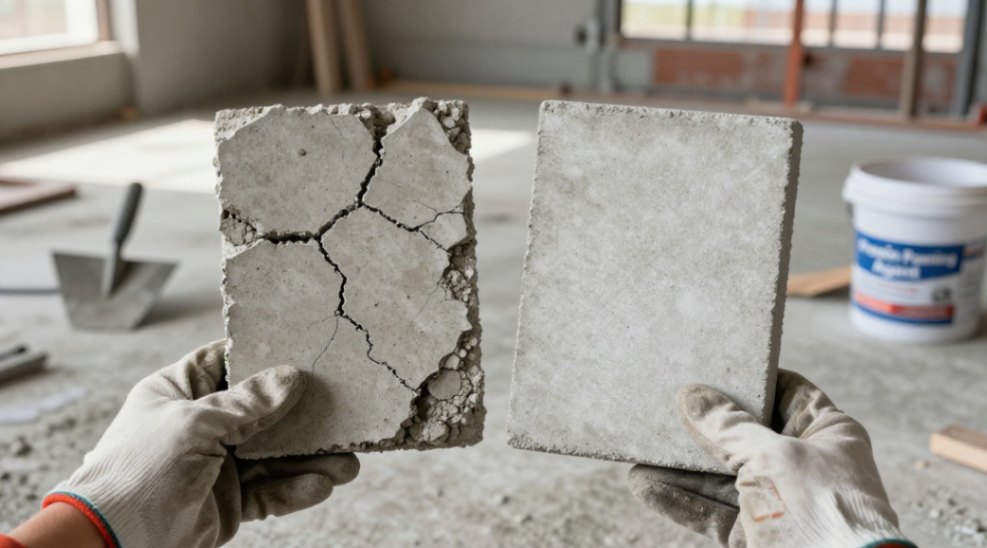
Let’s start with what makes a protein based concrete foaming agent unique. Its composition is derived from hydrolyzed proteins, often from animal by-products like keratin or from plant sources. These long-chain protein molecules are amphiphilic-they have a water-loving ‘head’ and a water-hating ‘tail’. During the foaming process, these molecules align perfectly at the air-water interface. They form a dense, viscoelastic membrane around each air bubble. Picture a robust, flexible skin. This is the chemical root of its advantage. Synthetic agents, typically based on Alpha Olefin Sulfonate (AOS) or Sodium Alkyl Sulfate (SAS), are simpler surfactants. They create a bubble, but the film is much thinner and less cohesive. It’s like comparing the wall of a latex balloon to a thin soap film. This fundamental difference in the bubble wall structure dictates everything that follows in your mix and your final product.
The Practical Consequences in Your Mix
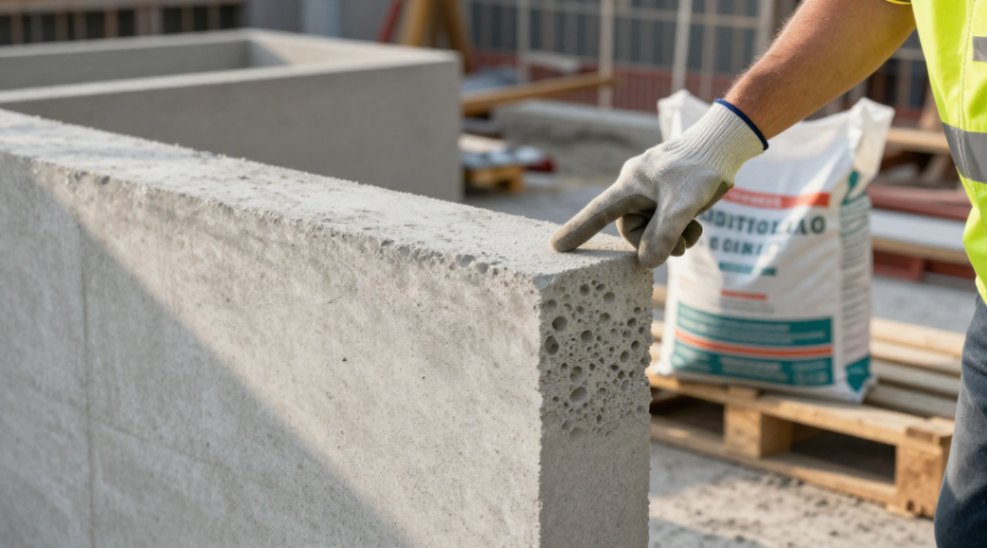
That robust membrane translates directly into foam stability. Protein foam resists collapse and coalescence during mixing, pumping, and placing. You get a uniform air-void system, which is critical. More importantly, the bubbles are predominantly closed-cell. They don’t interconnect. This is a game-changer for durability. Interconnected pores in synthetic foam act as capillaries, wicking water, chlorides, and sulfates deep into the concrete matrix. Closed-cell protein foam dramatically reduces this permeability. The result? Enhanced freeze-thaw resistance, lower water absorption, and better protection for reinforcing steel. We’ve seen this in accelerated lab tests and, more convincingly, in core samples taken from decade-old structures. The protein-based cellular concrete simply holds up better.
Listening to the Field
You don’t have to take just our word for it. The community chatter tells a consistent story. On industry forums and in project post-mortems, a common theme emerges. Users of synthetics often report batch-to-batch consistency issues, especially with hard water or temperature variations. The foam can be ‘fragile.’ A project manager on a recent Reddit thread summarized it well: ‘We switched to a protein agent for our lightweight block plant because we were tired of rejects from foam collapse. The density control is now rock solid.’ Another frequent point is fire resistance. The organic protein residue chars when exposed to flame, helping to seal the concrete’s surface. Synthetic surfactants, being petrochemical-based, can sometimes combust more readily, affecting the material’s overall fire rating-a critical factor for insulation screeds and partition blocks.
Making the Smart Choice for Your Project
So, is a protein based concrete foaming agent always the right call? Not always. Here’s our straight advice. For standard lightweight concrete blocks and cast-in-place CLC where durability, thermal performance, and fire safety are specified, protein agents are the professional’s choice. For thermal insulation screeds, especially over underfloor heating, the stable, closed-cell structure is non-negotiable. The cost-benefit analysis tips heavily in favour of protein here. The slightly higher upfront cost per liter is offset by lower dosage rates (typically 30-50% less than synthetics for the same density) and vastly reduced risk of call-backs due to structural or durability failures. However, for very low-density, temporary, or non-structural fill applications where ultimate performance isn’t critical, a robust synthetic might suffice to control budget.
Working with Protein Foam
If you decide to use it, respect its nature. A protein based concrete foaming agent isn’t a drop-in replacement. Mix design needs attention. These agents can be slightly more sensitive to mix water chemistry and temperature. Always conduct trial batches. They generally play very well with other admixtures like superplasticizers, but you must add them in the correct sequence-typically, foam goes in last. Use a dedicated, stable foam generator; the pre-formed foam method is standard. The trend towards sustainable construction materials is only accelerating this shift. Clients are demanding greener specs, and the bio-based, lower-VOC profile of protein agents fits that narrative perfectly, without sacrificing an ounce of performance. In the end, the choice reflects your priorities: a marginally cheaper pour today, or a demonstrably better building for decades to come.
Supplier
We are the global leader in lightweight concrete and advanced engineered foam solutions. Known globally for its commitment to research, innovation, and applied expertise, we have been providing engineered foam solutions since the early 2012’s.
We can supply high-quality concrete admixture and foam concrete related products all over the world.
The company has a professional technical department and quality supervision department, a well-equipped laboratory, and equipped with advanced testing equipment and after-sales customer service center.
If you are interested, please feel free and contact us.