Concrete4U | Concrete Admixtures, Tools, and Production Machines

Superplasticizer Dosage for Concrete: Avoid These 7 Costly Mistakes
Stop Guessing Your Superplasticizer Dosage
Ever had a perfect concrete mix design turn into a nightmare on site? You add a little more superplasticizer to hit the slump, and suddenly the mix bleeds, segregates, or just won’t set. It’s frustrating. It’s expensive. And it’s usually because of dosage mistakes that are entirely preventable. After 20 years in the field, I’ve seen it all. Let’s walk through the critical questions to avoid these pitfalls and get your dosage spot-on.
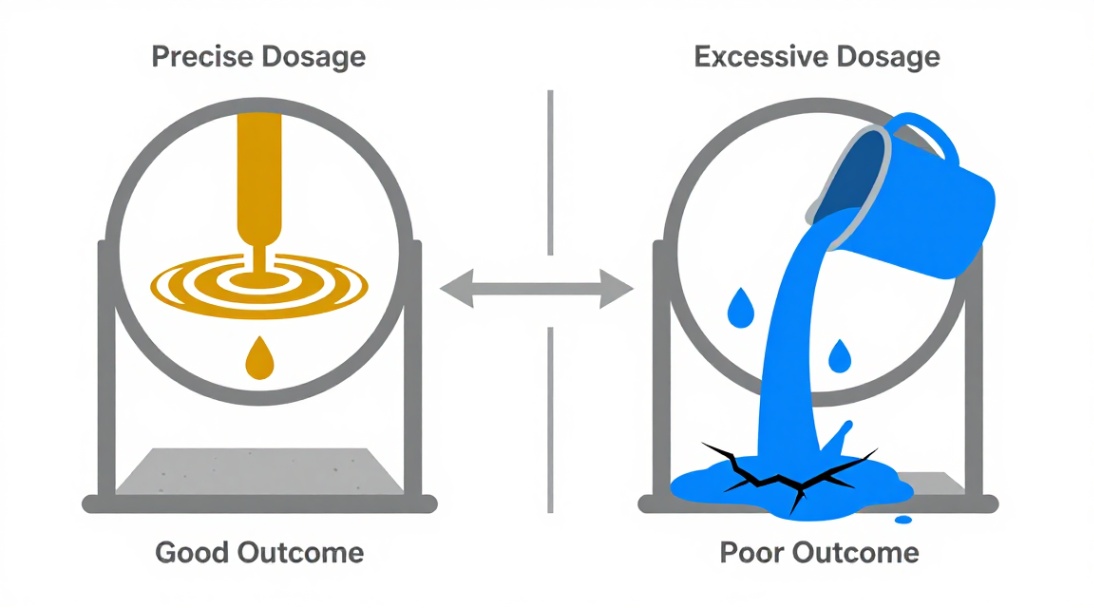
1. What is the biggest mistake people make with superplasticizer dosage?
They eyeball it. This isn’t cooking. Adding a ‘glug’ more because the concrete looks stiff is a recipe for disaster. You might get a temporary slump boost, but the chemical interactions are complex. This leads to severe slump loss, excessive bleeding, or severe retardation of the set time. Precision is non-negotiable. Always measure by weight, not volume.
2. What factors determine the correct superplasticizer dosage?
It’s never one-size-fits-all. You must consider at least five key factors:
- Cement Chemistry: The C3A and alkali content are huge players. High-C3A cements often demand more admixture.
- Temperature: Hot weather accelerates reactions. You typically need a slightly higher dosage to maintain workability, or you use a retarding-type plasticizer.
- Desired Slump/Flow: A standard 4-inch slump mix requires far less than a self-consolidating concrete (SCC) mix.
- Other Materials: Fly ash, slag, silica fume – they all interact differently with the chemical. Your dosage must account for them.
- Mixing Time & Sequence: Adding it too early or too late can reduce its effectiveness by 30% or more.
3. What are typical dosage ranges for superplasticizer?
First, a critical rule: Always start with the manufacturer’s recommended range on the data sheet. That’s your bible. As a general guide for modern polycarboxylate-based superplasticizers, dosages often fall between 0.2% to 1.5% of the cementitious materials by weight. But listen closely: a standard high-range water-reducer application might use 0.4-0.8%. A flowing concrete for slabs might need 0.8-1.2%. Self-consolidating concrete often pushes to the upper limits, 1.0-1.5% or higher. Starting at the low end and adjusting upward is the safe play.
4. What happens if I overdose my concrete mix?
You trade one problem for several worse ones. Over-dosage isn’t just ‘more fluidity.’ It triggers a cascade of failures.
- Severe Segregation: The paste becomes too lubricated. Aggregates sink, paste and water rise. This destroys strength and creates a weak, porous surface layer.
- Excessive Bleeding & Laitance: Water channels to the top, carrying fines. You get a weak, dusty finish that’s prone to scaling and dusting.
- Extreme Set Retardation: The concrete may not set for days, delaying finishing and stripping, throwing your whole schedule off. In cold weather, this risks permanent damage.
As one senior lab director told me, “An overdose doesn’t fix a bad mix; it just gives you a different, more expensive kind of bad.”
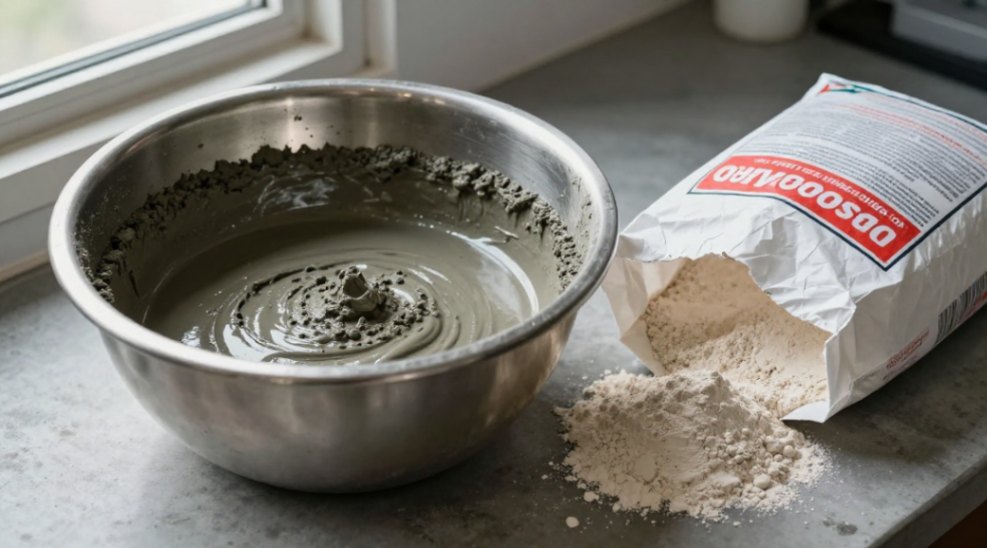
5. How does batching sequence affect my dosage effectiveness?
Massively. The wrong sequence wastes your admixture and your money. The gold standard is the ‘water reduction’ method: add about 75% of your mixing water first, then your aggregates and cementitious materials. Mix for 30 seconds. Now add your entire measured dose of superplasticizer diluted in the remaining 25% of the water. This delayed addition is critical. It can improve efficiency by 25-40%, meaning you use less to achieve the same slump. Dumping it in with the initial water is a common, costly error.
6. Why is compatibility testing non-negotiable?
Because cement and admixtures can be incompatible. You can follow every dosage guideline and still get rapid slump loss or flash set. A proper compatibility test in a lab or on-site with trial batches will show you the workability retention curve. Does the slump hold for 60 minutes? 90? This tells you if you need to adjust the dosage, use a different admixture, or modify your cement source. Never assume compatibility. Field data shows that up to 20% of combo issues are caught only by this test, saving projects from failure.
7. How do I adjust dosage for hot or cold weather?
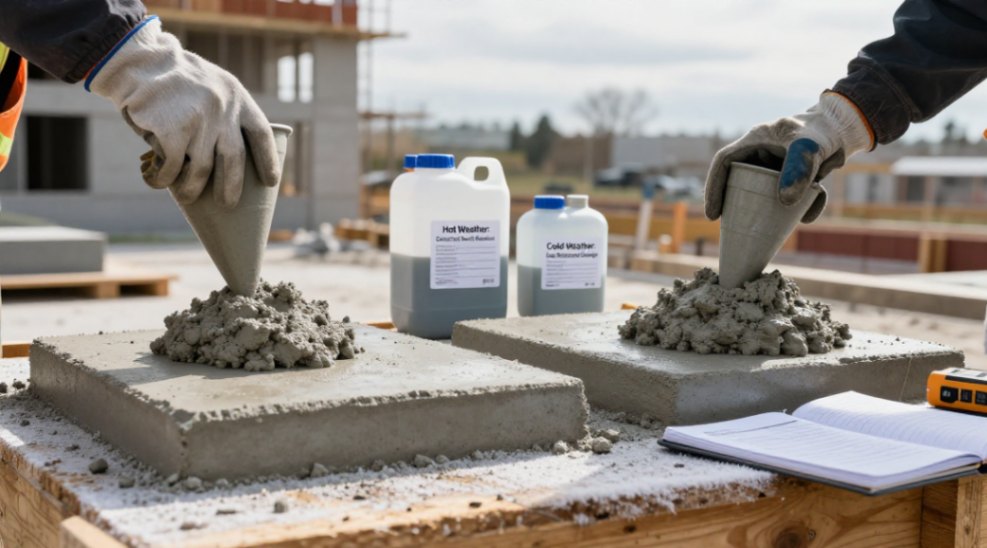
Temperature changes everything. In hot weather, hydration is faster. You might need a slightly higher initial dosage to achieve target slump, but more importantly, you’ll likely need a superplasticizer specifically formulated with enhanced slump retention. A standard type will lose workability too quickly, tempting crews to add uncontrolled water. In cold weather, be extremely cautious. Slightly *reduce* your initial dosage. Overdosing in the cold can lead to severe, unpredictable retardation and early-age freezing damage. The key is trial mixes under realistic temperature conditions.
Your Action Plan for Perfect Dosage
Stop playing guesswork. Your next step is simple and systematic. First, conduct a trial batch with your exact materials. Test the slump at 0, 30, 60, and 90 minutes. Second, lean on manufacturer support. Their technical team is a free resource. For complex projects, using a high-performance superplasticizer with a proven record of consistency and strong technical backing isn’t an expense; it’s your insurance policy. It removes variability. Finally, train your crew on the precise batching sequence. Control the process, control the outcome. Your concrete will be stronger, more durable, and your pours will run smoothly.
Supplier
We are the global leader in lightweight concrete and advanced engineered foam solutions. Known globally for its commitment to research, innovation, and applied expertise, we have been providing engineered foam solutions since the early 2012’s.
We can supply high-quality concrete admixture and foam concrete related products all over the world.
The company has a professional technical department and quality supervision department, a well-equipped laboratory, and equipped with advanced testing equipment and after-sales customer service center.
If you are interested, please feel free and contact us.