Concrete4U | Concrete Admixtures, Tools, and Production Machines

Beyond Bentonite: Why Hydroxyethyl Cellulose (HEC) is the Silent Engine of Modern Drilling Fluids
What is Hydroxyethyl Cellulose? A Painkiller for Drilling Engineers
Have you ever watched a drilling fluid turn to thin, useless water in a shale formation, costing you thousands in mud losses and wellbore instability? You’re not alone. That’s the pain traditional viscosifiers can’t always solve.
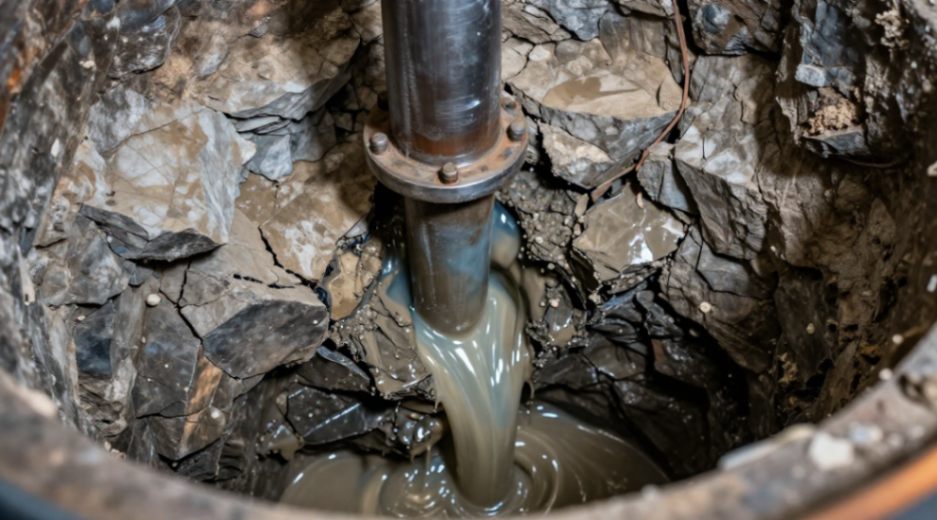
Hydroxyethyl Cellulose (HEC) is a water-soluble polymer derived from cellulose. In drilling, it’s a chemical workhorse engineered to thicken, suspend solids, and seal the wellbore wall. Unlike reactive clays, HEC builds viscosity through molecular action. It’s not just an additive; it’s a calculated solution for fluid control problems.
The Core Mechanics: How HEC Tames Unruly Fluids
Forget vague descriptions. HEC works through three precise, physical mechanisms.
- Hydration & Solubility: HEC molecules love water. They rapidly hydrate, uncoil, and occupy space, creating immediate viscosity without needing reactive clay particles.
- Chain Entanglement: These long polymer threads intertwine like spaghetti in a pot. This network traps water and drilling cuttings, providing superior suspension power. The gel structure prevents solids from settling during connections.
- Filter Cake Formation: As fluid infiltrates permeable rock, HEC molecules align and pack at the surface. They form a thin, tough, low-permeability filter cake. This barrier drastically reduces fluid loss and stabilizes the formation.
HEC vs. The Old Guard: The Uncomfortable Advantages
The industry‘s bentonite default has limits. HEC challenges them directly.
Where HEC Dominates
- Salt-Sensitive Formations: Bentonite flocculates and fails in high-salinity brines. HEC remains stable. It’s the go-to viscosifier for potassium chloride (KCl) polymer muds, a standard for shale inhibition.
- Low-Solids Systems: Need high viscosity with minimal abrasive solids? HEC delivers. This protects downhole tools and improves rate of penetration (ROP).
- Completion & Workover Fluids: You cannot risk formation damage. HEC’s clean, non-invasive filter cake is ideal for these sensitive operations.
- Environmental & Regulatory Ease: It’s non-toxic and biodegradable. In environmentally sensitive areas, HEC simplifies compliance and reduces liability.
The Trade-Offs (No Sugarcoating)
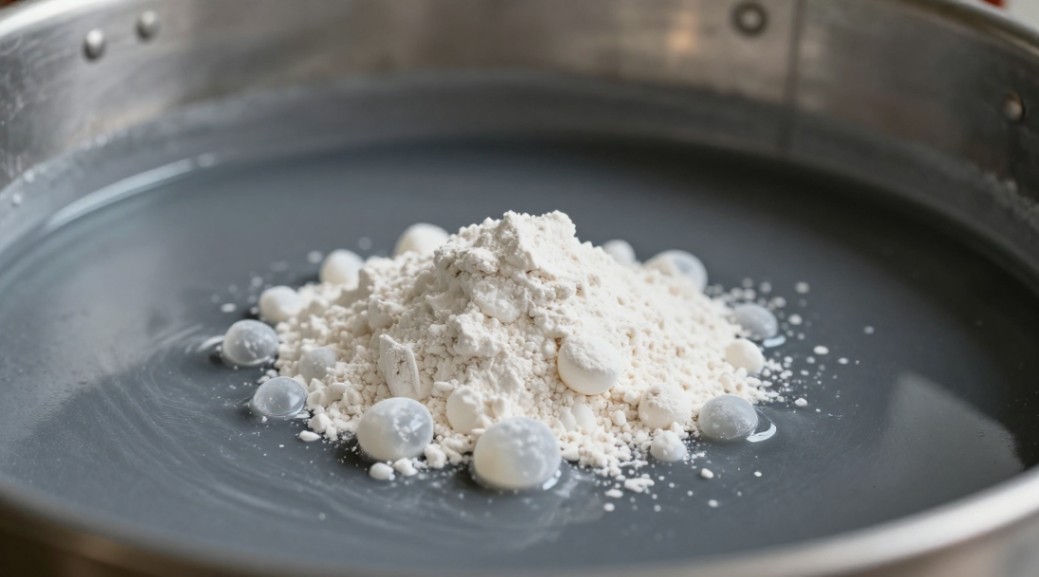
HEC isn’t magic. Performance depends on molecular weight and degree of substitution. Higher molecular weight means better viscosity. Proper pre-hydration is non-negotiable; dumping powder directly into the mud pit creates fisheyes and wastes product. While thermally stable for most applications, extreme high-temperature wells (above 300°F/149°C) can cause degradation. It’s also a food source for microbes; a biocide is often a necessary partner.
Practical Application: Making HEC Work For You
Theory is useless without execution. Here is the field-proven method.
- Pre-Hydrate. Always mix HEC in a freshwater hopper or chemical barrel before adding to the active system. Use a venturi hopper for best results. Let it “soup up” for 15-30 minutes.
- Target Concentration. For most water-based muds, 0.5 to 2.0 lb/bbl (1.4 to 5.7 kg/m³) is sufficient. Start low, test rheology, and increase as needed.
- Leverage Compatibility. HEC works synergistically with other polymers like polyanionic cellulose (PAC) for enhanced fluid loss control. It’s compatible with most common drilling additives.
- Monitor & Maintain. Track fluid loss and gel strengths. A sudden drop may indicate microbial attack or thermal breakdown.
The Bottom Line: Is HEC Your Next Move?
If your drilling challenges involve sensitive shales, salty environments, or the need for a clean, high-performance fluid, hydroxyethyl cellulose in drilling fluid applications isn’t just an option-it’s the logical choice. It replaces bulk with precision, and reactivity with controlled polymer science.
Stop fighting your mud. Specify a system designed around HEC’s unique strengths. Consult with your fluids engineer and test it on your next troublesome interval. The stability you gain will translate directly to your bottom line.
Supplier
We are the global leader in lightweight concrete and advanced engineered foam solutions. Known globally for its commitment to research, innovation, and applied expertise, we have been providing engineered foam solutions since the early 2012’s.
We can supply high-quality concrete admixture and foam concrete related products all over the world.
The company has a professional technical department and quality supervision department, a well-equipped laboratory, and equipped with advanced testing equipment and after-sales customer service center.
If you are interested, please feel free and contact us.