Concrete4U | Concrete Admixtures, Tools, and Production Machines

How to Use Potassium Silicate for Acid Resistant Mortars: A Step-by-Step Guide
Why Your Acid Resistant Mortar Keeps Failing (And How to Fix It)
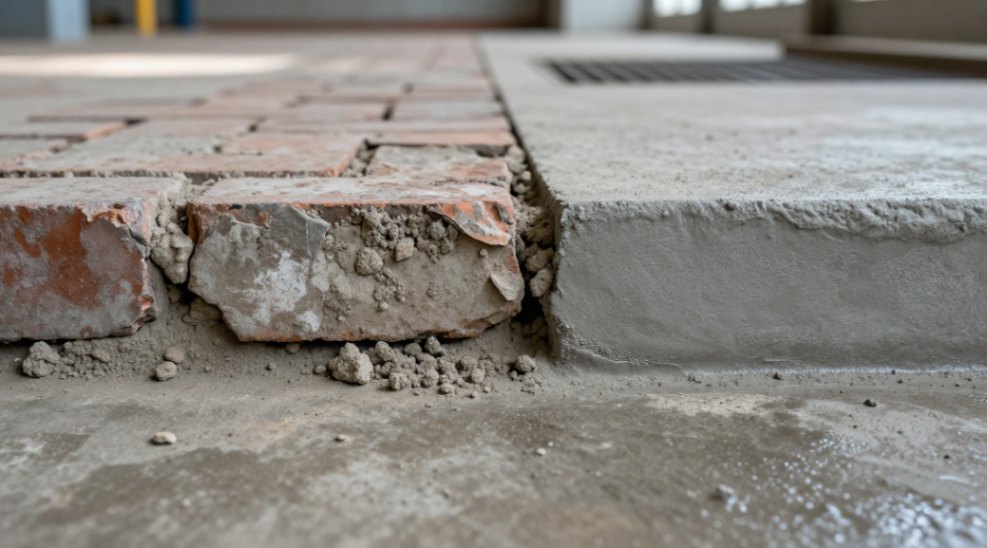
Have you spent money on a chemical-resistant floor or chimney lining, only to watch it crumble after six months? You are not alone. Many users on Reddit report that their acid brick mortar softened or dissolved within a year. The culprit is almost always the binder. Portland cement cannot withstand strong acids. Organic resins soften with heat. The material you need is potassium silicate for acid resistant mortars. This is the professional standard for chemical plants, steel mills, and battery rooms.
1. What Exactly is Potassium Silicate for Acid Resistant Mortars?
1.1. The Chemical Mechanism
Potassium silicate is a liquid binder. It reacts with a special hardener powder (often silica or silicofluoride) to form a durable silicate matrix. This matrix is ceramic-like. It is completely inert to most mineral acids, including sulfuric, hydrochloric, and nitric acids. The reaction is not a hydration like cement. It is a chemical condensation that locks the aggregate into a dense, non-porous body.
1.2. Why It Beats Cement and Resins
Portland cement mortars dissolve in acid. Organic epoxy or furan resins burn or soften above 200°C. A potassium silicate mortar survives both acid attack and temperatures up to 1000°C. It does not support combustion. It does not emit toxic fumes. That makes it the go-to material for industrial flooring, chimneys, and chemical storage areas.
One user on a chemical engineering forum wrote: “We replaced our epoxy brick lining with potassium silicate mortar three years ago. Zero degradation since. The previous resin lining failed in 11 months.” That is the kind of track record this binder delivers.
2. Step-by-Step Guide: Mixing and Applying Potassium Silicate Mortar
2.1. Step One: Prepare Your Materials and Work Area
You need three components: the potassium silicate liquid, the dry powder hardener, and inert acid-resistant aggregates (like silica or carbonundum). Store the liquid above 10°C. Cold liquid thickens and will not mix properly. Read the technical data sheet for your specific product. Ratios vary by brand.
- Check ambient temperature. Optimal range is 15°C to 30°C.
- Ensure the substrate is clean, dry, and free of oil or grease.
- Wear rubber gloves and safety goggles. The liquid is alkaline and can irritate skin.
2.2. Step Two: Proper Mixing Procedure
Do not dump all liquid into the powder at once. That creates lumps. Instead, pour the potassium silicate for acid resistant mortars liquid slowly into the pre-blended dry mix (hardener + aggregate). Use a mechanical mixer with a paddle. Mix for 3 to 5 minutes until the consistency is like stiff peanut butter. Let the mix stand for 2 minutes (this is called “sweating-in”). Then mix for one more minute.
Critical warning: Do not re-temper the mortar with water or extra liquid later. Additives like fine silica fume can be added during the dry blending stage to enhance acid resistance and density.
2.3. Step Three: Application Technique
Apply the mortar with a trowel. Press firmly to ensure full contact with the brick or tile. Joint widths should be between 3 mm and 6 mm for chemical service. For floors, butter the brick and the substrate. Force the mortar into the joint. Scrape off excess immediately. The mortar sets chemically in 30 to 60 minutes, depending on temperature. Do not disturb it during this initial set.
3. Curing Requirements: The Make-or-Break Phase
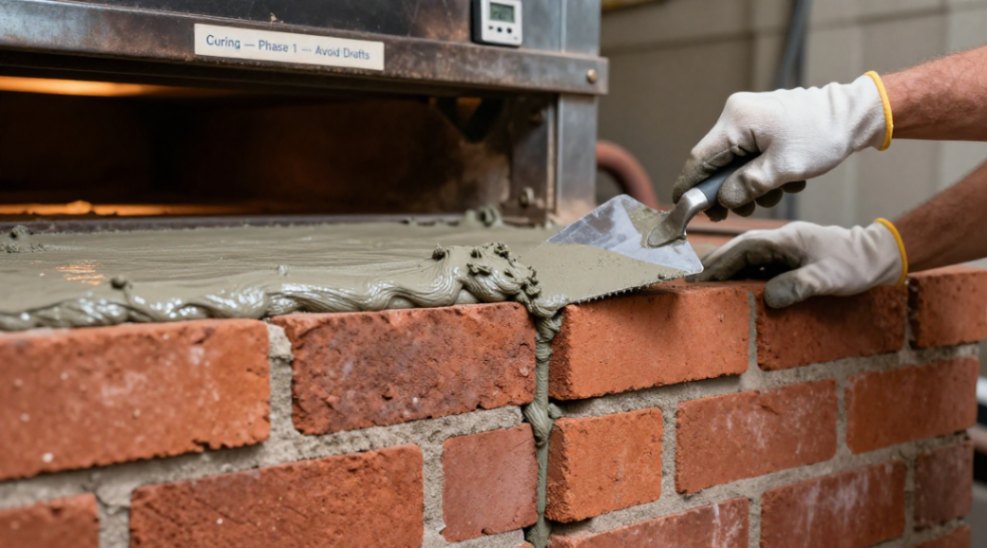
Here is where most field failures occur. Potassium silicate mortars do not cure by drying. They cure by chemical reaction. But moisture inhibits that reaction. The mortar must be kept dry during curing. Relative humidity should stay below 60%. Do not apply water spray or mist. Do not let rain hit the fresh mortar. Cover the area with polyethylene sheeting if needed.
Carbonation is the enemy. Carbon dioxide in the air reacts with the uncured binder and weakens the matrix. Speed matters. After the mortar sets hard (typically 24 hours), it requires a curing time of 7 to 14 days before exposure to chemicals. For hot service (above 100°C), a slow heat-up ramp over 24 hours is mandatory to avoid thermal shock and micro-cracking.
4. Comparison: Potassium Silicate vs. Sodium Silicate Mortars
Many industrial users wonder which silicate to choose. Sodium silicate is cheaper. It has been used for decades. But sodium silicate mortars have a major drawback: high efflorescence. Sodium salts migrate to the surface and form white deposits. They also absorb moisture from the air, leading to swelling and cracking.
Potassium silicate for acid resistant mortars solves these problems. Potassium salts are less hygroscopic. The mortar resists moisture much better. Efflorescence is virtually eliminated. Furthermore, potassium-based binders yield a denser, more chemically stable matrix. For any application where water contact or high humidity is possible, potassium silicate is the superior choice.
A project manager from a battery recycling plant stated: “We switched from sodium to potassium silicate for our tank linings. The sodium mortar failed within two years from moisture softening. The potassium mortar is going on four years with zero issues.”
5. Limitations You Must Not Ignore
No material is perfect. Potassium silicate mortars are sensitive to carbon dioxide during curing. They also require strict moisture control. If you apply them in a rainy season or in a basement with high humidity, expect problems. The mortar is also not resistant to hydrofluoric acid or strong alkalis. For those environments, you need a carbon brick or a special resin system.
Surface preparation is non-negotiable. The substrate must be rough, clean, and dry. A concrete floor must be cured for at least 28 days and then acid-etched or grit-blasted. Any laitance must be removed. The bond between silicate mortar and un-prepared concrete is weak and will delaminate.
6. Safety and Handling: What the Data Sheet Tells You
Potassium silicate liquid has a pH of around 11 to 12. It is corrosive to eyes and skin. Always wear alkali-resistant gloves and goggles. The powder hardener often contains silicofluorides, which are toxic if inhaled. Use a respirator with a P3 filter when mixing large batches. In case of skin contact, rinse with plenty of water for 15 minutes. Do not use vinegar or acid to neutralize on skin—that generates heat.
7. Get It Right the First Time: Our Recommendation
You have read the steps. The science is clear. Potassium silicate for acid resistant mortars is the proven solution for industrial acid attack. But buying the right product from a reliable supplier is essential. Many cheap imports have inconsistent ratios or use low-quality potassium silicate that contains too much sodium. Do not gamble with your facility’s integrity.
We recommend the PRO-SIL ACIDBOND K-Series. It meets the strictest ASTM C-1312 standards for chemical-resistant mortars. The formulation uses high-purity potassium silicate and a proprietary hardener system that minimizes carbonation sensitivity. Mixing and curing instructions are printed on every bucket. Your job will be easier. Your lining will last decades, not months.
Stop wasting money on repairs. Click here to order your PRO-SIL ACIDBOND K-Series trial pack today. Free technical consultation call included with every purchase.
Supplier
We are the global leader in lightweight concrete and advanced engineered foam solutions. Known globally for its commitment to research, innovation, and applied expertise, we have been providing engineered foam solutions since the early 2012’s.
We can supply high-quality concrete admixture and foam concrete related products all over the world.
The company has a professional technical department and quality supervision department, a well-equipped laboratory, and equipped with advanced testing equipment and after-sales customer service center.
If you are interested, please feel free and contact us.