Concrete4U | Concrete Admixtures, Tools, and Production Machines

Stop Pouring Concrete Before You Read This: 5 Non-Chloride Early Strength Admixture Mistakes to Avoid
Here is a Hard Truth: 1 in 3 Cold-Weather Pours Fail Because of a Poorly Chosen Accelerator
Do not let your project become that statistic. You chose a non-chloride early strength admixture to protect your steel. Smart move. But the hard data shows that a shocking number of contractors still mess up the basics. They swap in a non-chloride option and assume the job is done. It is not. Using the wrong non-chloride early strength admixture, or using it incorrectly, can destroy your concrete just as fast as adding road salt. Let me walk you through the five critical traps you must avoid.
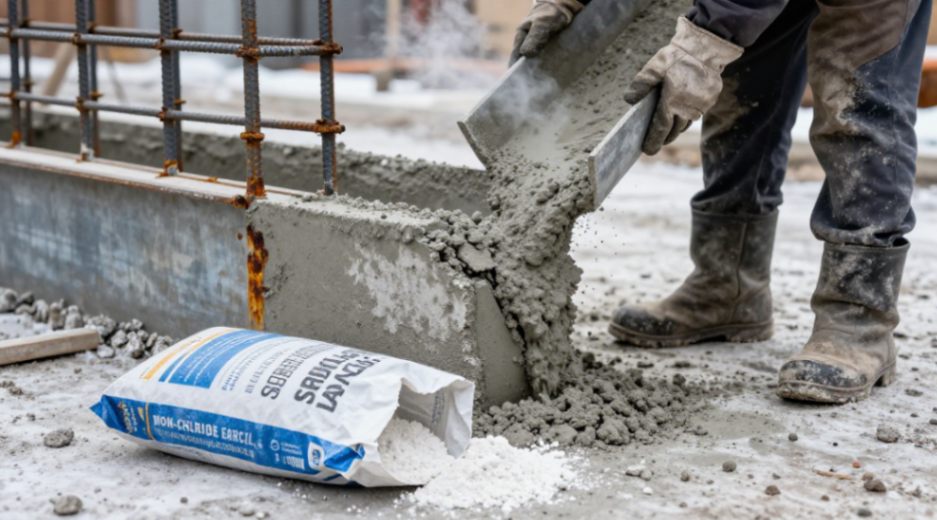
1. Overdose for Faster Set: The False Economy of High Dosages
You need to strip forms by morning. Your instinct is to double the dose. Stop. Do not do it. More non-chloride early strength admixture does not always mean more speed. It often means disaster.
The Cold Logic of Dosage Limits
Every admixture has an optimal saturation point. Exceed it, and you face three immediate problems:
- Flash set: The concrete stiffens in the truck before you can place it. You lose the entire load.
- Strength regression: High doses can actually lower the 28-day compressive strength. You gain early speed at the cost of long-term durability.
- Workability loss: The mix turns sticky and unmanageable. Finishers will fight the slab, not finish it.
Trust the manufacturer’s recommended range. Your non-chloride early strength admixture is a precision tool. Use it like one. If you need more speed, lower your water-cement ratio first. Then adjust the admixture dose within the safe window.
2. Mixing Chloride Accelerators with Non-Chloride Admixtures: A Chemical Betrayal
This seems obvious, but I see it every winter. A crew adds a calcium chloride accelerator on day one. Then, for the next pour, they switch to a non-chloride early strength admixture without flushing the line or the mixer. The residual chloride contaminates the entire batch. The steel sees the chloride. The corrosion starts. You get zero benefit from your non-chloride choice.
Trace Amounts Kill the Protection
A non-chloride early strength admixture is designed for a chloride-free environment. Even small traces of chloride from a previous batch can trigger localized pitting corrosion. This is non-negotiable:
- Use separate equipment for non-chloride mixes.
- If you cannot separate the equipment, perform a triple flush with hot water and a neutralizing cleaner.
- Test the first batch for chloride content. A simple field test kit saves you a lawsuit.
Remember: a non-chloride early strength admixture eliminates corrosion risk only if you keep chloride out of the system.
3. Ignoring the Water Cut: The Silent Workability Killer
You add a non-chloride early strength admixture to the mix. The slump disappears. So you add more water. Terrible idea. You just defeated the purpose of the admixture.
Why the Slump Drops
Non-chloride early strength admixtures work by accelerating the hydration of tricalcium silicate (C3S). This reaction consumes free water rapidly. The result: lower workability within the first 30 minutes. Adding water to fix this dilutes the cement paste and increases the water-cement ratio. You lose early strength, and you increase shrinkage cracking.
Here is what you do instead:
- Pre-wet your aggregate to reduce absorption.
- Use a high-range water reducer (superplasticizer) that is compatible with your non-chloride early strength admixture.
- Increase the initial slump by 25-50 mm at the batching plant. Expect the slump to drop during transport.
Resist the urge to add water on site. Your non-chloride early strength admixture needs a tight water control to deliver its full benefit.
4. Pairing with the Wrong Retarder: A Race with No Winners
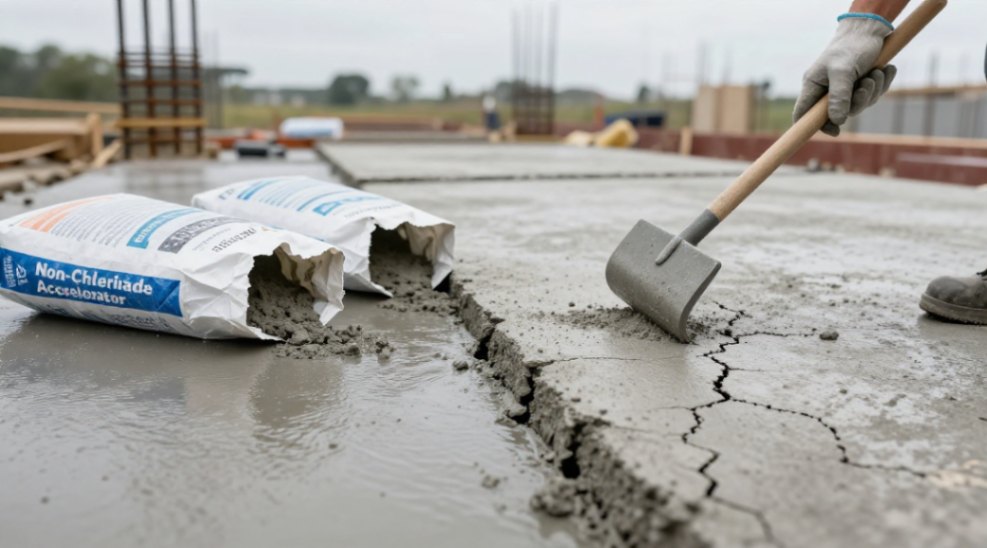
You need to accelerate the early strength, but you also need to extend the setting time for a long haul. So you add a retarder and a non-chloride early strength admixture together. Sometimes this works. Often, it creates a mess.
The Compatibility Trap
Not all retarders play nice with accelerators. Some retarders (like sugar-based types) can over-retard the mix when combined with certain calcium nitrate or calcium formate based admixtures. The result: the concrete does not set for 12 hours. You lose the early strength you paid for.
The logical solution is simple:
- Pre-test every combination in a small trial batch. Do not assume compatibility.
- Use a retarder specifically recommended by the non-chloride early strength admixture manufacturer.
- If you cannot test, add the accelerator first, then the retarder. This order often helps control the reaction.
Do not gamble. A failed set costs you time and money. A successful one keeps the schedule on track.
5. Applying Standard Curing Methods: Thermal Stress Blindness
Your non-chloride early strength admixture makes the concrete gain heat faster. That is the point. But if you cure it the same way you cure a standard mix, you risk thermal cracking.
The Heat of Hydration Curve Shifts
Accelerated concrete reaches peak temperature up to two hours earlier than plain concrete. If you start curing at the same time as usual, you miss the critical early cooling phase. This leads to differential thermal stress: the center of the slab is hot, the surface is cold, and the concrete cracks.
Adjust your curing protocol:
- Start wet curing within 30 minutes after finishing, not after the initial set.
- Use insulated blankets to control the rate of heat loss. Do not cool the surface too fast.
- Monitor the internal temperature. Keep the temperature differential between core and surface below 20°C.
A non-chloride early strength admixture demands smarter curing, not harder curing. Respect the heat, or it will crack your slab.
Your Next Move: Test, Then Trust
You now know the five critical errors. Here is my direct advice: do not rush into a full-scale pour with a new non-chloride early strength admixture without a trial batch. Spend one hour testing. That hour could save you ten days of repair.
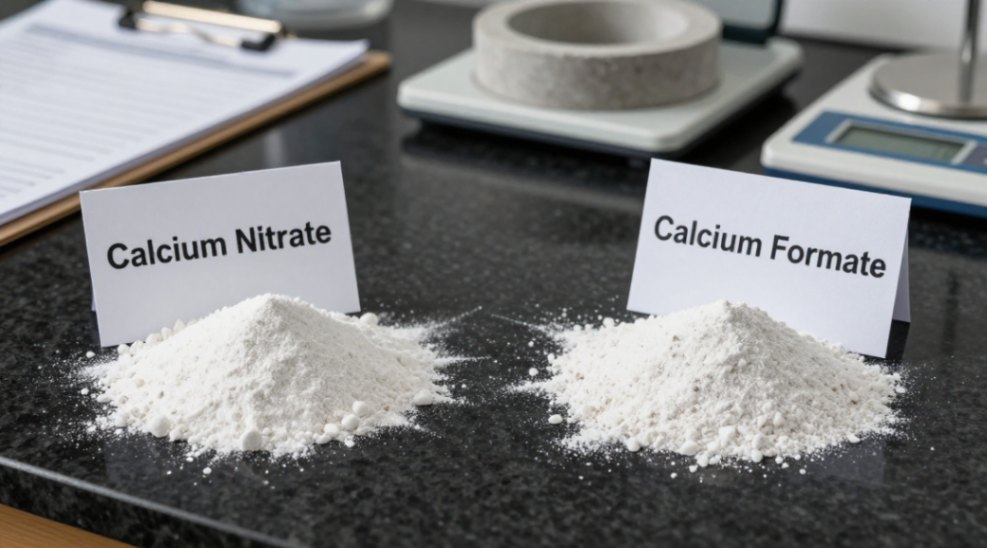
When you are ready to select an admixture, look for one that offers a proven balance of early strength and long-term durability. A quality product will come with clear guidance on dosage, compatibility, and curing. I recommend starting with a calcium nitrate based formulation if you work in cold weather, or a calcium formate option if you need consistent set control in variable temperatures. Both have a strong track record when used correctly.
Do not let a cheap shortcut ruin a good design. Your concrete deserves a non-chloride early strength admixture that works as hard as you do. Choose wisely, test thoroughly, place confidently.
Supplier
We are the global leader in lightweight concrete and advanced engineered foam solutions. Known globally for its commitment to research, innovation, and applied expertise, we have been providing engineered foam solutions since the early 2012’s.
We can supply high-quality concrete admixture and foam concrete related products all over the world.
The company has a professional technical department and quality supervision department, a well-equipped laboratory, and equipped with advanced testing equipment and after-sales customer service center.
If you are interested, please feel free and contact us.