Concrete-mesa | Concrete Admixtures, Tools, and Production Machines

Stop Wasting Money: The Hard Truth About Early Strength Agents for Cold Weather Concrete
Most Cold Weather Concrete Failures Are Preventable
If you are pouring concrete this winter, listen up. Using the wrong early strength agent for cold weather concrete is a recipe for disaster. I have seen slabs crumble, rebar rust out from the inside, and projects miss deadlines by weeks. All because someone grabbed the cheapest accelerator off the shelf.
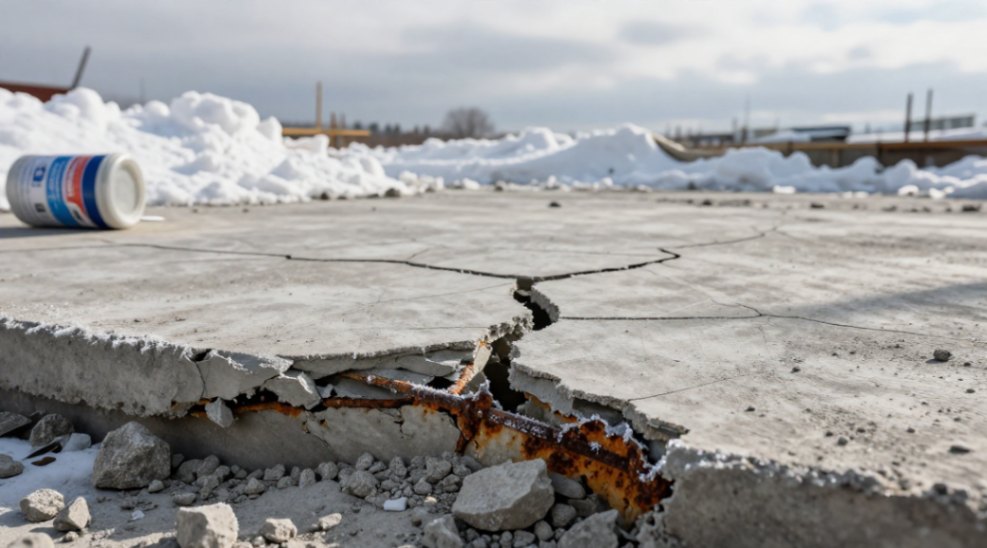
The first rule? Never use a chloride-based accelerator in reinforced concrete. Period. Many users on Reddit have shared horror stories of structural failure years later, all traced back to that one bad decision. The corrosion is invisible until it is too late.
The Three Mistakes That Will Kill Your Cold Weather Pour
Let me break down the critical errors. I have organized these by risk level. Read this table carefully. It might save your project.
| Mistake | Why It Fails | What Experts Do Instead |
|---|---|---|
| Using calcium chloride in reinforced concrete | Corrodes steel reinforcement. Leads to spalling and structural failure. | Use a non-chloride accelerator (ASTM C494 Type C or E). Accept the slightly higher cost. |
| Ignoring the dosage rate | Too little does nothing. Too much causes flash set or reduces long-term strength. | Test dosage with your specific cement and aggregate. Start at the manufacturer’s minimum recommendation. |
| Assuming the agent replaces good curing practices | Accelerators help hydration. They do not protect against freezing. | Keep concrete above 5°C (40°F) for 48-72 hours post-pour. Use insulated blankets. Heat the mixing water. |
Why Chloride-Based Accelerators Are So Risky
The chemistry is simple. Chloride ions attack the passivation layer on steel rebar. Once that layer is gone, rust begins. Reddit threads are full of contractors who saved $50 on an accelerator, only to spend $5,000 on repairs later. The early strength agent for cold weather concrete you choose must be compatible with your reinforcement.
For prestressed concrete or any structural element, never use calcium chloride. Full stop. The standards are clear. ASTM C494 defines Type C accelerators. If you need water reduction too, look for Type E. Both are available in non-chloride formulations.
How the Best Early Strength Agents Actually Work
You are not just speeding up the clock. You are changing the chemistry. The right agent catalyzes cement hydration, generating heat internally. This heat raises the concrete’s temperature, buying you crucial time before frost hits.
Some agents also lower the freezing point of water in the fresh mix. This is a good secondary benefit, but never rely on it alone. Your primary goal is always to keep the concrete warm enough to hydrate properly.
The Dosage Trap: Why More Is Not Better
I have seen contractors double the dose of an early strength agent for cold weather concrete thinking they will get faster results. What they get is a flash set, or worse, a permanent reduction in 28-day strength. The concrete gets hard fast, but it stays brittle.
Optimal dosage depends on three things: ambient temperature, cement type, and your specific mix design. A thin slab in -5°C weather needs a different dose than a thick column at 0°C. There is no universal number. You must verify.
The Verification Protocol: Test Before You Trust
I cannot stress this enough. Lab tests are not optional. You need compressive strength results at 1, 3, and 7 days. That is the only way to know if your early strength agent for cold weather concrete is performing as expected.

Here is the standard procedure I recommend:
- Day of pour: Make test cylinders from the same batch used on site.
- Day 1: Test compressive strength. You are looking for early release values, typically 500-1000 psi, enough to strip forms safely.
- Day 3: Test again. This confirms the acceleration curve is on track.
- Day 7: Final test. The 7-day strength should predict your 28-day target with reasonable confidence.
Many users on Reddit share their results. The consistent feedback? Those who test always catch problems before they become failures. Those who skip testing are the ones posting about cracked slabs.
Compatibility: The Silent Project Killer
Your accelerator does not work in isolation. It interacts with every other admixture in your mix. Water reducers, air-entrainers, retarders, they all talk to each other. If they do not get along, you get unexpected results.
Always verify compatibility with your specific combinations before the pour. A simple paste test in the lab can save you a full truck of concrete on site. The early strength agent for cold weather concrete must be added in the correct order, usually after the water reducer but before the air-entrainer. Follow the manufacturer’s sequence explicitly.
The Safety Rules You Cannot Ignore
Handle these chemicals with respect. Non-chloride accelerators are often alkaline or corrosive to skin. Wear gloves and eye protection. Store containers in a heated area. Freeze-thaw cycles can degrade the product or cause crystallization, ruining its effectiveness.
And remember this final warning: Never add dry accelerator directly to dry cement. It can cause a violent reaction. Always mix it with the mixing water first.
Your Action Plan for the Next Cold Pour
Do not let this information sit idle. Next time you plan a winter pour, follow these steps. First, choose a non-chloride early strength agent for cold weather concrete that meets ASTM C494 Type C or E. Second, run compatibility and dosage tests with your actual materials. Third, keep your concrete warm, no matter what the accelerator label promises. Fourth, test your cylinders at 1, 3, and 7 days.
You now know the critical pitfalls. Share this with your crew. A simple article can prevent a catastrophic failure. I believe you can do this right. The only bad question is the one you do not ask. Start your next project smarter.
Supplier
We are the global leader in lightweight concrete and advanced engineered foam solutions. Known globally for its commitment to research, innovation, and applied expertise, we have been providing engineered foam solutions since the early 2012’s.
We can supply high-quality concrete admixture and foam concrete related products all over the world.
The company has a professional technical department and quality supervision department, a well-equipped laboratory, and equipped with advanced testing equipment and after-sales customer service center.
If you are interested, please feel free and contact us.