Concrete-mesa | Concrete Admixtures, Tools, and Production Machines

What is Sodium Silicate for Concrete Densification? A Clear Guide for Industrial Floors
Is Your Concrete Floor Causing You Daily Headaches?
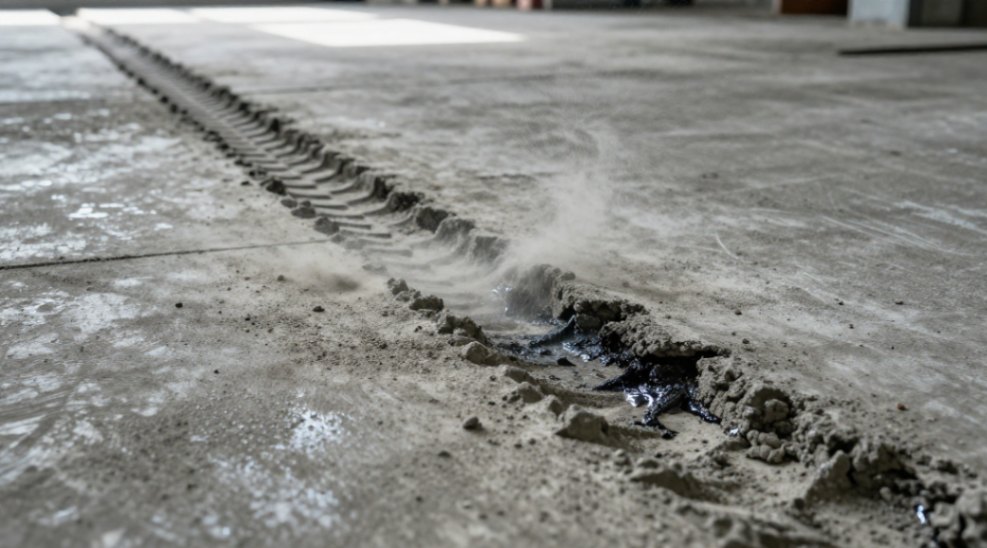
You know the signs. Your concrete warehouse floor produces a never-ending cloud of dust. Forklift tires grind it away. Spills seep in and stain. The surface feels soft and friable. You sweep constantly, but the problem never truly goes away. We’ve all been there. The culprit is often weak, porous concrete at the surface. But what if there was a simple, established chemical treatment that could harden it from within? There is.
What Is Sodium Silicate Solution for Concrete Densification?
At its core, sodium silicate solution for concrete densification is a reactive liquid hardener. Often called ‘water glass,’ it’s a clear, viscous, alkaline solution. Its job is simple: penetrate the concrete’s surface and trigger a permanent chemical reaction that fills pores and binds particles together. This isn’t a coating. It’s a treatment that works from the inside out.
How Does Sodium Silicate Densify Concrete?
The mechanism is a textbook example of concrete chemistry. We apply the solution to the surface. It soaks into the open capillary network of the concrete. Inside, it reacts with two key components naturally present in hardened cement paste:
- Free Lime (Calcium Hydroxide): This is the primary reactant. Sodium silicate reacts with free lime to form additional calcium silicate hydrate (C-S-H).
- Unhydrated Cement Particles: The alkaline solution can also reactivate these particles, promoting further hydration.
The newly formed C-S-H is the same ‘glue’ that holds concrete together. It crystallizes within the microscopic voids. The result? A denser, less permeable, and significantly harder surface layer.
Key Benefits and Primary Use Cases
Why do we choose this material? The benefits are straightforward and proven.
- Effective Dustproofing: This is its number one job. By binding surface particles, it eliminates dusting at the source.
- Surface Hardening: It increases surface hardness and abrasion resistance, which is critical for industrial traffic.
- Cost-Effectiveness: Compared to other chemical densifiers or coatings, sodium silicate is often the most economical option per square foot.
- Preserves Vapor Transmission: Unlike films or sealers, it densifies without sealing the concrete. Moisture vapor can still escape, reducing the risk of blistering.
Its typical use cases are clear-cut: warehouses, distribution centers, manufacturing plants, and any industrial slab where dust control and moderate surface hardening are the primary goals.
The Practical Application Process
Success depends on proper execution. Here’s the standard process we follow.
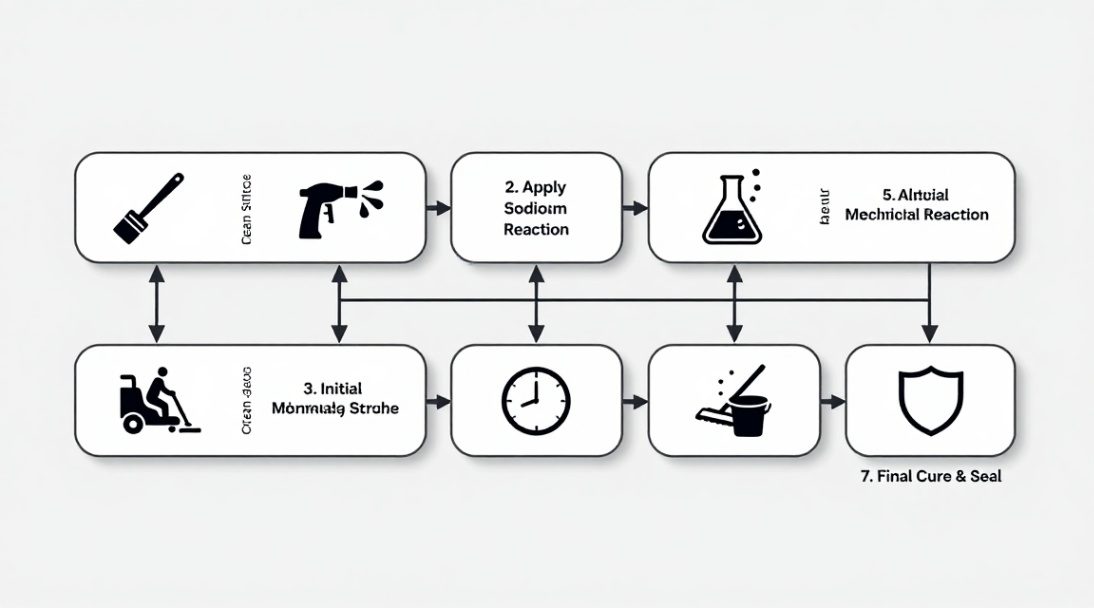
- Surface Preparation: The concrete must be clean and open. We grind or shot-blast to remove contaminants and laitance, exposing a clean, porous surface for maximum penetration.
- Solution Application: We apply the sodium silicate solution using a low-pressure sprayer or roller. The goal is to keep the surface wet for a specified dwell time, allowing deep penetration. Multiple applications are standard.
- Residue Removal: After the final application, any unreacted, milky residue on the surface must be scrubbed and rinsed away with water. Leaving it creates a slippery, weak film.
- Curing: The floor needs 24-72 hours to dry and for the chemical reaction to mature before subjecting it to light traffic.
Critical Limitations and Considerations
This is where experience matters. Sodium silicate is not a cure-all. Knowing its limits prevents costly failures.
- Not a Structural Repair: It does not add structural strength. It only densifies the top 1-4mm.
- Requires Free Lime: It only works on Portland cement-based concrete. It will not react effectively on non-calcareous surfaces like terrazzo or some polymer-modified toppings.
- Alkaline and Slippery When Wet: The solution is caustic. We wear PPE—gloves, goggles, boots. The treated surface can also be slippery when wet until fully cured and cleaned.
- Can Affect Appearance: On colored or decorative concrete, it may cause slight lightening or a hazy ‘bloom.’ We always test a small area first.
Sodium Silicate vs. Other Concrete Densifiers
How does it stack up? The choice often comes down to chemistry and cost.
- Lithium Silicate: More reactive, less likely to leave residue, and doesn’t cause efflorescence. It’s the premium option, often used on polished concrete. Sodium silicate is the cost-effective workhorse for basic industrial hardening.
- Potassium Silicate: Similar to sodium but with slightly different reactivity. The performance differences in standard industrial applications are often marginal for the cost.
- Penetrating Sealers (Silanes/Siloxanes): A different class. These are water repellents that block moisture entry but don’t significantly harden. Sodium silicate hardens but doesn’t repel water. We sometimes use them in sequence for combined hardening and water resistance.
Long-Term Performance and Final Thoughts
A properly applied sodium silicate treatment is permanent. The chemical reaction doesn’t reverse. However, the densified layer will wear over decades under heavy traffic. Maintenance is simple: regular cleaning and occasional reapplication of a maintenance coat every few years in high-wear areas can extend the performance life indefinitely.
From a sustainability angle, it’s a low-VOC, water-based treatment that extends the life of existing concrete, reducing the need for replacement. That’s a solid win.
The bottom line? For dusting, aging industrial concrete slabs where a cost-effective, permanent hardening solution is needed, sodium silicate solution for concrete densification remains a fundamental tool in our arsenal. It’s not flashy. It’s fundamental. And when applied correctly, it solves that dusty-floor headache for good.
Supplier
We are the global leader in lightweight concrete and advanced engineered foam solutions. Known globally for its commitment to research, innovation, and applied expertise, we have been providing engineered foam solutions since the early 2012’s.
We can supply high-quality concrete admixture and foam concrete related products all over the world.
The company has a professional technical department and quality supervision department, a well-equipped laboratory, and equipped with advanced testing equipment and after-sales customer service center.
If you are interested, please feel free and contact us.