Concrete4U | Concrete Admixtures, Tools, and Production Machines

8 Steps to Master Low Slump Concrete Water Reducer for High-Strength Mixes
Direct Conclusion: Water Reducer is Not Optional for Low Slump Mixes
Low slump concrete (typically 25-75 mm) cannot achieve sufficient compaction on its own. You need a low slump concrete water reducer to disperse cement particles efficiently. Without it, you get poor workability and lower strength. Here is the proven process to select, dose, and apply these admixtures in eight actionable steps.
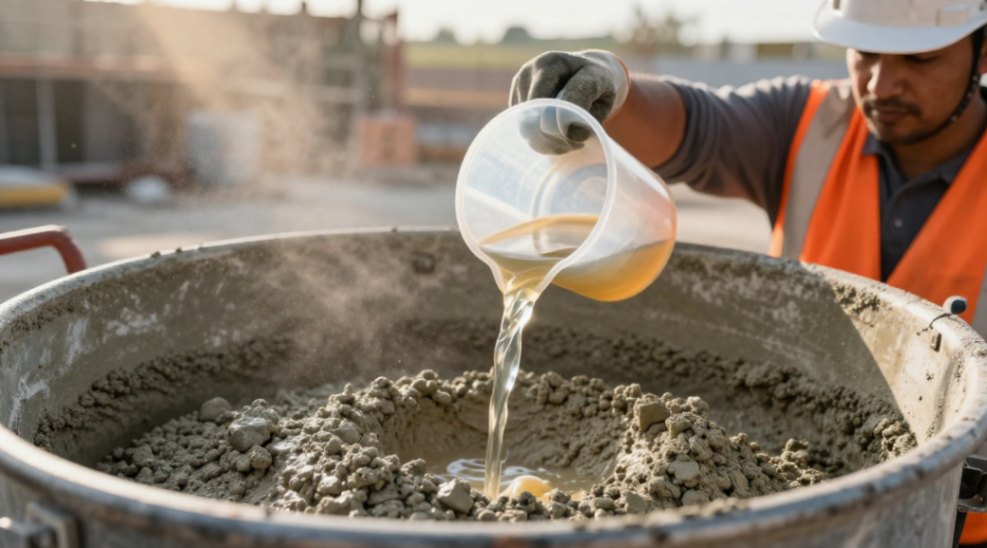
Step 1: Understand Your Mix Design Constraints
Low slump mixes have a water-cement ratio (w/c) between 0.35 and 0.40. This low water content requires a high dose of chemical dispersant to maintain any workability. Measure your exact w/c ratio using ASTM C1603 before adding any admixture. Record the ambient temperature and cement type.
Critical parameters to list before dosing
- Water-cement ratio (target 0.35-0.40)
- Cement type (Type I, III, or blended)
- Fine aggregate fineness modulus (2.6-3.0 typical)
- Coarse aggregate size (max. 19 mm recommended)
Step 2: Select the Correct Chemical Family
Three families dominate low slump concrete water reducer formulations: lignosulfonates (Type A), naphthalene sulfonates (Type F), and polycarboxylate ethers (Type F). Each behaves differently at low w/c ratios. Make your selection based on slump retention requirement.
| Type | Water Reduction | Slump Retention | Best for |
|---|---|---|---|
| Lignosulfonate | 5-10% | 30-60 min | Simple paving |
| Naphthalene sulfonate | 12-18% | 45-90 min | Precast, high-early strength |
| Polycarboxylate ether | 18-30% | 60-120 min | Slipform, high-strength |
Step 3: Calculate Dosage for Low Slump Conditions
Dosage for a low slump concrete water reducer must be expressed as a percentage of cementitious material weight. Start at 0.2% for lignosulfonate, 0.5% for naphthalene, and 0.8% for polycarboxylate. Do not exceed the manufacturer’s maximum. Overdosing causes segregation and rapid slump loss.
Addition sequence matters. Add the reducer to the mixing water in the first 10 seconds of batching. Never add it to dry cement. This ensures uniform dispersion.
Step 4: Execute a Slump Retention Test (Immediate and Delayed)
Measure initial slump per ASTM C143 immediately after mixing. Then remix and test again at 20, 40, and 60 minutes. For low slump concrete water reducer performance, you need 30 mm of retained slump after 45 minutes for slipform operations. Document each measurement.
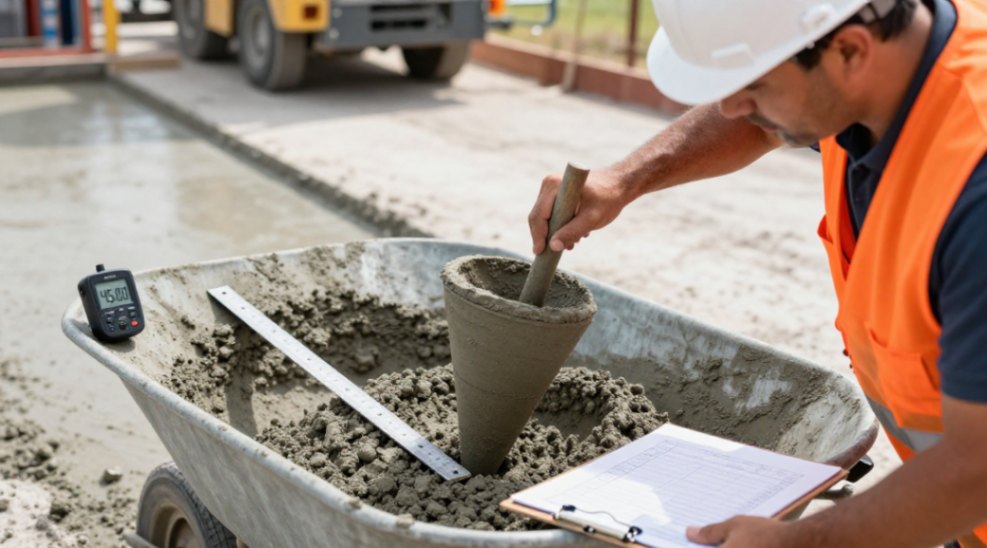
Step 5: Validate Compressive Strength at 1, 7, and 28 Days
A proper low slump concrete water reducer should increase 28-day compressive strength by at least 15% compared to a plain mix at the same w/c. Cast six cylinders per set (two per age). Cure under standard conditions per ASTM C192. If strength increase is below 10%, switch to a Type F superplasticizer.
Step 6: Mitigate Slump Loss with Retarding Admixtures
Low slump mixes lose water quickly. Combine your low slump concrete water reducer with a Type D retarder (0.1-0.3% by cement weight) if placement takes longer than 30 minutes. This combination maintains workability without delaying setting time beyond four hours.
Step 7: Field Adjustment Protocol for Temperature Variation
For every 5°C increase above 25°C, increase the dosage of polycarboxylate by 10%. For every 5°C below 10°C, decrease dosage by 10%. Re-test slump after each adjustment. Many users on Reddit report that ignoring temperature compensation leads to rapid slump loss and rejected loads.
Step 8: Compatibility Check with Supplementary Cementitious Materials (SCMs)
Use a low slump concrete water reducer compatible with fly ash and slag. Test a trial batch with the exact SCM replacement percentage (e.g., 20% fly ash). Measure setting time and slump loss. Some polycarboxylates become less efficient with high slag content. Switch to naphthalene sulfonate if you see a slump drop greater than 30% within 30 minutes.

Quick Reference Table: Test Standards for Low Slump Water Reducer
| Standard | Test | Acceptance Criteria |
|---|---|---|
| ASTM C494 | Water reduction | Type A: ≥5%, Type F: ≥12% |
| ASTM C143 | Slump retention | ≥75% initial slump at 30 min |
| ASTM C39 | Compressive strength | ≥110% of control at 28 days |
| ASTM C157 | Drying shrinkage | ≤0.045% at 28 days |
Common Issues and Remedies
- Segregation: Reduce dosage by 10% and increase fine aggregate by 2%.
- Excessive slump loss: Switch from lignosulfonate to polycarboxylate. Add retarder.
- Overdosing: Add a small amount of cement or fly ash (1% of total) to restore cohesion.
Your Next Move
Run a full trial batch with a high-quality low slump concrete water reducer from a reputable supplier. Test against the eight steps above. Document your slump retention curves and strength data. Share your results in the comments below if you need help troubleshooting.
Supplier
We are the global leader in lightweight concrete and advanced engineered foam solutions. Known globally for its commitment to research, innovation, and applied expertise, we have been providing engineered foam solutions since the early 2012’s.
We can supply high-quality concrete admixture and foam concrete related products all over the world.
The company has a professional technical department and quality supervision department, a well-equipped laboratory, and equipped with advanced testing equipment and after-sales customer service center.
If you are interested, please feel free and contact us.