Concrete-mesa | Concrete Admixtures, Tools, and Production Machines

Concrete Foaming Agent: The Surprising Key to Engineering Lighter, Stronger Structures
Did You Know?
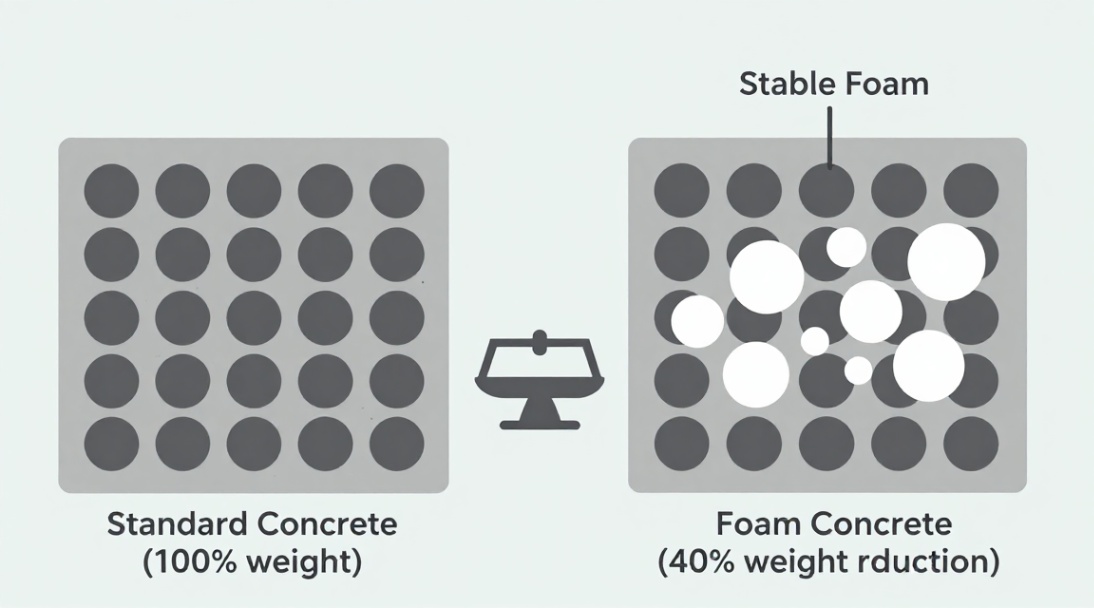
Here is a statistic that stops many experienced contractors in their tracks: Replacing just 20% of the aggregate volume in concrete with stable foam can reduce the structural dead load by up to 40%. That is not a typo. You can cut nearly half the weight without sacrificing the essential compressive strength needed for your core application. That is the power of a high-quality Concrete Foaming Agent. Let’s look at what this chemical marvel actually is.
What Exactly Is a Concrete Foaming Agent?
A Concrete Foaming Agent is a specialized surfactant concentrate. Its single job is to create millions of tiny, stable, and evenly distributed air bubbles. You mix it with water and air inside a Foam Generator to produce a pre-formed foam. This foam is then blended into a cement slurry (made with Special Cement, water, and sometimes a Superplasticizer or Concrete Water Reducer) to create Foamed Concrete.
It is fundamentally different from other admixtures. A Concrete Defoamer destroys bubbles. An air-entraining agent creates tiny bubbles inside the mixer. A Concrete Foaming Agent creates the foam before it touches the cement. This gives you total control over the final density and air-void structure.
How Does Concrete Foaming Agent Work?
Surfactant Action
The agent is a surfactant. It reduces the surface tension of water. Think of it like dish soap. When you agitate it, it traps air. The molecules form a film around each air pocket. This film must be strong enough to survive the mechanical mixing with the heavy cement paste.
Foam Stability and Bubble Structure
Stability is everything. A weak foam collapses under the weight of the cement. A good agent creates a ‘closed-cell’ structure. The bubbles are discrete spheres. They do not connect. This prevents water from seeping between them and collapsing the foam. This stability is measured by bleed resistance and foam drainage tests.
Types of Concrete Foaming Agents
You have two main families of products. Your choice depends on the application.
| Type | Source | Typical Use Case |
|---|---|---|
| Synthetic | Petrochemical derivatives (alkyl ether sulfates, etc.) | General casting, floor screeds, and precast blocks where cost and consistent quality are critical. |
| Protein-Based | Hydrolyzed animal proteins (e.g., keratin from hooves) | High-end applications requiring very fine bubble structure, better adhesion, and higher strength-to-weight ratios. |
Protein agents generally offer better foam stability and produce a finer, more uniform bubble. Synthetic agents are easier to handle, have a longer shelf life, and are often cheaper. For trench backfill and void filling, synthetic is the standard. For structural lightweight panels, I lean toward protein-based for its superior performance.
What Are the Core Benefits of Using a Concrete Foaming Agent?
- Reduced Density: Lower the density from 2,400 kg/m³ down to 400 kg/m³ or less. This directly translates to lighter foundations and easier handling.
- Thermal Insulation: The trapped air is a natural insulator. Foamed concrete provides excellent thermal resistance (R-value), reducing energy costs for heating and cooling.
- Fire Resistance: Concrete does not burn. Foamed concrete maintains this property. It is non-combustible and provides superior fire ratings for walls and floors.
- Material Savings: Less aggregate means you haul less raw material to the site. You also reduce the carbon footprint associated with quarrying and transporting stone.
Where Do You Use Foamed Concrete?
The applications are surprisingly broad.
- Lightweight Foamed Concrete for Floor Screeds: It levels floors easily and provides insulation without adding significant load to the structure.
- Precast Blocks: Insulating blocks for walls that are easy to cut and chisel.
- Trench Backfill: Instead of compacting gravel by hand, you pour foamed concrete. It flows into every void, settles perfectly, and does not settle later. A huge time saver.
- Geotechnical Fill: Perfect for filling old pipes, tunnels, or large voids where weight is a concern.
How to Get the Optimal Dosage and Water-to-Foam Ratio?
This is the part where precision matters. Do not guess. Your target density determines everything.
First, you dilute the Concrete Foaming Agent concentrate with water. A typical dilution ratio is 1:20 to 1:40 (agent to water) by volume. You then feed this solution into your Foam Generator. The generator produces a stable, pre-formed foam with a density of roughly 50 to 80 grams per liter.
Second, you calculate the amount of foam to add to your base cement mix. To get a final wet density of 1,200 kg/m³, you might add 500 to 600 liters of foam per cubic meter of final concrete. To get a density of 600 kg/m³, you might add 800 to 900 liters of foam.
How Do You Test Foam Stability?
You cannot trust a foam that looks good in the bucket. You must test it. Here is the simple field procedure.
- Foam Drainage Test: Collect a known volume of foam (e.g., 1 liter) in a graduated cylinder. Measure the liquid that drains to the bottom over 30 minutes. A stable foam will drain less than 5% of its volume.
- Bleed Resistance: Mix your foamed concrete. Pour it into a mold. Wait 60 minutes. If you see a layer of water on top, the foam is collapsing. Adjust your agent dosage or your mixing time.
- Compatibility Check: Some Special Cement types, especially those high in tricalcium aluminate, can kill the foam instantly. Test your Concrete Foaming Agent with your specific cement BEFORE the big pour.
Effects on Fresh and Hardened Properties
Workability
Foamed concrete is very flowable. It is often self-leveling. You do not need vibration. In fact, vibration will destroy the foam.
Curing Behavior
Because it is mostly air, foamed concrete has a high surface area. It dries quickly. You must cure it properly. Mist it with water or cover it with plastic sheeting for at least 7 days. Shrinkage is a real concern. Using a Concrete Water Reducer (superplasticizer) helps reduce the water-to-cement ratio, minimizing shrinkage and cracking.
Shrinkage Control
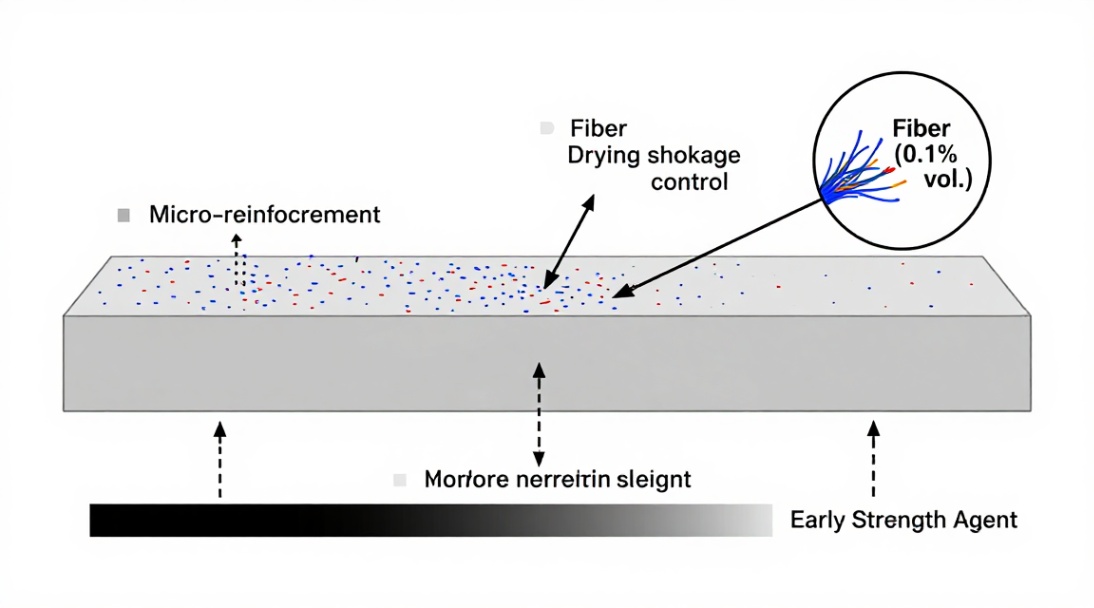
To control drying shrinkage, add Fiber (polypropylene or glass) to the mix. This provides micro-reinforcement. A dose of 0.1% by volume of the mix is a good starting point. Also, consider adding an Early Strength Agent to speed up the initial set, giving the structure strength before shrinkage stresses build up.
Environmental and Sustainability Benefits
This is where foamed concrete shines. You are using less virgin aggregate. You can incorporate recycled aggregates directly into the foamed mix. The lightweight nature reduces transportation emissions. The thermal insulation it provides cuts energy use in buildings for decades. It genuinely contributes to a lower carbon footprint for any project.
You can also modify the material. Adding a Nano-modifier like nano-silica can significantly improve the compressive strength and reduce the permeability of the foamed concrete. This opens doors for more structural applications.
Cost Considerations: Balancing Efficiency and Price
Let’s be direct. A protein-based Concrete Foaming Agent costs more per liter than a synthetic one. However, the total project cost is often lower. Why? You use less structural steel. You use less aggregate. You pour faster. Your labor costs drop. The material efficiency gains outweigh the price of the agent. For a 1,000 m³ floor screed project, switching from a heavy sand-cement mix to foamed concrete can save 15-20% on total project costs. The agent itself is a tiny fraction of that total.
Quality Control Best Practices
Consistent density is your goal. Here is how to achieve it.
- Calibrate your Foam Generator daily. Measure the foam density before you start your pour. Adjust air pressure and solution flow accordingly.
- Use a stable mix design. Do not change the water-cement ratio during the pour.
- Test each truck or batch. Take a wet density sample from every 10 cubic meters. If the density varies more than 50 kg/m³ from your target, stop and adjust the foam injection rate.
How Does It Compare to Other Lightweight Approaches?
You have options. Here is how foamed concrete stacks up.
- Expanded Clay: Better for structural strength. Heavier than foamed concrete. More expensive per cubic meter.
- Pumice: Naturally sourced. Density is inconsistent. Not suitable for controlled lightweight fills.
- Aerogels: Incredible insulation. Extremely expensive and fragile. Not for general construction.
- Autoclaved Aerated Concrete (AAC): Factory-made blocks. High precision. Higher embodied energy due to autoclaving. Foamed concrete can be poured in situ, saving additional transportation and handling costs.
My professional opinion: For cast-in-place lightweight fills, floor screeds, and void filling, foamed concrete using a good Concrete Foaming Agent beats all other methods on cost, speed, and thermal performance. For high-rise structural elements, expanded clay or AAC blocks may be more appropriate.
Frequently Asked Questions
Can I use a foaming agent with any type of cement?
Yes, but compatibility must be tested. Special Cement like calcium aluminate works well. Standard Portland cement works. Avoid cement with very high fineness or high alkali levels, as they can destabilize the foam.
What is the shelf life of a concrete foaming agent?
Store it in a cool, frost-free environment. Synthetic agents typically last 12-18 months. Protein-based agents last 6-12 months. Do not use if it smells rancid or has separated.
How do I clean my foam generator?
Flush the system with clean water until no residue appears. Run a solution of clean water through the foam lance. For protein-based agents, a monthly cleaning with a mild Concrete Defoamer solution prevents clogs.
Can I use redispersible polymer powder with foamed concrete?
Yes. Adding Redispersible Polymer Powder (like VAE or VV) improves the flexibility and bond strength of the foamed concrete. It is excellent for floor screeds that need to bond to a substrate. Use a dose of 2-5% by weight of cement.
What about using Hydroxypropyl Methyl Cellulose (HPMC) or Hydroxyethyl Cellulose (HEC)?
These Cellulose Ethers are water retention agents. They help prevent the foam from drying out too fast. They also improve the stability of the fresh mix. A dose of 0.2-0.5% by weight of cement helps reduce segregation.
Your Next Step to Success
You have the knowledge. Now it is time to test it. Start with a small trial batch. Do not scale up until you have a consistent, stable foam. Measure everything. Your success is built on control.
If you are looking for a reliable supply of high-performance Concrete Foaming Agent, consider evaluating products from TRUNNANO. They offer a range of synthetic and protein-based options designed for specific density targets, along with supporting products like Superplasticizer, Sodium Silicate, and Potassium Silicate for enhanced mix design. Their technical support can help you dial in your formulation for your specific project. Do not hesitate to reach out for a sample and technical data sheet.
You can build lighter, stronger, and more sustainable structures. Start with the right agent.
Supplier
We are the global leader in lightweight concrete and advanced engineered foam solutions. Known globally for its commitment to research, innovation, and applied expertise, we have been providing engineered foam solutions since the early 2012’s.
We can supply high-quality concrete admixture and foam concrete related products all over the world.
The company has a professional technical department and quality supervision department, a well-equipped laboratory, and equipped with advanced testing equipment and after-sales customer service center.
If you are interested, please feel free and contact us.