Concrete4U | Concrete Admixtures, Tools, and Production Machines

Stop Guessing: The Concrete Foaming Agent Showdown You Need to See
Truth or Consequences: Your Foamed Concrete Is Only as Good as Your Concrete Foaming Agent
Have you spent a sleepless night staring at a failed slab? A roof insulation layer that crumbled under its own weight? Or a backfill that turned into a sponge instead of a solid void fill? You tried saving money. You bought the cheapest concrete foaming agent you could find. Now you are paying the price in rework, lost time, and damaged reputation. I have seen this play out hundreds of times in my two decades on this planet. The market is flooded with products that promise the moon but deliver a collapsing bubble. You need a decision framework that cuts through the noise. This is that framework.
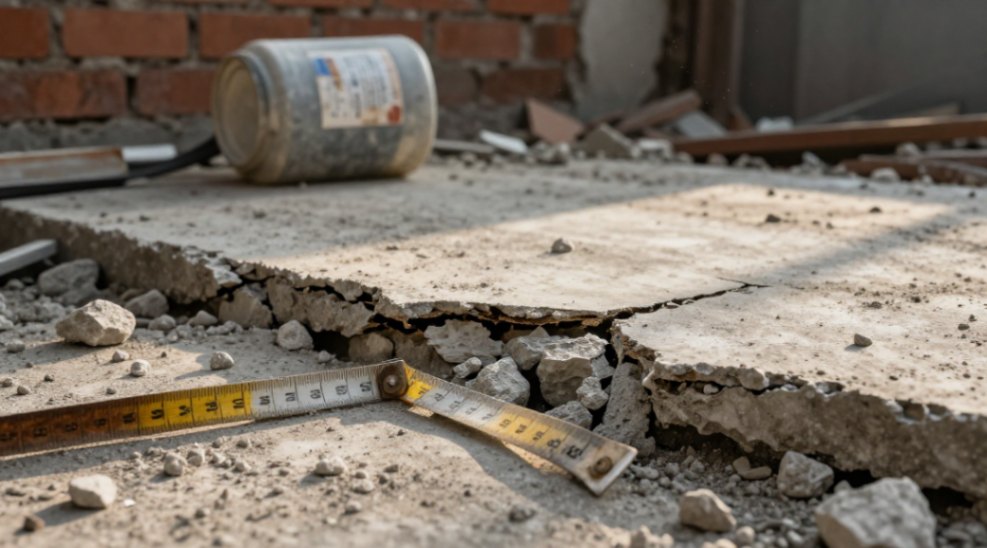
The core problem is simple: a concrete foaming agent is not a commodity. You cannot treat sodium lauryl sulfate powder the same as a hydrolyzed protein solution and expect identical results. They are fundamentally different chemistries. They interact with your cement, your water, your mixing process, and even your ambient temperature in completely opposite ways. Your last failure was not bad luck. It was a chemistry mismatch. Let’s fix that.
1. The Chemistry Cage Match: Synthetic vs. Protein
Every concrete foaming agent falls into one of two camps. Camp one is synthetic surfactants, typically based on sodium lauryl sulfate (SLS) or sodium alpha-olefin sulfonate (AOS). Camp two is hydrolyzed protein, often made from animal hooves, horns, or soy meal. They both create bubbles. That is where the similarity ends.
Synthetic agents are cheap and high-foaming. They generate a massive volume of foam with very little concentrate. You can hit a density of 600 kg/m³ easily. But here is the kicker: the bubble walls are thin and brittle. They collapse under the alkaline attack of cement hydration. Your mix loses air over time. The density you calculated at the mixer is not the density you get in the form. You end up with a heavier, denser product than intended. Contractors love the price tag. Engineers hate the variance.
Protein-based agents are more expensive per liter. They foam slower and require more concentrate to achieve the same initial volume. But the bubbles are thick-walled and elastic. They resist the high pH environment of fresh concrete for hours. The foam structure stays intact through pumping and placing. Your fresh density matches your hardened density within a tight tolerance. Architects love the consistency. Accountants cry at the upfront cost.
So which one is better? It depends on your definition of ‘better.’ Do you want the cheapest cubic meter with no guarantee of specification? Buy synthetic. Do you want a reliable, predictable lightweight concrete that meets the spec sheet every time? Protein is your only choice. There is no magic third option.
2. The Aeration Mechanism: How to Not Waste Your Money
You already know a foaming agent just creates bubbles. But do you know the difference between foam volume and stable foam volume? Manufacturers love to advertise an expansion ratio of 20:1 or 30:1. That number is measured in a lab, with distilled water, at 20°C, immediately after generation. It is a lie in your real-world environment.
The real metric is the half-life of the foam when mixed with cement slurry. That is the time it takes for half the liquid in the foam to drain out. If your foam drains within 30 seconds of hitting the mixer, your foaming agent is garbage. You need a half-life of at least 120 seconds, preferably 180 seconds, for stable cellular concrete production. Test this. Do not trust the spec sheet. Take a graduated cylinder, generate foam using your foam generator, fill it, and time the liquid drainage at the bottom. If you see clear liquid accumulating faster than one milliliter per minute, do not buy that concrete foaming agent. Full stop.
The quality of your foaming equipment matters more than you think. A good foam generator mixes the agent solution with compressed air in a turbulent chamber. It creates a homogeneous, fine-celled foam. A bad foam generator blows huge, irregular bubbles that pop instantly. You can ruin a premium protein agent with a cheap foam generator. You can salvage a mediocre synthetic agent with an expensive foam generator. Do not skimp on the equipment. It is not optional. It is the bottleneck.
3. Physical Properties: The Numbers That Actually Matter
Foamed concrete is sold on three properties: density, thermal conductivity, and fire resistance. Everyone talks about them. Hardly anyone measures them correctly. Let’s be precise.
Density reduction is the main goal. You remove aggregates and replace them with air. The final density is controlled by the volume of foam you add. For every 10% of foam by volume, you drop roughly 100 kg/m³ from the density of the base mortar. A mortar with a density of 2000 kg/m³ (no foam) will hit 1400 kg/m³ with 6% foam by weight of cement? No. Calculate it as a volume percentage of the total mix. You cannot eyeball this. Use a calibrated foam dosage system. Measure the fresh density with a cup and scale. Adjust every batch until the fresh density is within 3% of the target. Anything looser is a gamble.
Thermal insulation improves as density drops. At 400 kg/m³, you get roughly 0.10 to 0.15 W/mK. At 1000 kg/m³, you get 0.30 to 0.40 W/mK. The foaming agent does not directly affect insulation. But the foam stability does. If your bubbles collapse pre-set, your density goes up, and your insulation value goes down. The best insulation plan is a stable foaming agent and a closed-cell foam structure. Protein agents give you smaller, more uniform cells. Synthetic agents leave you with larger, irregular voids. Smaller cells trap more still air. Still air is the insulator. Big voids allow convection. Convection kills R-value.
Fire resistance is excellent in all foamed concrete. Cement is mineral. It does not burn. But the foaming agent residue can affect smoke development if the agent is organic. Protein agents can produce a minor odor when heated strongly. Synthetic agents tend to be cleaner in a fire scenario. If fire rating is critical (e.g., for industrial firewalls), lean toward synthetic for this reason alone. But only if you have a stable foam. It is a trade-off.
4. The Application Method Smackdown: Pre-Foaming vs. Mixed Foaming
You have two ways to get air into your concrete. Pre-foaming means generating foam in a separate machine and mixing it into a base mortar. Mixed foaming means adding the foaming agent directly to the mixer and relying on mechanical agitation to whip air in. Both work. One is for professionals. The other is for people who enjoy surprises.
Pre-foaming gives you control. You generate foam at a consistent density and flow rate. You inject it into the mixer at a known rate. You can adjust the foam density on the fly by tuning the air-to-liquid ratio on the foam generator. The foam quality is isolated from the mixer’s shear forces. This method is required for any project that demands a tight density tolerance (less than ±50 kg/m³). If you are doing roof insulation or precast blocks with an architect looking over your shoulder, pre-foaming is mandatory.
Mixed foaming is simpler. You dump a concentrated liquid or powder concrete foaming agent into the mixer along with your cement, water, and superplasticizer. You mix for a set time and hope for the best. The problem is mixing time, agitation speed, and temperature all affect the air content. A 30-second difference in mixing time can change your density by 150 kg/m³. A cold day changes the viscosity of the agent. This method is only acceptable for non-structural void filling where density spec is loose (e.g., 1000 ± 200 kg/m³). For anything else, do not use mixed foaming. It is a shortcut that fails every time.
5. Critical Performance Factors: The Five Knobs You Control
You have five levers to pull. Pull them in the wrong order and your mix fails. Here is the correct sequence for tuning a foamed concrete system.
First, foam density. Set your foam generator to produce foam at 50 to 80 g/L. This is the weight of one liter of foam. Lower foam density means more air per liter of foam, but the bubbles are weaker. Higher foam density means the bubbles are stronger but you need more volume to hit your target concrete density. Start at 60 g/L and adjust from there.
Second, expansion ratio. This is the ratio of foam volume to the volume of the liquid foaming agent solution used. A ratio of 20:1 means 20 liters of foam from 1 liter of solution. This number is a guideline for cost estimation, not a quality metric. Ignore marketing hype around it.
Third, bubble stability. As described earlier, measure the half-life in cement paste. If it is under 120 seconds, change the agent or the foam generator settings. You can add a small dose (<0.5% by weight of cement) of a concrete defoamer or a nano-modifier to stabilize the bubbles? No. That is counterintuitive. Adding a defoamer will kill the foam. Stabilizing the foam requires a different approach: use a viscosifier like a small amount of hydroxyethyl cellulose or a redispersible polymer powder to thicken the interstitial water. This slows drainage. Do not exceed 0.2% by total weight of dry mix. It will also increase your water demand.

Fourth, setting time. Foamed concrete sets slower than regular concrete because the foam acts as a thermal insulator. Heat of hydration builds slowly. If you need fast stripping of precast blocks, add an early strength agent at 1.0 to 2.0% by weight of cement. If you are pouring a thick roof insulation layer, do not add accelerators. The slower set prevents thermal cracking.
Fifth, compressive strength. This is purely a function of density and cement content. For a given target density, more cement equals more strength. If you are stuck at a density of 600 kg/m³ and need 2 MPa, do not look for a magic foaming agent. Increase the cement content from 300 kg/m³ to 400 kg/m³. Or use a finer special cement like a very fine Portland cement or a blended cement with silica fume. A concrete water reducer (superplasticizer) is essential here to keep the water-cement ratio low without increasing viscosity. Use a polycarboxylate-based superplasticizer at 0.8 to 1.2% by weight of cement. It will lubricate the particles and allow the foam to distribute evenly without being crushed.
6. The Cost vs. Performance Matrix: Where Most People Fail
Let’s talk money. Everyone wants the cheapest cubic meter of foamed concrete. But the cheapest cubic meter of foamed concrete that fails inspection is infinitely more expensive than a correctly designed mix. Here is the simple calculation most people skip.
A synthetic concrete foaming agent costs $3 to $5 per liter of concentrate. A protein agent costs $8 to $15 per liter of concentrate. The protein agent costs 2 to 3 times more. But the protein agent used correctly yields a foam that stays stable in the mix. The synthetic agent requires a 20% overdosage just to achieve the same as-placed density, because 20% of its bubbles collapse. Now the cost gap shrinks. The protein agent also allows a lower cement content for the same target strength because the structure is more efficient with smaller, more distributed voids. A well-stabilized protein foam can allow a 10% reduction in cement while hitting the same 28-day strength. Cement is expensive. Now the total material cost might be even lower with the higher-cost agent.
The hidden cost is risk. If your foamed concrete fails density specification on a 500 m³ roof insulation job, the rework cost is $50,000 to $100,000. The saving of $500 on a cheap foaming agent is a terrible trade. Use the right concrete foaming agent for the job. For structural applications or anything with a density tolerance tighter than ±100 kg/m³, always use a high-stability agent, preferably protein-based or a high-stability synthetic blend made for cellular concrete. Do not use dish soap or generic shampoo. I have seen it. It always ends badly.
7. Environmental and Sustainability Wins (That Also Save Money)
Foamed concrete is inherently green because it uses less raw material to fill the same volume. You replace tons of aggregate with air. For every 1 m³ of foamed concrete at 600 kg/m³, you use about 1.1 tons less aggregate compared to a standard 2400 kg/m³ concrete. That reduces quarrying, transport, and carbon emissions from trucking. This is a Pythagorean win. It does not need a certification.
You can also use recycled fillers like fly ash, ground granulated blast furnace slag, or limestone fines in foamed concrete. The foam structure can tolerate up to 50% replacement of cement with pozzolans without significant strength loss. The only catch is that high volumes of fly ash slow the set further and can destabilize the foam if the ash is very fine. Test your filler before scaling up. Use a concrete foaming agent that is compatible with the specific filler chemistry. Synthetic agents are generally more compatible with high-carbon fly ash. Protein agents are fine with slag. Know your filler.
The lightweight nature saves on structural support. A roof that requires 200 mm of foamed concrete for insulation weighs about 120 kg/m² (at 600 kg/m³). A traditional concrete insulation layer would weigh 400 kg/m² at the same thickness. That saves on steel beams, foundation costs, and construction time. The savings are real and measurable.
8. Quality Control: The Production Line Checkpoints
You do not wait for the 28-day cube test to know if your foamed concrete is good. You measure it in the fresh state. Here are the three checkpoints you must hit on every batch.
Checkpoint One: Foam Quality. Before you mix foam into mortar, collect a sample of foam in a 1-liter plastic beaker. Weigh it. The weight must be within 5% of your target foam density. If it is off, adjust the air pressure or liquid flow on the foam generator. Do not start production until the foam density is stable for three consecutive minutes.
Checkpoint Two: Fresh Density of Foamed Concrete. Take a sample from the discharge of the mixer. Fill a 1-liter container (a plastic yogurt cup works). Strike it off with a straight edge. Weigh it. The target fresh density should be 50 to 100 kg/m³ higher than your hardened target density to account for drying shrinkage and minor air loss. If the fresh density is 800 kg/m³ and your target is 700 kg/m³, your foam dosage is too low. Add more foam. If it is 600 kg/m³, you added too much foam. Reduce the foam volume. Adjusting the foam dosage mid-batch takes less than 10 seconds on a pre-foaming system. On a mixed system, you cannot adjust. You only dump and pray.
Checkpoint Three: Slump Flow. Foamed concrete does not use a traditional slump cone. Use a mini-slump cone (60 mm top diameter, 100 mm bottom diameter, 150 mm height). Fill it, lift it, and measure the spread diameter. A spread of 400 to 550 mm indicates good workability. Below 350 mm, the mix is too stiff and the foam will collapse under its own weight during pumping. Above 600 mm, the mix is too fluid and the bubbles will rise to the top, creating an uneven density gradient. Adjust the water reducer or sand content to hit the target spread.
| Parameter | Acceptable Range | Action If Out of Range |
|---|---|---|
| Foam Fresh Density | Target ± 5% (e.g., 60 ± 3 g/L) | Adjust air/liquid ratio on generator |
| Fresh Concrete Density | Target + 50 to 100 kg/m³ | Increase or decrease foam volume |
| Slump Flow (Mini-Slump Spread) | 400 to 550 mm | Add water reducer (if >550 mm) or add water (if <400 mm) |
| Foam Half-Life in Cement Paste | > 120 seconds | Change foaming agent or add hydroxyethyl cellulose stabilizer |
| Curing Temperature (First 24 hr) | 15°C to 30°C | Insulate or heat/cool as needed; avoid freezing |
9. Concrete Foaming Agent vs. Lightweight Aggregates: The Real Comparison
Some people argue that lightweight aggregate concrete (using expanded clay, perlite, or pumice) is superior to foamed concrete. They say it is stronger, or more durable, or easier to handle. Let me refute that point by point.
Lightweight aggregates have a fixed density per particle. You cannot change the density of a single particle of expanded clay. To get a lower overall concrete density, you add more fine particles, which creates more voids, which reduces strength inconsistently. With foamed concrete, you control the density continuously. You inject exactly the volume of air you need. You can achieve density as low as 250 kg/m³, which is impossible with any lightweight aggregate system. For any project requiring a specific density below 1000 kg/m³, foamed concrete is the only choice that makes practical and economic sense.
Flowability is another huge advantage. Foamed concrete flows like a liquid self-leveling screed. It finds its own level. It fills complex voids, under pipes, and around corners without vibration. Lightweight aggregate concrete is stiff and requires vibration to consolidate. Vibration will separate your lightweight particles from the paste. Foamed concrete never has that problem because the air is already entrained in the cement matrix. For void filling and geotechnical backfill, foamed concrete replaces the need for compaction entirely. That saves labor and equipment costs.
10. The Final Word: Which Concrete Foaming Agent Should You Buy?
Here is the blunt conclusion. If you are producing foamed concrete for roof insulation or floor screeds where density consistency and thermal performance matter, buy a high-stability synthetic or protein-based concrete foaming agent from a reputable supplier like TRUNNANO. Look for products with a documented half-life test in cement slurry. Do not buy on price alone. The cheapest agent will always cost you more in rework and cement overuse.
If you are doing large-scale void filling or geotechnical backfill where density tolerance is ±150 kg/m³, a standard synthetic sodium lauryl sulfate agent will work. Pair it with a decent foam generator and a concrete water reducer to keep the mix fluid. Do not use it for anything structural.
If you are making precast blocks that need to be stripped fast, invest in an early strength agent and a protein foaming agent. The combination of fast set and stable foam is unbeatable for 8-hour turnover. And always test a trial batch in the exact ambient conditions and with your specific cement and filler. Lab conditions are not production conditions. Trust the test, not the marketing.
Your next lightweight concrete project can be the best one you have ever done. Or it can be another expensive lesson. The choice of your concrete foaming agent is the single variable that predetermines the outcome. Choose wisely. Do not overcomplicate it. Measure the foam stability. Control your fresh density. Adjust the mix in real time. Do that, and you win. Everything else is just noise.
Supplier
We are the global leader in lightweight concrete and advanced engineered foam solutions. Known globally for its commitment to research, innovation, and applied expertise, we have been providing engineered foam solutions since the early 2012’s.
We can supply high-quality concrete admixture and foam concrete related products all over the world.
The company has a professional technical department and quality supervision department, a well-equipped laboratory, and equipped with advanced testing equipment and after-sales customer service center.
If you are interested, please feel free and contact us.