Concrete4U | Concrete Admixtures, Tools, and Production Machines

How Are Advanced Admixtures Revolutionizing 3D-Printed Concrete Construction?
1. Introduction
Just 24 hours ago, a team at ETH Zurich unveiled a new 3D-printed pedestrian bridge in Switzerland that relies entirely on a custom-engineered concrete mix infused with high-performance admixtures. This milestone highlights how modern construction is leaning on advanced concrete chemicals to push the boundaries of what’s possible—not just in speed or cost, but in sustainability and aesthetics too.
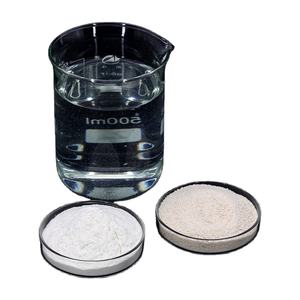
At the heart of this innovation? Admixtures. Far from being mere ‘add-ons,’ these concrete additives are now mission-critical in niche applications like 3D printing, where precision, flowability, and rapid setting are non-negotiable. Let’s dive into how specific admixture types are transforming one of construction’s most futuristic frontiers.
2. Why 3D-Printed Concrete Demands Specialized Admixtures
Unlike traditional poured concrete, 3D-printed structures are built layer by layer without formwork. This means the mix must be fluid enough to extrude smoothly through a nozzle yet stiff enough to hold its shape immediately after deposition. Achieving this balance is impossible without carefully selected admixtures.
The right combination of water reducers, accelerators, and fibers ensures the concrete remains workable during printing while gaining early strength fast enough to support subsequent layers. Without them, the structure could slump, crack, or fail entirely.
3. Superplasticizers: The Flow Masters
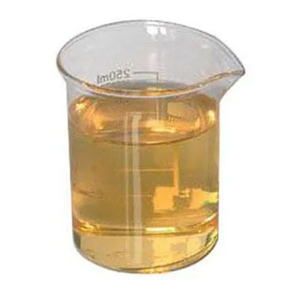
Superplasticizer in concrete—especially polycarboxylate ether (PCE)-based formulations—is arguably the MVP of 3D printing mixes. These high-range water reducing admixtures drastically cut water content while maintaining exceptional flow, which is essential for smooth extrusion.
Unlike older naphthalene or melamine-based superplasticizers, modern PCE superplasticizers offer superior control over rheology. They allow engineers to fine-tune viscosity without compromising strength, making them the best admixture for concrete in digital fabrication.
- Polycarboxylate superplasticizer enables low water-cement ratios (<0.35)
- Enhances pumpability without segregation
- Compatible with mineral admixtures like fly ash or silica fume
4. Accelerators and Retarders: Timing Is Everything
In 3D printing, curing time isn’t just about schedule—it’s structural. Too slow, and lower layers deform under new ones; too fast, and the nozzle clogs. That’s where accelerating admixtures for concrete and concrete retarder admixtures come in.
Concrete accelerator curing time can be reduced to under 10 minutes using tailored formulations, often based on calcium nitrate or proprietary blends like Chryso admixture systems. Conversely, surface retarder concrete agents may be used in hybrid techniques to delay setting just long enough for robotic troweling or texturing.
The key is dynamic control: some advanced systems even inject accelerator only at the print head, allowing the bulk mix to stay stable in the hopper while hardening instantly upon deposition.
5. Fiber Reinforcement: Building Strength Without Rebar
One of the biggest advantages of 3D printing is eliminating traditional rebar—but that doesn’t mean skipping reinforcement. Enter fibers for concrete: polypropylene fibres for concrete, steel fibers for concrete, and even carbon fiber reinforcement in concrete are now standard in printable mixes.
These reinforcement fibers for concrete improve tensile strength, reduce cracking, and enhance ductility. Macro fibers (like those in Fibermesh concrete) provide post-crack load-bearing capacity, while microfibers control plastic shrinkage.
Notably, coconut fiber reinforced concrete is gaining traction in eco-conscious projects, proving that natural fibers can also play a role—though synthetic options remain dominant for structural reliability.
6. Waterproofing and Durability Additives
Since 3D-printed walls often have complex geometries and layered interfaces, long-term durability hinges on integral protection. That’s where waterproofing admixture for concrete shines.
Crystalline waterproofing admixture reacts with cement to form insoluble crystals that block capillary pores, offering permanent moisture resistance. Similarly, integral waterproofer and cement waterproofing additive solutions eliminate the need for external membranes—critical when surface access is limited.
Air entraining admixture is less common in 3D printing (due to potential layer adhesion issues), but when used carefully, air entraining concrete can boost freeze-thaw resistance in cold climates.
7. Real-World Impact and Future Outlook
From emergency shelters in disaster zones to luxury homes with organic curves, 3D-printed concrete is scaling fast—and it’s doing so thanks to smart admixture chemistry. Companies like COBOD and ICON already rely on proprietary blends of superplasticizer admixture, concrete accelerator, and fiber additives to deliver turnkey printed structures.
As research continues, expect to see more bio-based plasticizer for concrete, self-healing admixtures, and even color-integrated mixes using white cement and tinted concrete powders—enabling not just function, but beauty.
8. Conclusion
Admixtures are no longer just performance enhancers—they’re enablers of an entirely new construction paradigm. In 3D-printed concrete, the synergy between superplasticizers, accelerators, fibers, and waterproofing admixtures unlocks unprecedented speed, strength, and design freedom. As this technology matures, the line between material science and architecture will blur, all thanks to the quiet power of concrete chemicals working behind the scenes.
Our Website founded on October 17, 2012, is a high-tech enterprise committed to the research and development, production, processing, sales and technical services of ceramic relative materials such as How. Our products includes but not limited to Boron Carbide Ceramic Products, Boron Nitride Ceramic Products, Silicon Carbide Ceramic Products, Silicon Nitride Ceramic Products, Zirconium Dioxide Ceramic Products, etc. If you are interested, please feel free to contact us.