Concrete-mesa | Concrete Admixtures, Tools, and Production Machines

Photocatalytic Concrete Failures: The Top 5 Nano-Modifier Mistakes You Must Avoid
Is Your “Self-Cleaning” Concrete Failing Already?
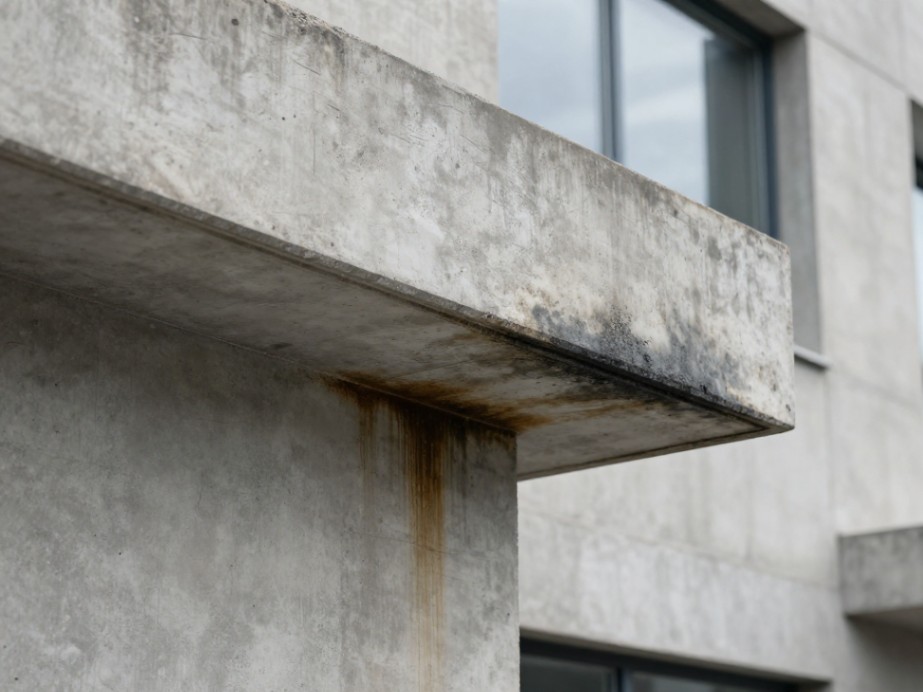
Your vision was clear: a facade that stays pristine, breaking down grime and pollutants with sunlight. You specified a nano-modifier for photocatalytic self-cleaning concrete. But within months, you notice uneven staining, discoloration, or worse, no visible effect at all. The maintenance team is still pressure washing. Many architects and engineers share this frustration. On forums like Reddit, a recurring complaint emerges: “We followed the spec, but the photocatalytic activity seems absent after one winter.” This points directly to application and specification errors. From two decades in the field, I can tell you that success hinges on avoiding critical mistakes.
How a Nano-Modifier Creates Photocatalytic Concrete
A nano-modifier for photocatalytic self-cleaning concrete is not a simple additive. It is typically a suspension of titanium dioxide (TiO2) nanoparticles engineered for dispersion and stability. The photocatalytic mechanism is precise. When ultraviolet (UV) light photons strike the TiO2, they generate electron-hole pairs. These highly reactive sites on the concrete surface decompose organic pollutants-like vehicle soot, algae, and oils-into harmless substances like carbon dioxide and water. This process also oxidizes gaseous air pollutants like nitrogen oxides (NOx). However, the nano-modifier must be correctly integrated and protected to function.
The 5 Fatal Errors in Photocatalytic Concrete Specification
These errors compromise performance, waste budget, and damage professional reputations. Avoid them at all costs.
1. Mistaking Surface Coatings for Integral Modifiers
This is the most common and costly error. A spray-on coating creates only a superficial photocatalytic layer. It erodes with weathering, foot traffic, or cleaning. The activity disappears. The correct method integrates the nano-modifier directly into the concrete mix or the cementitious topping. This ensures the photocatalytic particles are distributed throughout the wear layer, providing long-term, renewable activity as the surface slowly wears.
2. Ignoring the Binder’s Role in Particle Dispersion
Simply dumping TiO2 powder into a mixer is ineffective. Nanoparticles agglomerate. You get clusters, not a uniform dispersion. This drastically reduces the active surface area. The nano-modifier must be pre-dispersed in a compatible liquid carrier or use a specialized admixture system designed for colloidal stability in the high-pH cement environment.
3. Overlooking Curing and Early-Age Protection
Photocatalytic reactions begin immediately upon exposure to UV light. If the concrete surface is not properly cured and protected from premature drying, the nascent reactions can interfere with the critical hydration process. This leads to a weak, dusty surface layer that lacks both mechanical strength and lasting photocatalytic efficiency. Curing compounds must be verified as compatible or omitted.
4. Assuming All Nano-TiO2 is Equal
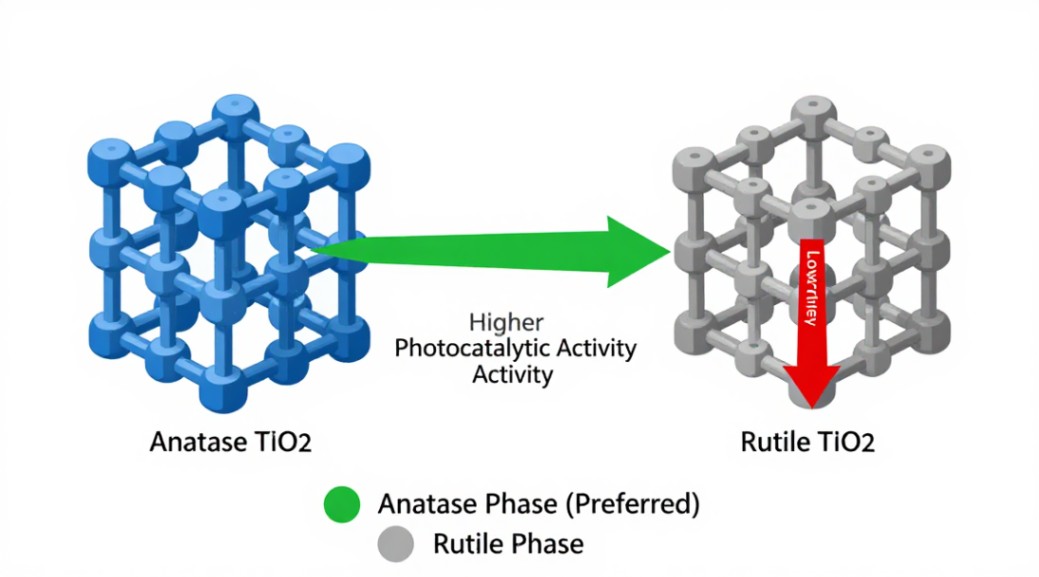
The crystalline phase is critical. The anatase phase of TiO2 possesses far higher photocatalytic activity than the rutile phase. Furthermore, unmodified anatase primarily responds to UV light. For enhanced performance under visible light, the nano-modifier may be doped with other elements (e.g., nitrogen, carbon). Specifying “TiO2” is insufficient. You must require a datasheet confirming the anatase content and any doping for visible-light activation.
5. Neglecting Performance Verification and Baseline Data
How do you measure success? Without a pre-construction performance test or a control sample, claims are meaningless. You cannot visually assess NOx reduction. Establish a verification protocol. This can involve standardized tests (e.g., measuring the degradation of a methylene blue stain under controlled UV light) or installing a reference panel of untreated concrete for direct visual comparison over time.
Critical Factors: A Side-by-Side Comparison
This table outlines the stark differences between correct and incorrect approaches to using a nano-modifier for photocatalytic self-cleaning concrete.
Table: Correct vs. Incorrect Application of Photocatalytic Nano-Modifiers
| Factor | Correct Application & Specification | Common Error & Result |
|---|---|---|
| Integration Method | Integral addition to mix or cementitious overlay. | Reliance on post-hardening surface coatings. |
| Result | Durable, renewable active surface layer. | Short-lived effect; coating wears off rapidly. |
| Particle Dispersion | Use of a pre-dispersed, stabilized nano-suspension. | Adding raw nano-powder directly to the mixer. |
| Result | Uniform distribution, maximizing reactive surface area. | Agglomeration, poor performance, material waste. |
| Concrete Curing | Strict wet-curing (e.g., burlap, water mist) for 7 days. | Use of incompatible film-forming curing compounds. |
| Result | Strong matrix with embedded, protected catalysts. | Sealed surface or weak matrix; inhibited activation. |
| TiO2 Type | Specification of high-purity anatase phase, possibly doped. | Accepting generic “TiO2” without phase specification. |
| Result | High photocatalytic efficiency, possible visible-light response. | Potentiality low activity, failing to meet expectations. |
| Performance QA/QC | Pre-installation testing and maintained control/reference panels. | Relying solely on supplier claims with no verification. |
| Result | Quantifiable data, clear long-term performance tracking. | Unverifiable performance, disputes, and failed projects. |
Moving Forward: From Pitfalls to Performance
The impact on concrete durability and maintenance costs is significant when done correctly. A properly executed photocatalytic concrete surface reduces biogenic growth and organic soiling. This minimizes aggressive chemical or mechanical cleaning, preserving the concrete’s microstructure and extending its service life. The reduction of air pollutants like NOx is a secondary, yet valuable, environmental benefit for urban projects.
Future research trends focus on enhancing efficiency under ambient light and improving the longevity of the photocatalytic effect within the alkaline concrete environment. Your next step is not to abandon the technology, but to refine your specification. Scrutinize product data sheets. Require proof of dispersion technology. Mandate performance test reports from independent labs. Insist on detailed application guidelines from the manufacturer and ensure your construction team is trained on the critical differences in handling and curing. This technology demands precision, not presumption.

Your action: Review your current specifications. Do they mandate integral addition, specify anatase-phase TiO2, and include a performance verification clause? If not, they are incomplete. Consult with material scientists or experienced specifiers who have documented, long-term case studies. The goal is a building that cleans itself for decades, not a marketing claim that fades in a season.
Supplier
We are the global leader in lightweight concrete and advanced engineered foam solutions. Known globally for its commitment to research, innovation, and applied expertise, we have been providing engineered foam solutions since the early 2012’s.
We can supply high-quality concrete admixture and foam concrete related products all over the world.
The company has a professional technical department and quality supervision department, a well-equipped laboratory, and equipped with advanced testing equipment and after-sales customer service center.
If you are interested, please feel free and contact us.