Concrete-mesa | Concrete Admixtures, Tools, and Production Machines

The 5 Most Costly Mistakes Engineers Make With Special Cement for High Temperature Resistance
A $200,000 Story of a Crumpled Kiln Lining
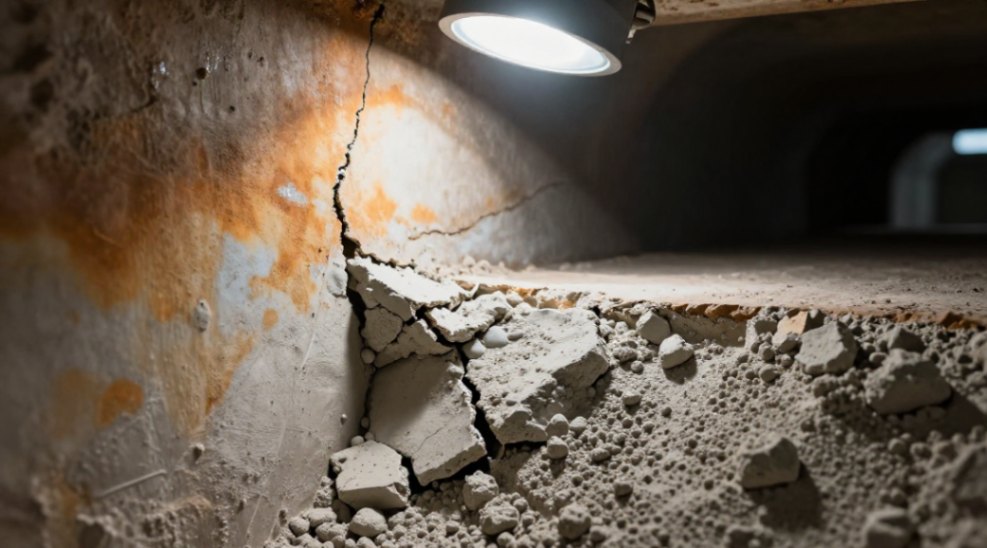
I was called to a tile factory where production had ground to a halt. The heart of their operation, a massive kiln, was damaged. The owner pointed to the new lining. “We used the best refractory cement we could find,” he insisted. “The bag said ‘high temperature’.” I ran my hand over the surface. It was powdery, cracked, and in some sections, it had slumped like wet clay. The diagnosis was simple, but the lesson was expensive: they used a standard Portland-based refractory mix in a zone requiring pure calcium aluminate cement. The repair bill topped $200,000. This story isn’t unique. It’s a warning.
Mistake #1: Confusing “Refractory” with “High-Temperature Resistant”
This is the first and most dangerous trap. Not all special cement for high temperature resistance is created equal. The term ‘refractory’ is broad. The critical performance metric is Refractoriness Under Load (RUL). It measures how much a material deforms under stress at temperature. A product rated for 1300°C might start to soften and creep at 1100°C under the weight of the structure above it.
Common industrial mortars often blend Portland cement with fireclay aggregates. They are cheap and work for patching a residential fireplace. They will fail spectacularly in a boiler, furnace, or kiln lining. You must match the cement’s temperature class rating to your application’s peak operational temperature, plus a safety margin. For primary linings, this almost always means a calcium aluminate-based cement.
The Calcium Aluminate vs. Portland Cement Divide
Portland cement hydrates to form calcium silicate hydrate (C-S-H) gel. This gel breaks down when exposed to sustained heat above 300-400°C, losing all strength. Calcium aluminate cement forms calcium aluminate hydrates. These compounds undergo a ceramic conversion upon heating, creating a strong, monolithic ceramic bond. This is the foundation of true high temperature resistance.
Mistake #2: Ignoring the Water-to-Cement Ratio
More water does NOT make mixing easier. It makes failure inevitable. Adding excess water dilutes the cement paste. It increases porosity after curing. Porosity is the enemy of thermal shock resistance and strength. Follow the manufacturer’s mix ratio to the letter. Use a paddle mixer, not a shovel. The mix should be stiff, like modeling clay, not pourable. Proper compaction is impossible with a soupy mix.
Mistake #3: Rushing the Cure and Dry-Out
This is where patience saves projects. After placement, the cement needs time for its chemical bonds to form. You must prevent it from drying out too quickly.
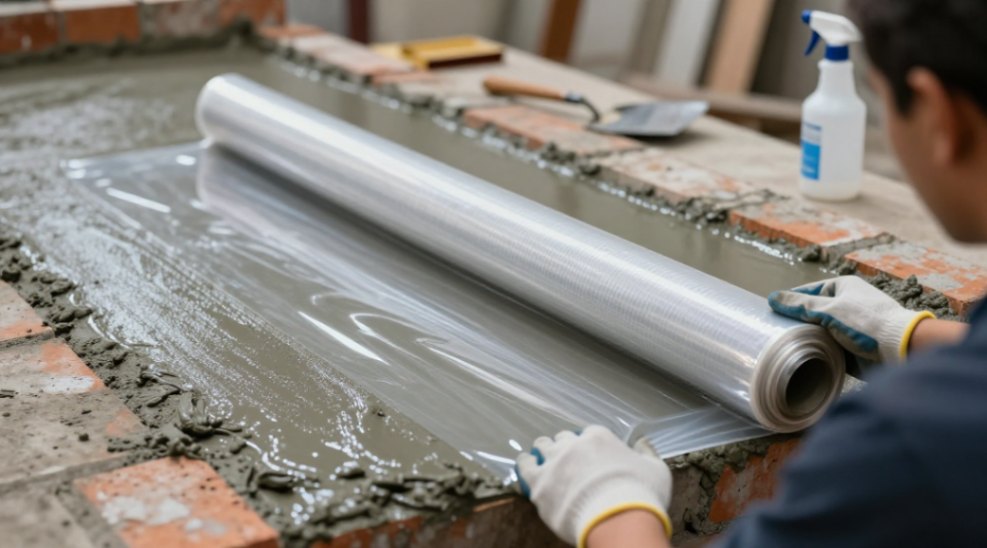
- Never expose a fresh lining to rapid heat or air drafts.
- Keep it covered with plastic sheeting for 24 hours.
- Mist the surface with a fine water spray periodically for the first 48 hours. This is controlled curing with water mist, and it is non-negotiable for developing initial strength.
The initial dry-out or bake-out schedule is equally critical. You must drive off the remaining chemical water slowly. A typical schedule ramps temperature up by 50°C per hour, with holds at key temperatures (e.g., 110°C, 350°C). Rushing this process creates steam pressure inside the lining, causing explosive spalling.
Mistake #4: Using the Wrong Aggregate or Additive
The cement is only the binder. The aggregates provide the bulk and define the thermal properties. Using sand from the local hardware store is a recipe for melting and slag formation. You need refractory aggregates like calcined fireclay, alumina, or silicon carbide, graded for optimal packing.
For enhanced performance, expert formulations include microsilica (silica fume). This ultra-fine powder fills microscopic voids, dramatically increasing density and strength. It improves resistance to chemical attack and penetration by molten materials. Know what’s in your mix.
Mistake #5: Assuming It’s Just Like Firebrick
Monolithic refractories (cements, castables, gunnables) offer huge advantages over traditional firebrick: no joints, faster installation, complex shapes. But their installation is a skilled craft.
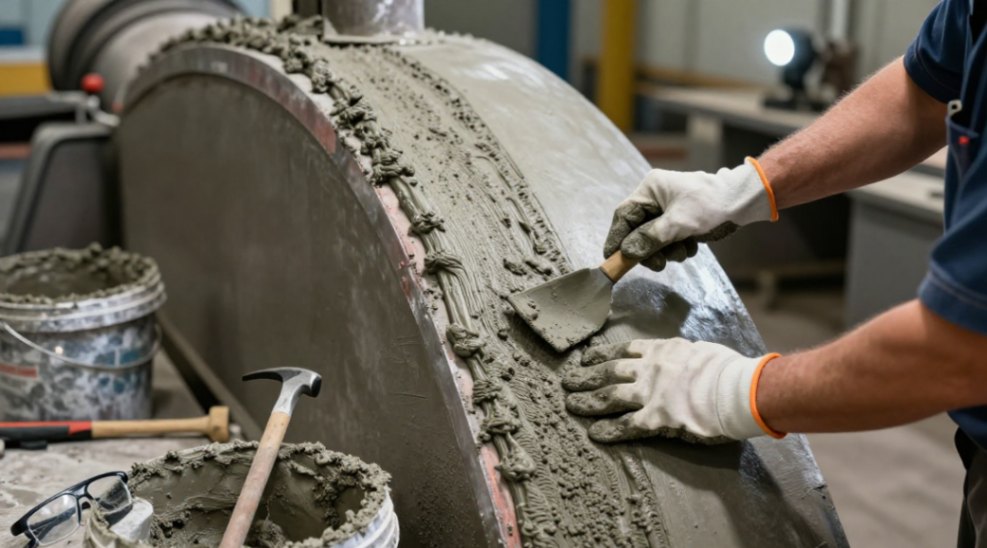
- Surface preparation is key. The substrate must be clean, sound, and often primed with a bonding agent.
- Installation technique matters. Whether casting, gunning, or troweling, you must achieve full compaction to eliminate air pockets. Voids become failure points.
- Expansion joints are not optional. Unlike rigid brick, monolithic linings expand with heat. You must plan and cut control joints to manage this stress, or uncontrolled cracking will occur.
Your Path to Safe, Durable Performance
The field of special cements is advancing. Research into systems like high-entropy oxides pushes theoretical limits. But for your project today, proven principles rule. Start with pure calcium aluminate cement for the binder. Use the correct refractory aggregates. Control your water religiously. Respect the cure and dry-out schedules. And if your application involves cycling above 1600°C, understand that even advanced SiC-based systems face limits around 1800°C due to active oxidation. Consult a refractory specialist early. Specify the exact service temperature, atmosphere, and mechanical load. This upfront diligence is your best insurance against a costly, dangerous failure. Your kiln, furnace, or boiler depends on it.
Supplier
We are the global leader in lightweight concrete and advanced engineered foam solutions. Known globally for its commitment to research, innovation, and applied expertise, we have been providing engineered foam solutions since the early 2012’s.
We can supply high-quality concrete admixture and foam concrete related products all over the world.
The company has a professional technical department and quality supervision department, a well-equipped laboratory, and equipped with advanced testing equipment and after-sales customer service center.
If you are interested, please feel free and contact us.