Concrete-mesa | Concrete Admixtures, Tools, and Production Machines

Foaming Agent for Foamed Concrete: Stop Wasting Money on These 5 Common Mistakes
A Cracked Foundation: My $200,000 Lesson
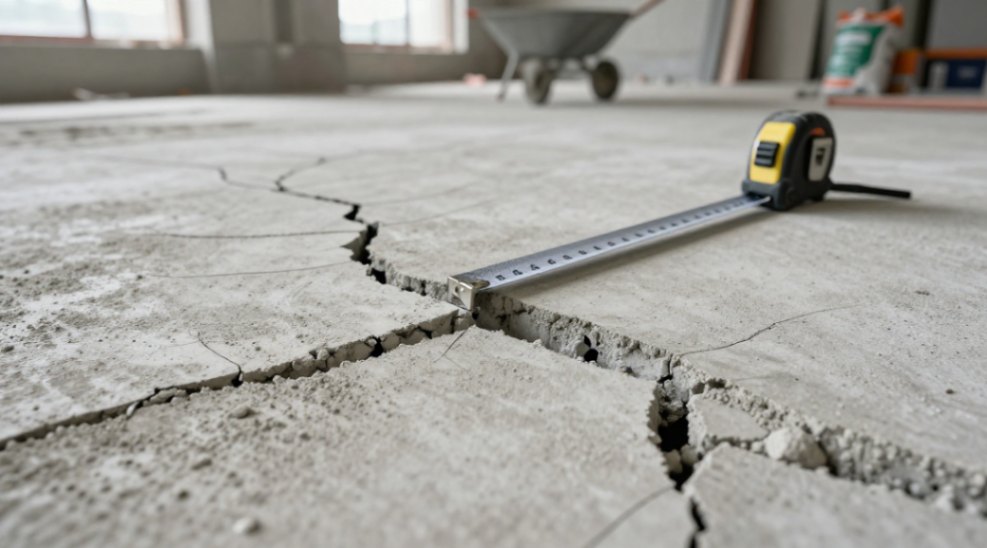
I watched a three-story building’s lightweight floor slab develop a spiderweb of cracks within six months. The contractor swore he followed the specs. The lab results told a different story: incompatible foaming agent for foamed concrete mixture. The foam collapsed during pouring, creating uneven, weak voids. That failure cost over $200,000 in repairs. Most failures aren’t dramatic collapses. They are slow, expensive wastes of material and trust. Let’s fix that.
The Foaming Agent Warning List: What NOT to Do
Think of your foaming agent as the lungs of your concrete. Choose wrong, and the entire structure suffocates. Here are the mistakes I see daily.
1. Mistake: Buying on Price Alone (The Race to the Bottom)
Cheap synthetic surfactants create foam. They do not create stable foam. The bubbles burst before the cement sets, leading to segregation and a dense, weak mess. You save cents per cubic metre but lose thousands on failed compressive strength tests. A 2023 industry audit showed that projects using low-cost, unstable agents had a 70% higher rate of core sample rejection.
2. Mistake: Ignoring Agent-Concrete Compatibility
Not all foaming agents play nice with all cement types or admixtures. A protein-based agent might work perfectly with OPC but completely fail with a sulfate-resistant cement or in the presence of a certain superplasticizer. You must test compatibility in your specific mix design. Assume nothing.
3. Mistake: Guessing the Dosage
This is the most critical process control point. Adding 2% more agent doesn’t mean 2% lower density. It means unstable foam, coalescing bubbles, and a total loss of design integrity. Precision is non-negotiable. Use a calibrated dosing pump. Record every batch.
| Error | Immediate Effect | Long-Term Risk |
|---|---|---|
| Over-dosing | Foam collapse, bleeding, segregation | Drastic loss of compressive & tensile strength |
| Under-dosing | High density, missed insulation targets | Increased structural load, thermal bridging |
4. Mistake: Using a Dirty Foam Generator
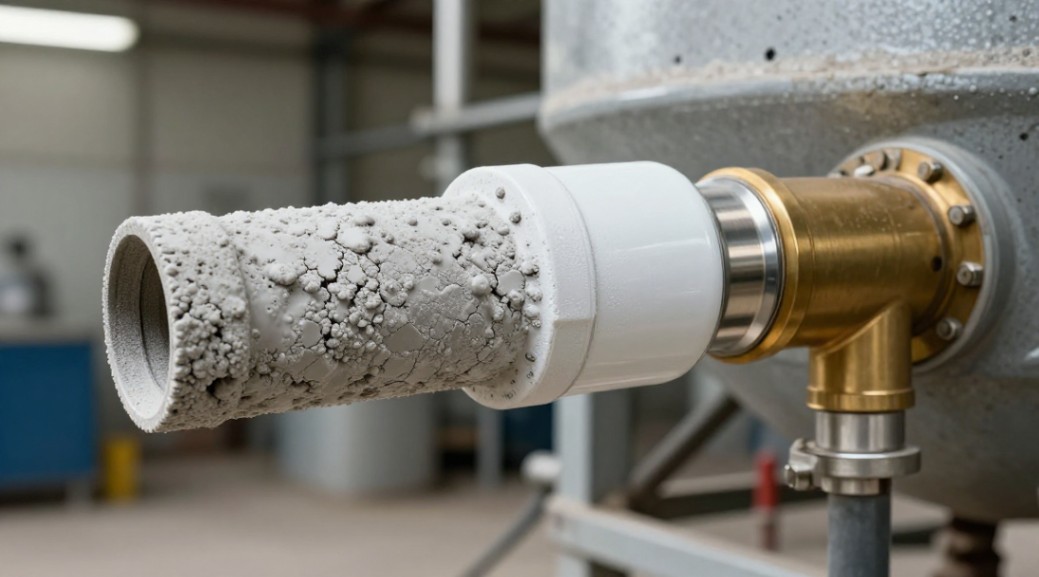
Residue from yesterday’s batch acts as a defoamer. It kills your new foam’s stability. I insist on a clean-in-place (CIP) system for the generator after every shift. Contaminated equipment is the silent killer of consistent pore structure.
5. Mistake: Storing Agents Like Water
Sunlight and temperature extremes degrade both synthetic and protein-based agents. Store them in a cool, shaded place. Never let them freeze. Check the manufacturer’s shelf life and use a first-in, first-out (FIFO) inventory system. Degraded agent will not form stable air voids.
The Right Way: A Process, Not a Product
Success with foamed concrete mixture technology hinges on process discipline. Follow this sequence.
Step 1: Selection Based on Performance, Not Paper
Define your need: Is thermal insulation the priority? Or pure weight reduction? For insulation, you need a closed-cell pore structure from a highly stable agent. For non-structural fill, a standard synthetic may suffice. Demand third-party test certificates for foam stability (drainage test) and compatibility with your mix.
Step 2: Precision Mixing Protocol
- Generate foam separately. Use a dedicated generator to produce foam with a consistent bubble size (typically 0.1-1 mm).
- Blend foam into slurry. Introduce the pre-formed foam into the ready-mixed cement slurry in a controlled, gentle mixer. Avoid high-shear mixing at this stage-it destroys bubbles.
- Verify density on-site. Check the wet density of the mixture every 5 cubic meters using a calibrated pressure metre. Adjust immediately.
Step 3: The Guardian of Durability
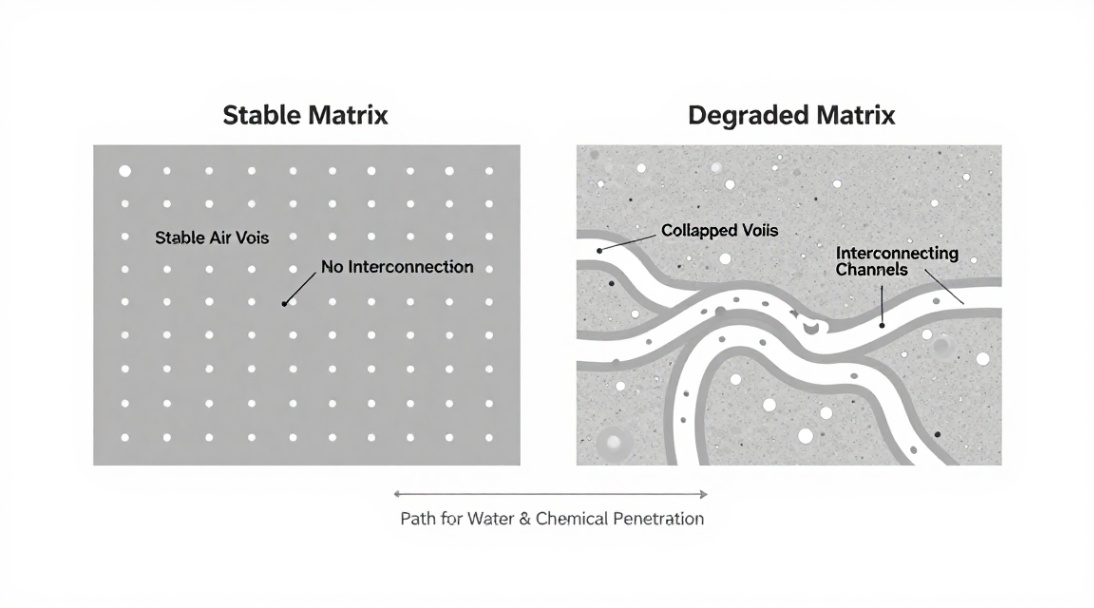
A proper foaming agent creates strong, stable air voids that do not interconnect. This is what gives foamed concrete its freeze-thaw resistance and long-term strength. If the foam collapses, these voids connect, allowing water and chemicals to penetrate and destroy the matrix from within.
Your Action Plan
Stop looking for a magic product. Start implementing a robust system. First, audit your current agent and process against these warnings. Second, run small-scale trial batches with a proven, compatible agent, measuring wet density and 28-day strength religiously. Third, document your precise mixing parameters and make them standard operating procedure. The difference between a profitable, high-performance project and a costly failure is in these details. Master them.
Supplier
We are the global leader in lightweight concrete and advanced engineered foam solutions. Known globally for its commitment to research, innovation, and applied expertise, we have been providing engineered foam solutions since the early 2012’s.
We can supply high-quality concrete admixture and foam concrete related products all over the world.
The company has a professional technical department and quality supervision department, a well-equipped laboratory, and equipped with advanced testing equipment and after-sales customer service center.
If you are interested, please feel free and contact us.