Concrete-mesa | Concrete Admixtures, Tools, and Production Machines

The #1 Mistake With Water Reducer for High Strength Concrete (& How to Fix It)
Why Your High-Strength Mix Design is Probably Wrong
A recent study by the American Concrete Institute suggests a startling fact: more than half of all high-strength concrete (HSC) projects fail to achieve their designed compressive strength, not due to material flaws, but because of improper admixture application. The culprit? A fundamental misunderstanding of the water reducer for high strength concrete role. We’ve all been there-chasing that magical 10,000 psi mix, only to get inconsistent results. The data tells us the gap between intent and execution is huge.
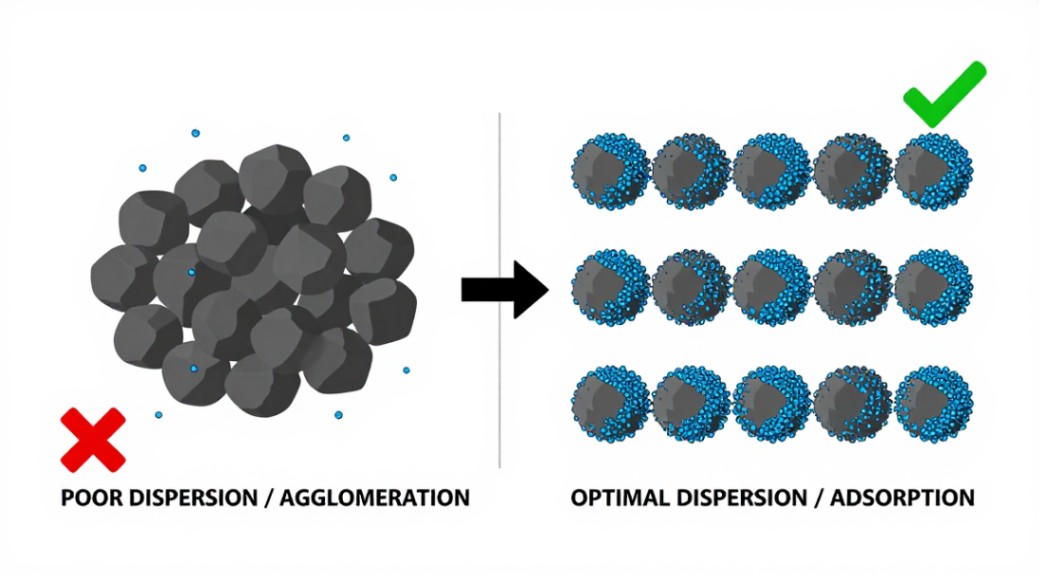
The Core Principle: It’s Not Just About Less Water
Think of a water reducer not as a simple water-saver, but as a molecular traffic controller. Its essential function is enabling a very low water-cement (w/c) ratio-often below 0.30-while maintaining the fluid workability needed for placement and consolidation. This isn’t a luxury; it’s the non-negotiable foundation of high-strength concrete.
1. The Three Pillars: Choosing Your Water Reducer Weapon
Not all admixtures are equal. Picking the wrong type guarantees problems. Here’s the breakdown we use on every project.
1.1 Mid-Range Water Reducers (MRWR)
- Best For: Everyday HSC mixes where moderate slump increase (3-4 inches) and a 10-15% water reduction is sufficient.
- Our Take: They’re the reliable workhorse. But if your target strength exceeds 8,000 psi, you’ll likely need more power. Many users on forums like Reddit report hitting a ‘cement hydration wall’ with MRWRs in ultra-high-performance designs.
1.2 High-Range Water Reducers (HRWR) / Superplasticizers
- Best For: The majority of demanding HSC applications. They deliver 20-30% water reduction, creating flowable, self-consolidating mixes from a near-zero slump base.
- Critical Insight: The old-school naphthalene or melamine sulfonates are still around, but they have a major flaw: poor slump retention. You get one shot at placement.
1.3 Polycarboxylate Ether (PCE) Superplasticizers
- Best For: Modern, complex HSC with SCMs (like silica fume, fly ash) and where long haul times or precise placement is required.
- Why They Dominate: PCEs offer superior slump retention and allow precise control over the rate of slump loss. This is the game. They let us design for both extreme strength and practical site logistics.
2. Beyond Strength: The Hidden Benefits You Can’t Ignore
Focusing only on 28-day compressive strength is shortsighted. The right water reducer for high strength concrete transforms the entire material.
- Denser Microstructure: With less free water, the cement paste becomes impermeable. This directly boosts durability against chloride ingress, sulfate attack, and freeze-thaw cycles. Strength is a byproduct of density.
- Sustainability Leverage: By enabling lower w/c ratios, you can often reduce the total cement content for an equivalent strength. This cuts the carbon footprint significantly. It’s a direct path to greener high-performance mixes.
- Economic Sense: Yes, PCEs cost more per gallon. But the savings from reduced cement, improved finishability, fewer callbacks for durability issues, and faster placement times always win the total cost calculation.
3. The Battle-Tested Protocol for Success (And Avoiding Disaster)
We see the same mistakes repeated. Here’s our field-tested checklist.
3.1 Dosage is NOT a Guessing Game
More is not better. An overdose of superplasticizer can cause severe segregation, bleeding, or excessive air entrainment. You must conduct job-site trials with your actual materials to find the saturation point-the dosage beyond which no further water reduction occurs.
3.2 The Batching Sequence is Sacred
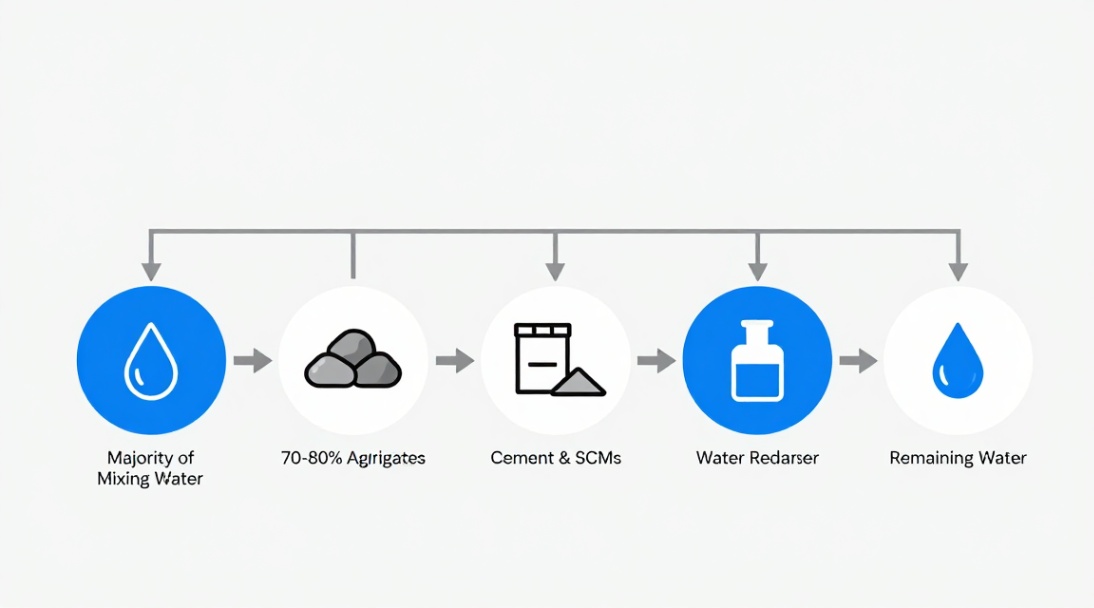
Get this wrong, and you waste the admixture. The standard rule: add the majority of the mixing water first. Then add 70-80% of your aggregates. Follow with cement and supplementary cementitious materials (SCMs). Add the water reducer last, or as a mid-point addition with the remaining water. This sequence maximizes dispersion and efficiency.
3.3 Compatibility Testing is Non-Negotiable
Your cement, SCMs, and admixture must get along. Incompatibility manifests as rapid slump loss, false set, or extreme retardation. Before any mix is approved, you need to test:
- Slump flow over 60-90 minutes.
- Setting time (initial and final) with admixture versus without.
- Hardened air-void system if using air-entraining admixtures alongside.
3.4 Mitigating Segregation & Bleeding
Low-water, highly fluid mixes want to separate. Combat this by:
- Optimizing the sand-to-total aggregate ratio.
- Incorporating micro-fillers like silica fume or metakaolin.
- Using a viscosity-modifying admixture (VMA) if the PCE alone can’t stabilize the paste.
4. The Future: What Top Producers Are Doing Now
The trend is moving beyond single admixtures. We’re now blending PCE superplasticizers with specific set retarders, hydration stabilizers, and shrinkage reducers to create tailored performance packages. The goal is a predictable, robust mix that performs identically from the first truck to the last, regardless of ambient conditions. This is where the industry is headed.
The Next Step: Stop Guessing, Start Engineering
If you’re still treating your water reducer for high strength concrete as a simple liquid additive, you’re leaving performance and profit on the table. The difference between a failed test cylinder and a record-breaking strength comes down to the precision outlined here.
Ready to engineer predictable, high-performance results? Don’t rely on generic advice. You need a solution engineered for your specific materials and climate. Contact our technical team today for a free, no-obligation mix design review. We’ll analyse your current approach, identify the weak points, and provide a clear protocol to achieve your strength and durability targets, every single batch. Let’s build something stronger.
Supplier
We are the global leader in lightweight concrete and advanced engineered foam solutions. Known globally for its commitment to research, innovation, and applied expertise, we have been providing engineered foam solutions since the early 2012’s.
We can supply high-quality concrete admixture and foam concrete related products all over the world.
The company has a professional technical department and quality supervision department, a well-equipped laboratory, and equipped with advanced testing equipment and after-sales customer service center.
If you are interested, please feel free and contact us.