Concrete4U | Concrete Admixtures, Tools, and Production Machines

What is HPMC and How It Solves Your Masonry Mortar Problems for Good
The Mortar Struggle is Real
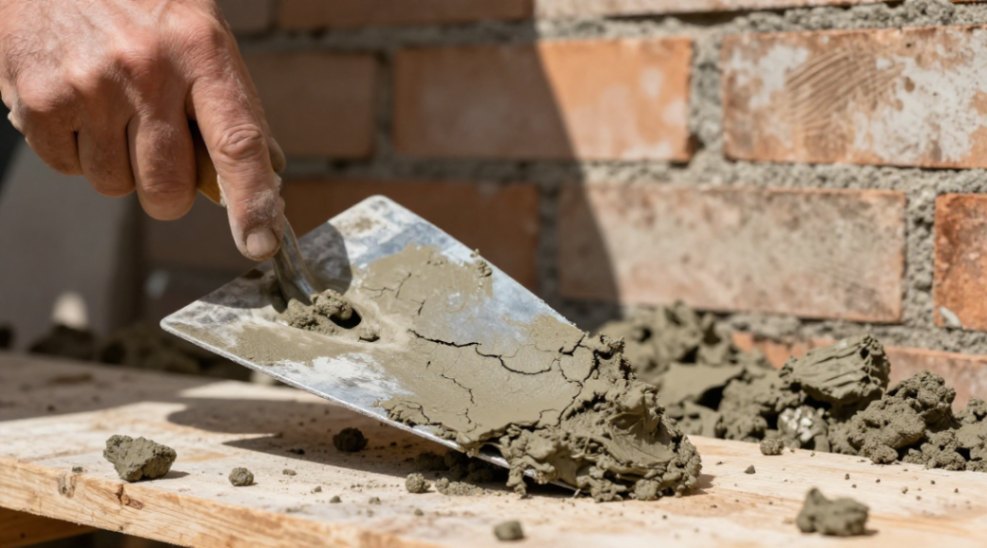
Have you ever stood there, trowel in hand, watching your fresh mortar stiffen and crust over before you can even get the next few bricks laid? You know the frustration. You add a splash of water to “bring it back,” hoping to regain that smooth, buttery consistency. But then the mix turns soupy. It loses its grip, starts to sag in the joints, and you’re left wondering about the final strength and durability. On forums like Reddit and contractor boards, masons share these exact headaches all the time. They talk about the race against the clock, the wasted material, and the inconsistent finishes that come from battling an uncooperative mortar mix. If this sounds familiar, you’re not just fighting the wall; you’re fighting the chemistry of your material. The solution to this age-old problem isn’t a secret trick or more muscle. It’s a precise, modern ingredient called Hydroxypropyl Methylcellulose, or HPMC.
What Exactly is HPMC in Mortar?
Let’s strip away the complex name. In the world of construction chemicals, HPMC is a cellulose ether. Think of it as a polymer derived from natural cellulose, engineered to be a multitasking marvel in dry-mix mortars. Its primary role isn’t to be a glue or a filler. Its job is to manage water. When you blend HPMC powder into your dry mortar mix-be it for bricklaying, plastering, or tile adhesive-it dissolves upon contact with water during mixing. It doesn’t just sit there; it actively works to thicken the water phase, creating a protective gel network that holds moisture hostage within the mortar matrix. This is the single most important thing it does. This water retention is not about making the mortar wetter; it’s about preserving the crucial water needed for cement to properly hydrate and gain full strength, while simultaneously giving you, the mason, unparalleled control over the material’s behavior from the mixer to the wall.
From Frustration to Fluid Application: How HPMC Transforms Workability
The magic begins the moment you start mixing. With HPMC in the formulation, you’ll notice the mortar develops a cohesive, fatty body. It clings to the trowel without being sticky and slides off with a smooth, effortless flow. This is workability defined. The polymer’s lubricating effect reduces internal friction between sand particles. This means less physical effort for you during spreading and bedding. But the real game-changer is what happens after the mix is made. Traditional mortars have a short “open time”-the window where the mortar remains plastic and workable. HPMC dramatically extends this open time. The water it retains is slowly released, preventing rapid drying from the surface or suction into porous bricks and blocks. You get more time to adjust that last brick in the course, to tool your joints perfectly, or to spread a larger area of plaster without panic. You stop fighting the clock. On-site, this eliminates the destructive cycle of frequent re-tempering with water, which dilutes the cement content and wreaks havoc on final strength and shrinkage. The mix you start with is the consistent mix you finish with.
Gripping the Wall: Adhesion, Anti-Sag, and a Superior Finish
Workability isn’t just about easy spreading; it’s about superior performance in place. This is where HPMC shines on vertical surfaces. The same gel network that retains water also dramatically improves the mortar’s adhesion and anti-sag properties. When you butter a brick or apply a render coat, the HPMC-modified mortar grips the substrate. It resists slumping under its own weight, allowing for thicker application in a single pass and ensuring uniform joint fill. This directly translates to fewer voids, better load distribution, and a significant reduction in cracks caused by poor bonding or shrinkage. The improved cohesion also minimizes droppings and waste, keeping the work area cleaner. The end result is a more durable wall, a more aesthetically pleasing finish with crisp joints, and a more efficient workflow that saves time and material.
Choosing and Using the Right HPMC: A Practical Guide
Not all HPMC is the same, and its performance is not guesswork. The key characteristic is its viscosity grade, typically measured in mPa·s for a 2% aqueous solution. This viscosity directly influences the thickening power, water retention, and open time. A low-viscosity grade (like 4,000 to 10,000 mPa·s) might be used in self-levelling compounds for mild thickening. For standard masonry and plastering mortars, a medium viscosity (15,000 to 60,000 mPa·s) offers an excellent balance of workability and sag resistance. For thick, non-sag tile adhesives or heavy-textured finishes, a high-viscosity grade (75,000 mPa·s and above) provides the necessary body. Dosage is critical and typically ranges from 0.1% to 0.5% of the total dry mortar weight. Starting low and testing is always wise. Remember, HPMC works in harmony with other modern additives like redispersible polymer powders (RPPs). While HPMC manages water and workability, RPPs enhance flexibility and adhesion. Together, they create a high-performance mortar system far superior to relying on traditional lime alone for workability, which offers inconsistent water retention and less control.
| Selection Factor | Consideration | Practical Implication |
|---|---|---|
| Viscosity Grade | Low, Medium, High (mPa·s) | Determines thickening and anti-sag. Use medium for general masonry. |
| Dosage Rate | 0.1% – 0.5% by weight | Start at 0.2% and adjust based on sand, cement, and desired feel. |
| Key Function | Water Retention | Ensures full cement hydration for strength and extends open time. |
| Primary Benefit | Improved Workability | Provides smooth, cohesive mortar that is easy to apply and adjust. |
| Compatibility | Redispersible Powders, etc. | Use with RPPs for combined benefits of workability + flexibility. |
The Final Result: Efficiency and Quality in Every Batch
When you integrate HPMC for improving workability in masonry mortar, you are not just adding a chemical. You are adopting a smarter approach to building. You trade frustration for control. You replace guesswork with consistency. The benefits cascade: less physical fatigue for masons, significant reduction in material waste, reliable open time that improves workmanship, and a finished wall with enhanced crack resistance, bond strength, and durability. It moves masonry from a battle against the material to a collaborative process where the material works for you. For anyone who has struggled with a stiff, unforgiving mix, understanding HPMC is the first step toward eliminating that struggle for good. Your next mix can be different. It can be predictable, cooperative, and capable of producing results you can be proud of, batch after batch.
Supplier
We are the global leader in lightweight concrete and advanced engineered foam solutions. Known globally for its commitment to research, innovation, and applied expertise, we have been providing engineered foam solutions since the early 2012’s.
We can supply high-quality concrete admixture and foam concrete related products all over the world.
The company has a professional technical department and quality supervision department, a well-equipped laboratory, and equipped with advanced testing equipment and after-sales customer service center.
If you are interested, please feel free and contact us.