Concrete-mesa | Concrete Admixtures, Tools, and Production Machines

The Foam Pump Fallacy: Why Your Industry Standard is the Weakest Link
The Hidden Inefficiency in Every Foam Line
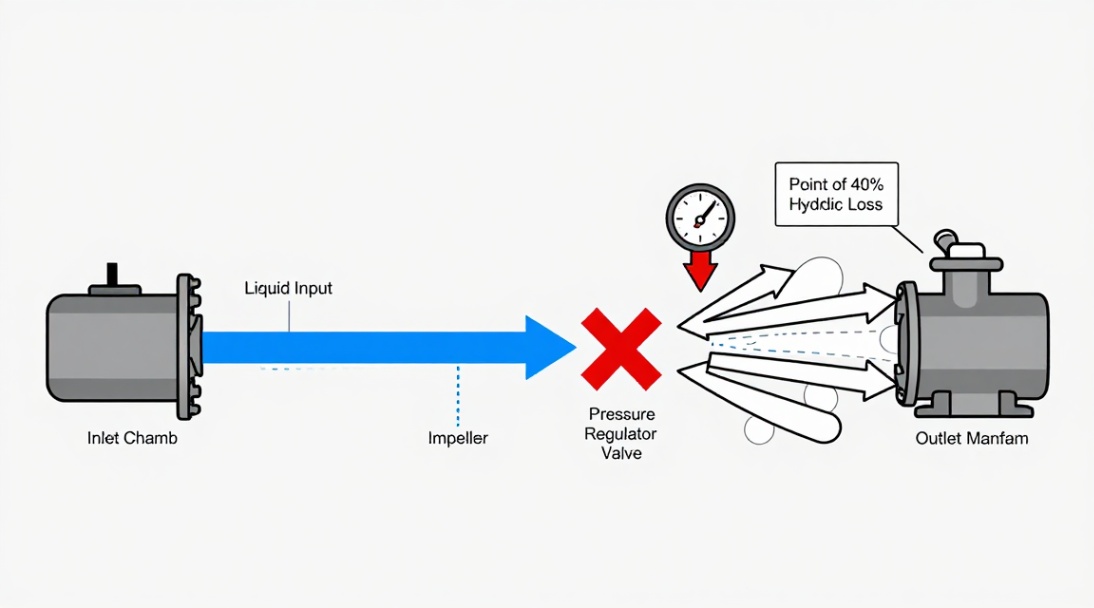
The industry celebrates a 5% gain in expansion ratio but ignores a 40% loss in hydraulic efficiency at the pump. This single component, often treated as a commodity, determines whether your foam generating machine is an asset or a liability. Most failures stem not from the generator but from a fundamental misunderstanding of the foam pump’s role. It is not just a liquid mover; it is the heart of a delicate, two-phase system.
Deconstructing the Core: Generator vs. Pump
A standard liquid pump fights against itself in foam applications. It cavitates. It shears. It delivers an inconsistent mixture to the foam generating machine, guaranteeing poor quality output. A dedicated foam pump operates on a different principle. Its internal geometry, clearances, and materials are engineered for a precise air-water-chemical emulsion. Think of it as a precision chef creating a perfect hollandaise, not a bulk blender making a smoothie. The difference is stability, structure, and ultimate performance.
The Operational Sequence Most Get Wrong
Success is a sequence. Failure is a missed step. The process is not about starting a machine; it’s about managing a chemical reaction under pressure.
- Solution Priming: The foam pump must first be flooded with the premixed water and foam concentrate solution. Air pockets here create immediate failure. This is non-negotiable.
- Pressure Stabilization: Engage the foam pump to build system pressure before introducing air. The generator needs a stable liquid stream to work upon. Most operators rush this.
- Air Induction & Generation: Only now do you open the air inlet valve on the foam generating machine. The pump’s steady flow draws in air, and the generator’s internal elements (vents, turbines, or porous media) violently mix the two phases.
- Discharge & Adjustment: The wet foam discharges. You adjust the air valve to control expansion ratio and the pump pressure or chemical injection rate to control foam density. These are interactive controls, not independent dials.
Skip the priming? You get sputtering, dry foam. Mess with the sequence? You get a collapsed, watery mess. The machine is logical. Its operation demands the same.
Why Manual Methods Fail and Specialized Systems Win
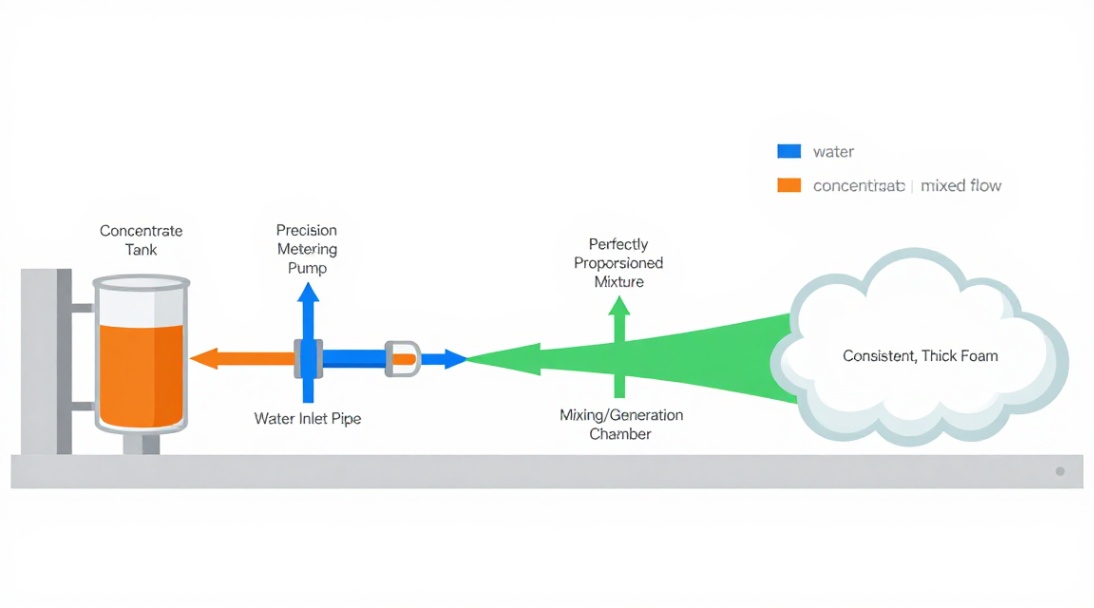
Pouring concentrate into a water stream and hoping for the best is alchemy, not engineering. A dedicated foam generating machine with an integrated foam pump and chemical injection system provides control. Precise control. The injection system meters concentrate at the pump’s suction, ensuring a perfectly proportioned mixture before generation even begins. This is the critical step manual methods cannot replicate. The result is consistent foam quality, predictable consumption, and reliable performance in critical applications like firefighting or industrial cleaning.
Maintenance is Not About Repair, It’s About Preservation
Your foam pump is not a wear item to be replaced. It is a precision instrument to be preserved. Maintenance is simple but absolute. After every use, flush the entire system with clean water. Run the foam pump on water alone for several minutes to clear all chemical residue. Inspect seals and check valves for debris monthly. A failing seal doesn’t just leak; it allows air into the suction side, destroying the pump’s ability to create a stable liquid feed for the generator. This single point of neglect accounts for most ‘generator’ problems reported in the field.
Selecting Your System: The Three Non-Negotiable Questions
Forget generic specs. Ask these questions.
- What is the foam’s primary job? Fire suppression demands high expansion and stability. Cleaning requires lower expansion and better wetting. The optimal foam generating machine and pump combination differs radically.
- What is your chemical’s viscosity? A pump perfect for a watery Class A foam will stall on a thick Class B alcohol-resistant concentrate. Match the pump’s design to the liquid’s physical properties.
- What is your acceptable failure rate? A diaphragm pump offers sealless, chemical-resistant operation but may have lower pressure. A centrifugal pump offers high flow but is susceptible to cavitation with thicker mixtures. Choose the failure mode you can manage.
The foam generating machine with foam pump is not a magic box. It is a system of interdependent components governed by fluid dynamics and chemistry. Master the pump, and you master the foam. Ignore it, and you are simply wasting money, chemical, and time. The industry’s focus on the generator’s output is misplaced. True performance begins at the suction inlet. Start there.
Supplier
We are the global leader in lightweight concrete and advanced engineered foam solutions. Known globally for its commitment to research, innovation, and applied expertise, we have been providing engineered foam solutions since the early 2012’s.
We can supply high-quality concrete admixture and foam concrete related products all over the world.
The company has a professional technical department and quality supervision department, a well-equipped laboratory, and equipped with advanced testing equipment and after-sales customer service center.
If you are interested, please feel free and contact us.