Concrete-mesa | Concrete Admixtures, Tools, and Production Machines

Choosing the Right Special Waterproofing Cement: A 20-Year Expert’s Comparison Guide
Let me tell you about a project that went sideways. Years ago, I was called to a new basement that was already weeping. The builder had used a standard cement slurry, convinced it would “seal things up.” It hadn’t. The owner faced a musty smell and the looming threat of mold before they even moved in. That moment cemented a truth for me: when water is the enemy, ordinary cement is not your friend. You need a dedicated ally. You need the right special cement for waterproofing applications. My friend, if you’re comparing products and feeling overwhelmed, take a breath. You’re in the right place. I’ve spent over two decades in the field, and today, I’ll walk you through this critical choice, not with jargon, but with the clarity that comes from hands-on experience.
The Fundamental Difference: Barrier vs. Integral Protection
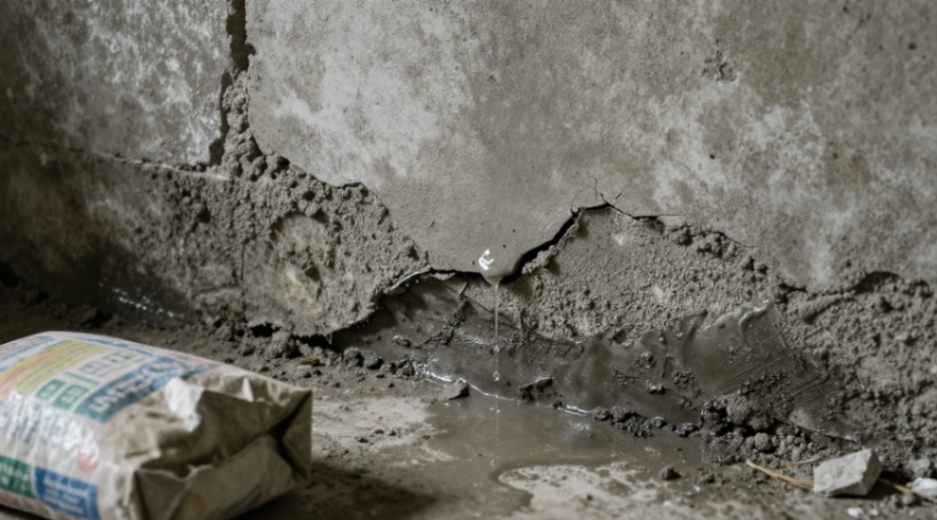
Standard Portland cement is porous. It always will be. Water under pressure, called hydrostatic pressure, will eventually find its way through those microscopic pores and hairline cracks. Think of it like a sponge. A special cement for waterproofing applications transforms that sponge into a solid, water-resistant block. It doesn’t just coat the surface; it becomes an integral part of the concrete or mortar’s structure. The primary mechanism revolves around key chemical components, most notably crystalline admixtures. When mixed with water, these compounds create millions of insoluble needle-shaped crystals. These crystals grow into and permanently block the capillary pores and micro-cracks, even self-sealing new cracks that may form later. It’s a living, reactive barrier.
The Core Contenders: A Product Comparison
Not all waterproofing cements are created equal. Your project’s success hinges on picking the right type. Let’s break down the common special cement for waterproofing applications you’ll encounter.
Cementitious Coatings (Brush/Trowel-Applied)
These are your go-to products for sealing foundations, basement walls, and swimming pools from the positive side (the side facing the water). They come as a powder you mix into a slurry. The beauty is in their simplicity. You trowel or brush on two coats, creating a seamless, rigid shield. They bond tenaciously to properly prepared concrete, masonry, and even stone. Their strength is formidable resistance to hydrostatic pressure. Their limitation? Lack of flexibility. They are best for stable structures where significant movement or cracking isn’t expected.
Integral Mortar Admixtures
This is the category for new construction or major repairs. You add this powder directly into your sand and cement mix at the batch plant or on-site. It waterproofs the entire mass of the concrete or mortar. We use this for water tanks, underground structures, and below-grade foundations where you need protection throughout, not just on the surface. It’s a set-and-forget solution, offering lifelong protection. The trade-off is that it must be planned from the start; you can’t add it later.
Rapid-Setting Hydraulic Cements
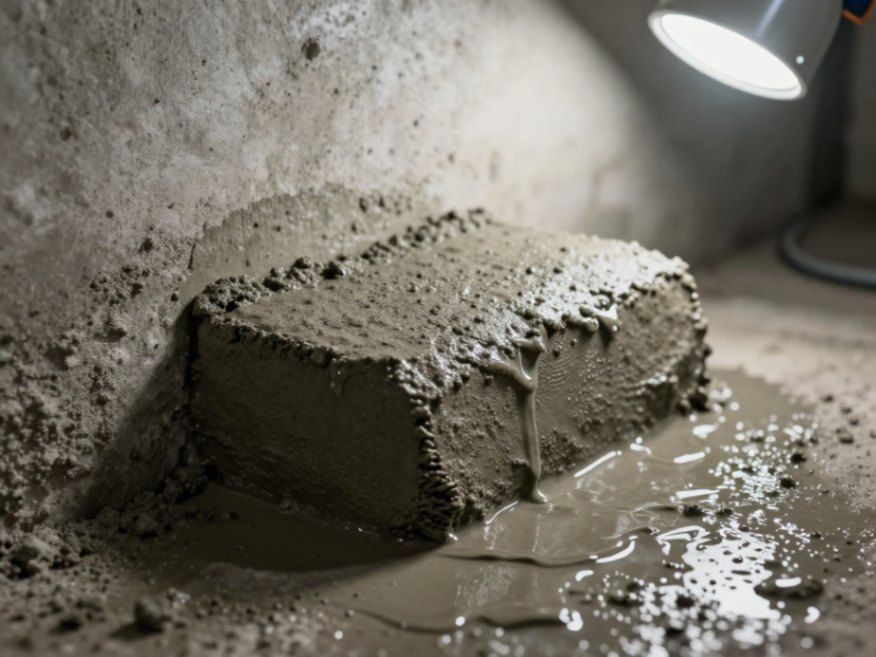
These are the emergency responders. Imagine a active leak in a basement wall or a pipe penetration. You can actually plug a flowing leak with this material. It sets incredibly fast, often in minutes, and expands slightly as it cures, creating a mechanical lock in the hole. It’s a phenomenal patching and plugging product. But remember, it’s a tactical solution, not a strategic one. Use it to stop active water, then follow up with a broader coating or membrane for full-area protection.
| Product Type | Best For | Key Advantage | Key Limitation |
|---|---|---|---|
| Cementitious Coatings | Foundations, Basements, Pools | High hydrostatic pressure resistance; seamless application | Rigid; not for moving cracks |
| Mortar Admixtures | Water Tanks, New Foundations | Integral, lifelong bulk protection | Must be planned for new construction |
| Rapid-Setting Cement | Plugging active leaks, urgent repairs | Sets fast, even in water | Not a standalone area solution |
The Decisive Factor: It’s All in the Preparation and Execution
Here’s where projects live or die. The finest special cement for waterproofing applications will fail on a poorly prepared substrate. You must remove all laitance, dust, grease, and any crumbling material. The concrete surface needs to be sound, rough, and aggressively cleaned-often with pressure washing or acid etching. Then, and this is critical, you must soak it. Saturate the substrate with clean water for several hours before application. A dry, thirsty concrete will suck the mixing water out of your slurry before the crystals can form, creating a weak, crumbly layer. The mix itself is precise. You’ll use a low-speed drill with a mixing paddle. Add the powder to clean, potable water, following the manufacturer’s ratio to the letter-typically measured in liters per 25-kilogram bag. Mix for the full recommended time, often 3 to 5 minutes, to a smooth, lump-free consistency resembling a thick paint.
Curing: The Silent Partner in Success
Your job isn’t done after the trowel stops. Curing is where the chemical magic happens. The crystalline growth requires moisture. After the initial set, usually after 2 to 4 hours, you must begin a fog mist or keep the surface covered with damp burlap or plastic sheeting. Maintain this moist environment for a minimum of 72 hours. Three full days. This isn’t a suggestion; it’s the requirement for the crystals to fully develop and create the dense, impermeable matrix you’re paying for. Skipping proper curing is the most common DIY mistake, leading directly to premature failure.
The Honest Cost-Benefit Analysis
Is this a DIY job? For a small, accessible foundation wall or a basement corner, a competent homeowner can succeed with a brush-applied coating. You must be meticulous with surface prep, mixing, and curing. The cost savings are real. For anything larger, more complex, or involving active moisture, hire a professional. The material cost for these special cement for waterproofing applications is higher than standard cement, but consider the alternative: the cost of a failed waterproofing system includes ruined belongings, structural damage, and mold remediation. The premium for a guaranteed, professionally installed system is almost always worth it. The long-term durability, when done correctly, is measured in decades, not years.
Making Your Final, Confident Choice
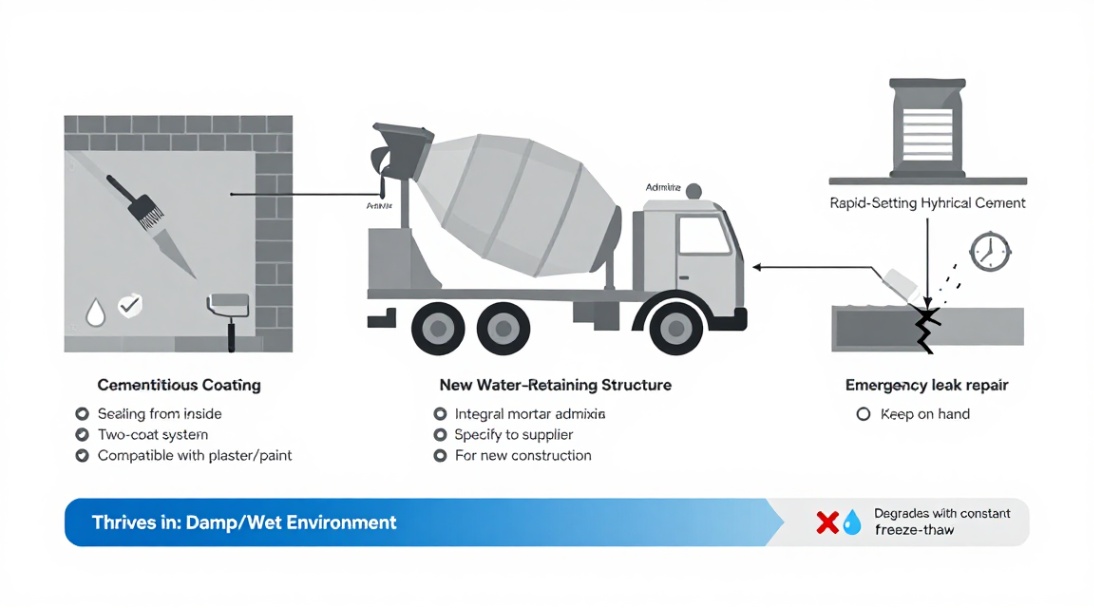
So, how do you decide? Look at your specific scenario. For sealing existing below-grade walls from the inside, a two-coat cementitious coating is your champion. For building a new water-retaining structure, specify an integral mortar admixture to your concrete supplier. For that surprise leak in the middle of the night, keep a bag of rapid-setting hydraulic cement on hand. Understand their limits: these materials thrive in consistently damp or wet environments but can degrade with constant freeze-thaw cycles if not protected. They are compatible with most finishes-once fully cured, you can plaster or paint over them. The data from the International Concrete Repair Institute is clear: integral crystalline systems significantly extend the service life of concrete in aggressive environments.
My advice, after all these years? Don’t gamble with water. The peace of mind that comes from a dry, secure space is invaluable. For most homeowners facing a basement or foundation issue, I consistently recommend starting with a high-quality, proprietary cementitious coating system from a trusted manufacturer. The technology is proven, the application is straightforward for a pro, and the results are permanent. Ready to solve your waterproofing problem for good? Your next step is to consult with a waterproofing specialist who uses these advanced materials. Bring this knowledge with you. It will help you ask the right questions and ensure you get a lasting solution, not just a quick fix. You can do this. Make the informed choice and build your defense with confidence.
Supplier
We are the global leader in lightweight concrete and advanced engineered foam solutions. Known globally for its commitment to research, innovation, and applied expertise, we have been providing engineered foam solutions since the early 2012’s.
We can supply high-quality concrete admixture and foam concrete related products all over the world.
The company has a professional technical department and quality supervision department, a well-equipped laboratory, and equipped with advanced testing equipment and after-sales customer service center.
If you are interested, please feel free and contact us.