Concrete4U | Concrete Admixtures, Tools, and Production Machines

Mid-Range Water Reducer: How Using It Wrong Destroys Concrete Performance
Mid-Range Water Reducer: What It Is and What It Isn’t
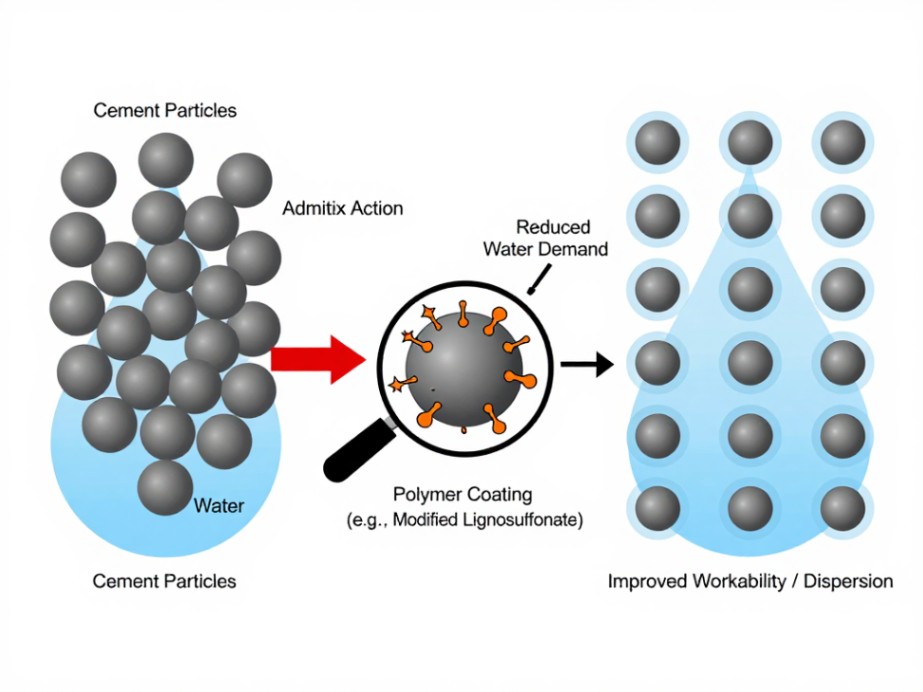
A mid-range water reducer is a chemical admixture designed to significantly increase concrete workability while allowing a moderate reduction in water content. This balance is its defining characteristic. It is not a superplasticizer for extreme flow, nor a basic retarder. Its core function is dispersion. The chemical composition, typically a modified lignosulfonate or a synthetic polymer, coats cement particles. This creates a negative charge, causing particles to repel each other. The result is a fluid, workable mix with less water. The wrong choice here sets a chain of failures in motion.
Warning: The 5 Most Common Mistakes with Mid-Range Water Reducers
1. Using It as a Simple Water Substitute
Never add a mid-range water reducer just to make wet, sloppy concrete easier to place. This is the cardinal sin. The admixture’s power is unlocking strength through water reduction. Adding it and keeping the water high gives you expensive, overly fluid, weak concrete. The mix bleeds excessively. Surface scaling becomes a real risk. You pay for an admixture and get inferior performance. The correct approach is to target a specific, reduced water-cement ratio. Use the improved workability to place a denser, more cohesive mix.
2. Ignoring Temperature During Placement
Mid-range water reducers often have a retarding effect. In cool weather (below 50°F / 10°C), this can be catastrophic. Setting times can delay by hours. Finishing crews wait. Project schedules blow up. Many users on construction forums report this exact issue: “The pour took forever to set, we lost a full day.” In hot weather, the opposite happens. Retardation helps, but if you dose for cold weather on a hot day, you might accelerate setting. Always consult the manufacturer’s data sheet for temperature-based dosage adjustments. Never use a standard dosage year-round.
3. Guessing the Dosage
“A little more should make it flow better.” This assumption destroys batch consistency. Overdosing leads to severe retardation, excessive air entrainment, and segregation. The concrete might never achieve proper strength. Underdosing wastes money and delivers none of the expected benefits. Dosage is not a guessing game. It is a precise calculation based on cement content and desired performance. Typical dosage ranges from 0.2% to 0.6% by weight of cementitious materials. You must conduct site trials with your exact materials. Batching plants that wing it face constant call-backs.
4. Assuming Compatibility with Everything
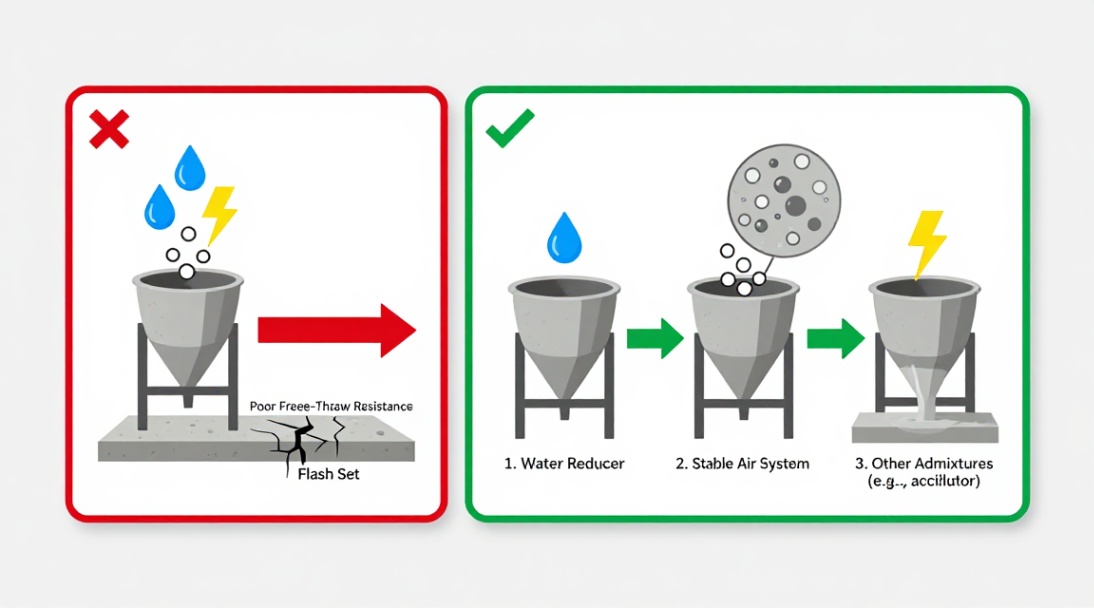
Mid-range water reducers do not automatically play nice with other admixtures. Combining them with certain air-entraining agents (AEAs) can neutralize the air system. You get no foam, leading to poor freeze-thaw resistance. Mixing with some calcium chloride-based accelerators can cause rapid flash set. The concrete becomes unworkable in minutes. Always perform compatibility tests in advance. Add admixtures to the mix in the correct sequence, usually water reducer first, followed by others. Blindly throwing chemicals into a mixer is a recipe for a rejected load.
5. Expecting High-Range Performance
This admixture is called mid-range for a reason. It will not give you self-consolidating concrete. Expecting it to transform a stiff mix into flowing lava is a fundamental misunderstanding of its role. Its primary benefits are increased workability and slump (typically 3-4 inches) without excess water, leading to reliable strength gain. For placing in standard forms, pumps, and slabs, it’s perfect. For intricate shapes with tight rebar, you need a high-range water reducer. Using the wrong tool for the job creates placement headaches and honeycombing.
Critical Application Guide: When to Use It (and When to Run)
Use a mid-range water reducer when you need reliable, predictable concrete for everyday applications. It shines in paving, slabs, beams, columns, and precast elements where moderate workability and improved strength are the goals. Its cost-benefit is excellent for high-volume, standard-spec projects. Avoid it for pours requiring extreme flow or very short set times in cold conditions. It is the workhorse admixture, not the specialist.
| Ideal Use Case | Poor Use Case | Reason |
|---|---|---|
| Standard structural slabs | Self-consolidating concrete (SCC) | Insufficient slump increase |
| Pumping concrete over distance | Cold weather pours (<10°C) without adjustment | Excessive retardation delays finishing |
| Precast concrete elements | Mixes with unknown admixture compatibility | Risk of chemical conflict and failure |
| Improving strength without redesign | Mixes with very high water content | Amplifies bleeding and segregation |
The Right Way: Batching and Mixing Protocol
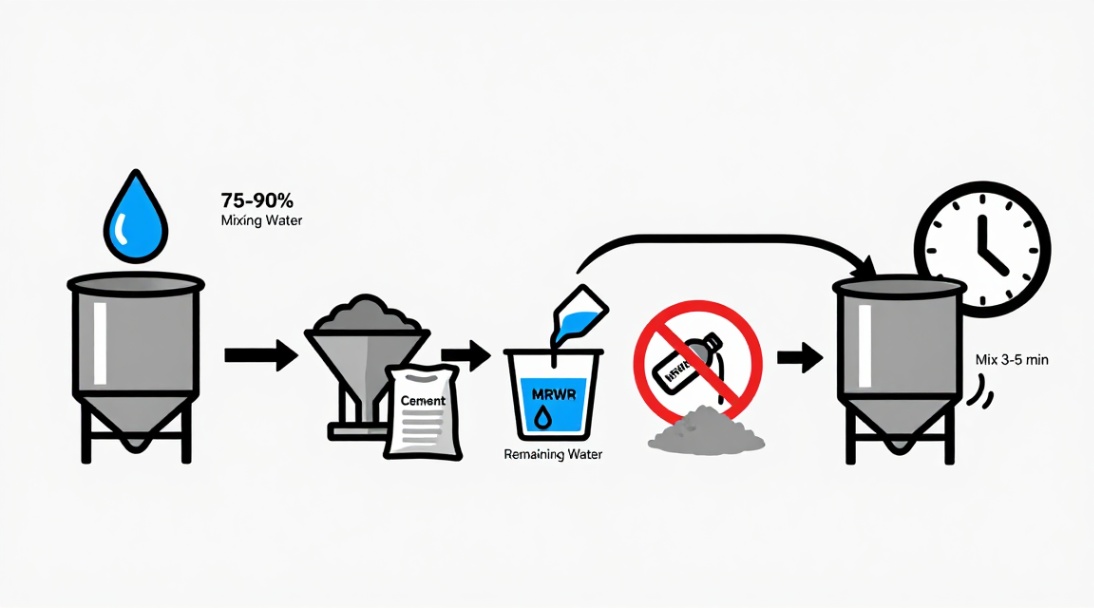
Follow this sequence rigidly. First, introduce 75-90% of the mixing water. Add the aggregates and cement. Mix thoroughly. Next, add the pre-dosed mid-range water reducer, preferably diluted in the remaining mixing water. This ensures even distribution. Mix for a minimum of 3-5 minutes after admixture addition. Never add undiluted admixture directly to dry cement. Never add it after the mix has begun to stiffen. Proper batching guarantees consistent performance across every truck and every pour.
The key is control. A mid-range water reducer is a powerful tool for achieving durable, strong concrete. Misused, it becomes a liability that compromises the entire structure. Understand its purpose, respect its limitations, and always test with your specific materials. That is how you build something that lasts.
Supplier
We are the global leader in lightweight concrete and advanced engineered foam solutions. Known globally for its commitment to research, innovation, and applied expertise, we have been providing engineered foam solutions since the early 2012’s.
We can supply high-quality concrete admixture and foam concrete related products all over the world.
The company has a professional technical department and quality supervision department, a well-equipped laboratory, and equipped with advanced testing equipment and after-sales customer service center.
If you are interested, please feel free and contact us.