Concrete4U | Concrete Admixtures, Tools, and Production Machines

Choosing the Right Micro Fibers for Shrinkage Reduction in Concrete: A Practical Guide
I remember my first major pour on a large warehouse floor nearly twenty years ago. Despite meticulous planning, hairline cracks spiderwebbed across the surface within a few weeks. The client was understandably frustrated. It wasn’t a failure of strength, but of shrinkage. That experience, common to so many of us, led me on a deep dive into prevention. Today, one of the most reliable tools in our arsenal is the humble micro fiber for shrinkage reduction in concrete. Let me walk you through not just what they are, but how to choose the right one for your job, comparing the options you’ll face so you can decide with confidence.
Understanding the Enemy: Why Concrete Shrinks and Cracks
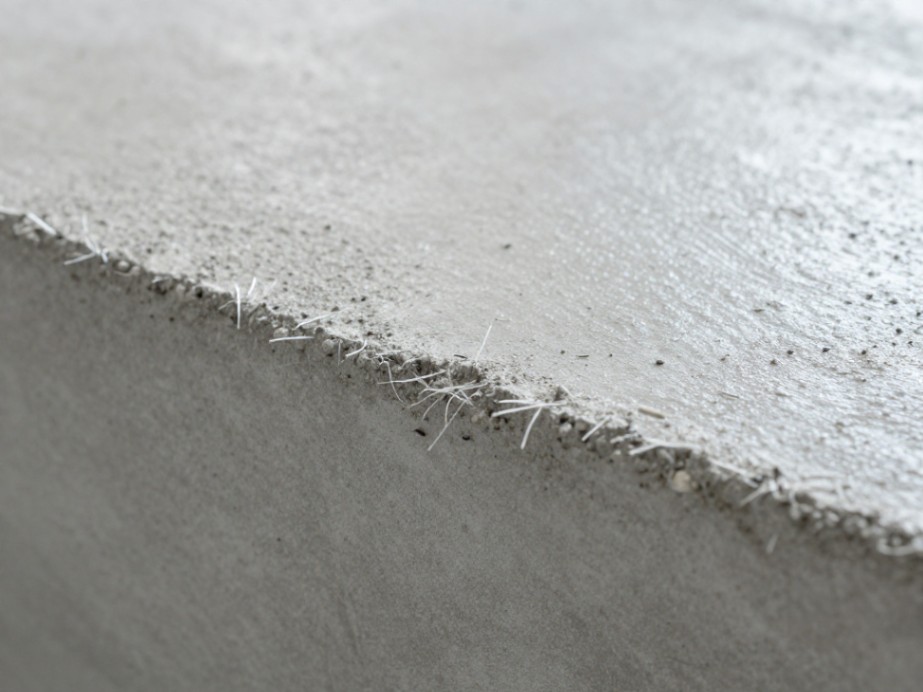
Concrete wants to shrink. It’s a fundamental trait. As it loses moisture, either while still plastic or later as it dries, internal tensile stresses build up. Plain concrete is notoriously weak in tension. When those stresses exceed its meager capacity, it cracks. These aren’t just cosmetic flaws. They become open highways for water, chlorides, and other aggressive agents that attack the steel reinforcement and degrade the matrix from within. Your beautiful, strong slab becomes compromised long before its time. The goal, then, isn’t to stop shrinkage entirely—that’s nearly impossible—but to control the cracking it causes. This is where micro fibers for shrinkage reduction shift the entire game.
How Tiny Fibers Win the Big Fight Against Cracks
The mechanism is elegant in its simplicity. Imagine thousands of tiny, flexible bridges distributed randomly throughout the wet concrete mix. As the concrete tries to shrink and micro-cracks begin to form, these bridges activate. They bridge the incipient crack faces, transferring stress and distributing the strain over a vastly larger area. This dramatically increases the material’s ability to accommodate shrinkage strain without letting a discrete, visible crack open. Think of it as giving the concrete a kind of internal flexibility or toughness during its most vulnerable phases. The fibers don’t significantly increase compressive strength, but they vastly improve the post-crack behavior. They hold everything together.
The Great Comparison: Synthetic Microfibers and Your Choices
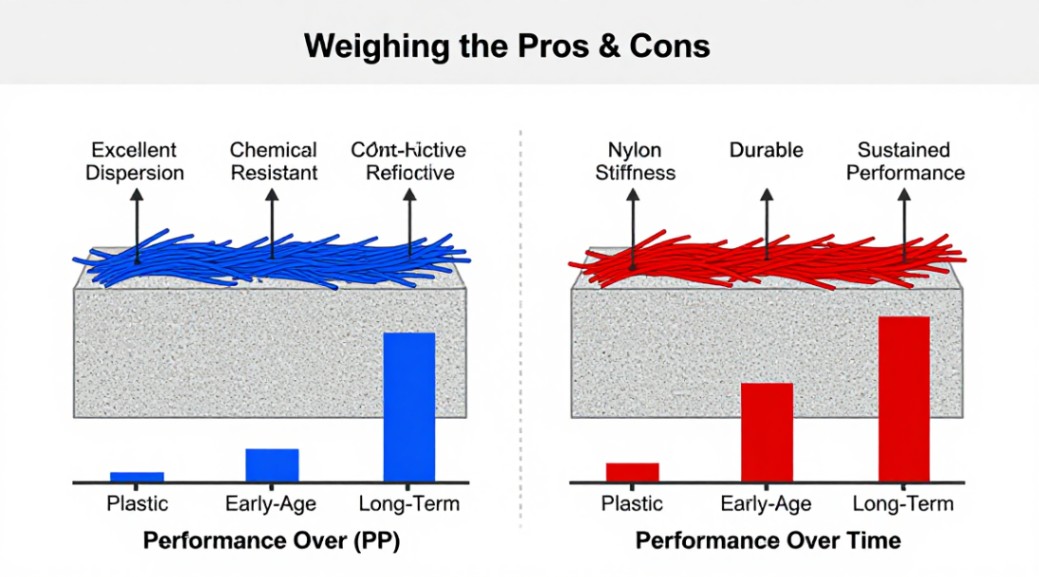
When we talk micro fibers for shrinkage reduction, we’re primarily in the realm of synthetics. You’ll encounter two main champions, each with a slightly different personality. The workhorse of the industry is polypropylene. It’s hydrophobic, meaning it doesn’t absorb mix water, and it’s highly resistant to the alkaline environment inside concrete. Polypropylene microfibers are brilliant at controlling plastic shrinkage cracks that form in the first few hours. They are cost-effective, widely available, and their primary mission is to mitigate early-age cracking. The other common type is nylon. Nylon fibers often have a slightly higher modulus of elasticity, meaning they’re a bit stiffer. This can offer marginally better performance against some forms of drying shrinkage. However, they can be more sensitive to the high pH in concrete over very long periods. Both are typically added at low dosage rates, usually between 0.1% to 0.3% by volume of concrete. That’s just a few pounds per cubic yard, but it makes a world of difference.
Weighing the Pros and Cons: A Clear-Eyed View
Let’s lay out the comparison plainly to help your decision. Polypropylene fibers are the go-to for most general applications. Their advantages are clear: excellent plastic shrinkage control, superb chemical resistance, and typically lower cost. They mix in easily and disperse well. The potential drawback? Their lower modulus means they are primarily early-age heroes. For long-term, wide crack control under significant stress, you might need to look at macro fibers or other solutions. Nylon fibers bring that slightly higher stiffness to the table, which can translate to better performance as the concrete dries and hardens fully. But this often comes at a higher price point, and you must ensure the specific nylon formulation is designed for long-term stability in cementitious environments. Some engineers prefer nylon for floor slabs expecting early traffic, where that extra bit of early toughness matters.
Putting Theory into Practice: Mixing, Placing, and Succeeding
Success with microfibers hinges on uniform dispersion. A clump of fibers is worse than useless; it’s a flaw. First, always add the fibers to the mixer after the aggregates and some of the water are in. Let the coarse material help separate the fibers. I recommend a minimum of five minutes of mixing after addition to ensure a truly homogenous blend. The concrete will look a little fuzzier, a bit less fluid, but it shouldn’t ball up. For placement, standard practices apply, but avoid over-vibration in one spot, which can cause the fibers to settle. Remember, these fibers are for shrinkage control, not structural reinforcement. You still need your designed rebar or welded wire mesh for load-bearing capacity. The fibers work synergistically with the steel, controlling the fine cracking that steel alone cannot.
Beyond Microfibers: How They Stack Up Against Other Methods
It’s wise to see where micro fibers for shrinkage reduction fit in the broader toolkit. Shrinkage-Reducing Admixtures (SRAs) are a chemical approach. They actually reduce the surface tension of the pore water, lessening the shrinkage force itself. SRAs can be very effective, but they are typically more expensive per cubic yard than a standard microfiber dosage. Often, the most robust solution is a combination: using an SRA to reduce the driving force and microfibers to control any residual cracking. Compared to internal curing with lightweight aggregates or expansive cements, microfibers offer a simpler, more predictable, and often more economical path for slab-on-grade, floors, and similar elements. Their beauty is in their simplicity and direct action.
Choosing Your Path: A Framework for Selection
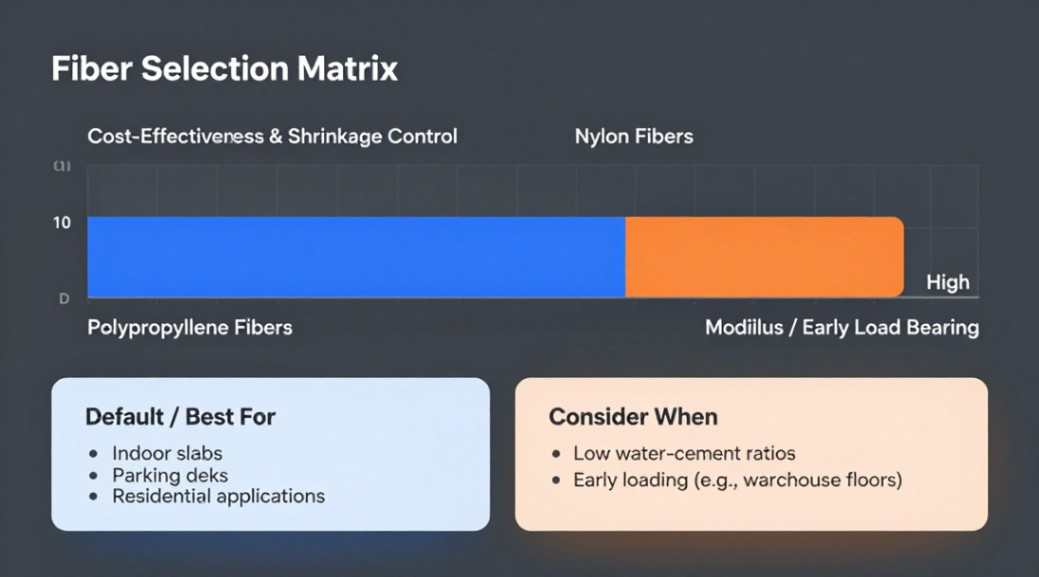
So, how do you choose? Let’s build a logical framework. For most indoor slabs, parking decks, and residential applications where plastic and early drying shrinkage are the chief concerns, polypropylene microfibers are the default, cost-effective winner. If you have a project with very low water-cement ratio mixes, or where the slab will be subjected to very early loading (like a warehouse floor needing fast track access), consider the higher modulus of nylon. Always, always request test data or project histories from your supplier. A reputable supplier will provide mixing guidelines and documented case studies. Don’t just buy a bag of ‘fibers’; understand the specific product’s properties and intended use. Your concrete mix design matters too. Fibers complement good practices—proper curing, controlled water content, sound jointing—they don’t replace them.
In the end, specifying micro fibers for shrinkage reduction in concrete is a decision that pays dividends in long-term durability and reduced maintenance headaches. It’s a small addition that speaks to a deeper understanding of concrete’s behavior. By comparing the options logically and applying them correctly, you’re not just preventing cracks; you’re building resilience into the very fabric of your structure. Trust the logic of the mechanism, follow the best practices for application, and you’ll see the difference in every smooth, durable surface you create.
Supplier
We are the global leader in lightweight concrete and advanced engineered foam solutions. Known globally for its commitment to research, innovation, and applied expertise, we have been providing engineered foam solutions since the early 2012’s.
We can supply high-quality concrete admixture and foam concrete related products all over the world.
The company has a professional technical department and quality supervision department, a well-equipped laboratory, and equipped with advanced testing equipment and after-sales customer service center.
If you are interested, please feel free and contact us.