Concrete-mesa | Concrete Admixtures, Tools, and Production Machines

Hydroxypropyl Methyl Cellulose (HPMC) as a Water Retention Agent: How it Works & Why Builders Trust It
What is HPMC as a Water Retention Agent?
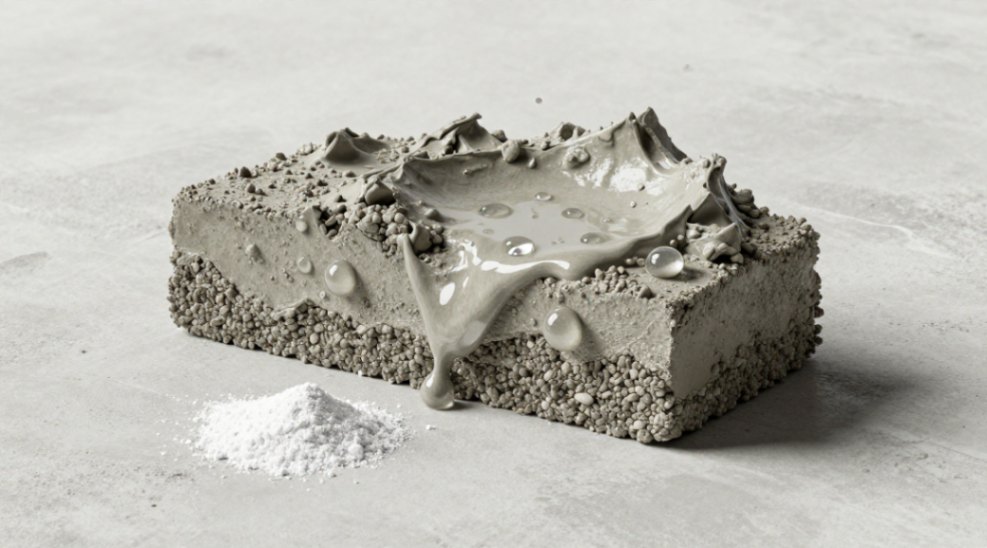
Hydroxypropyl methyl cellulose (HPMC) is a synthetic polymer derived from cellulose. In construction, it acts as a water retention agent. This means it traps and slowly releases water within cement-based mixes like mortar, plaster, and tile adhesive. Builders and formulators rely on it to prevent premature drying.
Many professionals on industry forums like Reddit’s r/Construction or ContractorTalk specifically highlight HPMC’s role in preventing “flash setting” in hot weather. They note its ability to maintain workability long enough to get the job done right.
How HPMC Retains Water: The Simple Science
HPMC works through a physical mechanism. When mixed into water, its long polymer chains hydrate and dissolve, forming a viscous colloidal solution.
- Viscosity Barrier: This thickened water surrounds cement particles and fills pores in the sand. It creates a physical barrier that slows down water evaporation.
- Gel Formation: As the mix heats up from hydration, HPMC can form a thermal gel layer on surfaces, further locking in moisture.
- Controlled Release: Water is released gradually over time, not all at once. This ensures cement particles have the sustained moisture they need for complete chemical reaction (hydration).
The Key Benefits of HPMC in Your Mix
Using HPMC as a water retention agent delivers tangible, measurable improvements to construction materials.
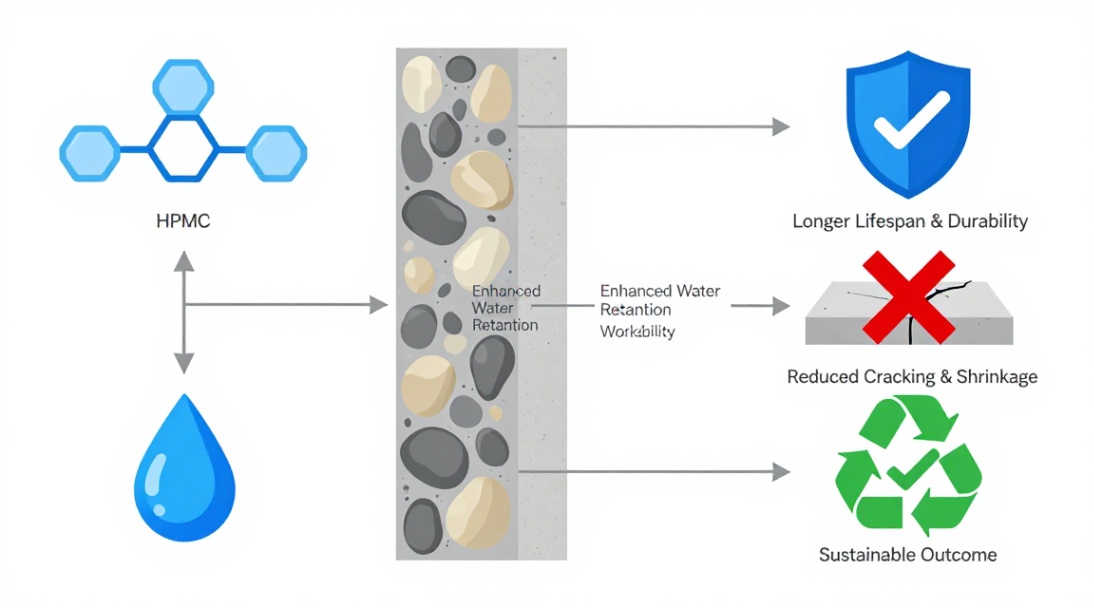
- Prevents Cracking & Shrinkage: Complete hydration minimizes dry shrinkage stresses. The result is a denser, more durable final product with far fewer microcracks.
- Extends Open Time & Workability: Mortar stays plastic and easy to trowel for longer. Workers get more time to adjust tiles or smooth plaster without the mix stiffening prematurely.
- Boosts Adhesion Strength: Better hydration leads to stronger calcium silicate hydrate gel formation. This directly translates to higher tensile and bond strength for tile adhesives and renders.
- Improves Application Properties: HPMC provides light lubrication and anti-sag properties. This enhances smoothness during application and allows for thicker, single-pass coats on vertical surfaces.
HPMC vs. Other Water Retention Agents
HPMC is the dominant choice in modern dry-mix mortars, but it’s not the only option. Here’s how it compares.
- Other Cellulose Ethers (e.g., Methyl Cellulose – MC): HPMC offers better thermal gelation properties and improved solubility in cold water compared to standard MC.
- Starch Ethers: These are lower cost but often provide less consistent viscosity and can be more susceptible to biological degradation.
- Polyvinyl Alcohol (PVA): PVA excels in adhesion but is less effective as a primary water retention agent. Many formulators use HPMC and PVA together for a synergistic effect.
Feedback from product developers often cites HPMC’s balance of performance, consistency, and cost-effectiveness as the deciding factor.
How to Use HPMC for Optimal Water Retention
To get the best results, you must select and incorporate HPMC correctly. Follow these guidelines.
1. Selecting the Right Viscosity Grade
- Low viscosity (e.g., 400 mPa·s): Used for self-leveling compounds and high-flow grouts. Water retention is moderate, primary function is workability.
- Medium viscosity (e.g., 4,000 – 15,000 mPa·s): The workhorse for tile adhesive and plaster. Provides excellent water retention and body.
- High viscosity (e.g., 60,000+ mPa·s): Used in thick-bed mortars and renders for exceptional sag resistance and water holding.
2. Determining the Correct Dosage
Dosage is typically between 0.1% to 0.5% by weight of the total dry mix. Always start low and test.
- 0.1% – 0.2%: Common for basic workability improvement in masonry mortar.
- 0.2% – 0.4%: Standard range for cement-based tile adhesives and ETICS plaster.
- >0.4%: Used in special renders or where extreme water retention is needed for thin-bed applications over highly absorbent substrates.
3. Critical Mixing Procedure
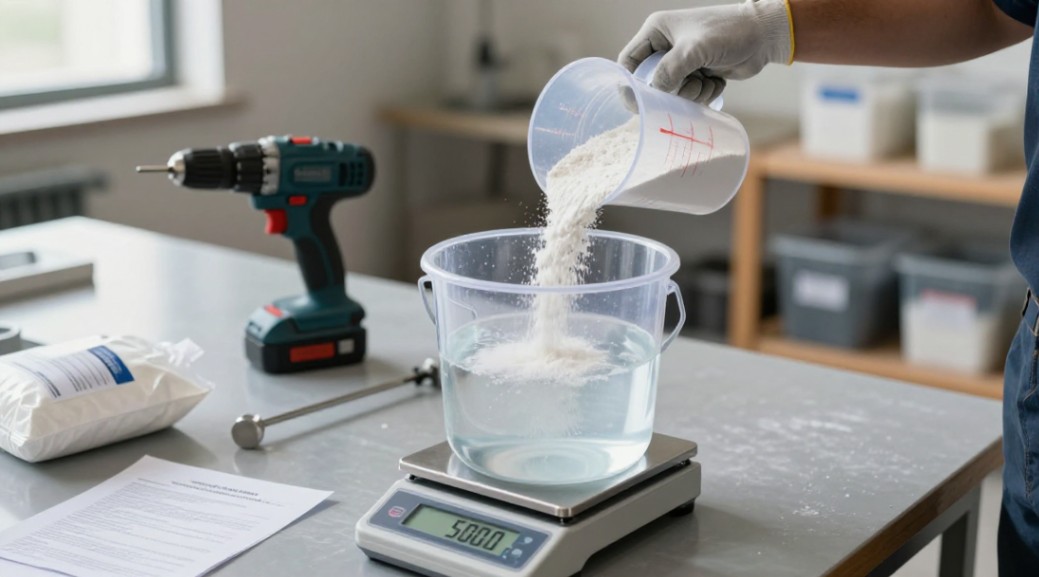
Proper dispersion is non-negotiable. Add the HPMC powder to your mixer dry-blended with your other powders (cement, sand, filler). Mix for 2-3 minutes to ensure even distribution. Then add your water. Adding HPMC directly to water will create lumps that are impossible to dissolve fully.
HPMC’s Role in Common Construction Materials
Here is where HPMC proves its worth on the job site every day.
- Tile Adhesive: It is the backbone of modified thin-bed adhesives. HPMC ensures the adhesive doesn’t skin over too quickly, allows tile adjustment, and prevents water from being sucked out by porous tiles or substrates.
- Gypsum Plasters & Joint Compounds: HPMC controls water demand and significantly reduces shrinkage cracking as the gypsum sets and dries.
- Cementitious Renders & Stucco: Provides cohesiveness for spray application, reduces rebound, and ensures uniform curing even in windy or sunny conditions.
- Self-Leveling Underlayments (SLU): While flow is key, HPMC prevents segregation of components and ensures consistent setting throughout the slab depth.
Trust in Performance and Safety
HPMC is a well-established, safe material. It is non-toxic, biodegradable under specific conditions, and presents no significant environmental hazards when used as intended. Its primary function-improving the durability and performance of building materials-directly contributes to longer-lasting structures with less need for repair, which is a sustainable outcome in itself.
This detailed look at hydroxypropyl methyl cellulose as a water retention agent provides the foundational knowledge to select and use it effectively. For specific project formulations, always consult with your raw material supplier’s technical team to fine-tune viscosity, dosage, and combination with other additives like redispersible polymer powders.
Supplier
We are the global leader in lightweight concrete and advanced engineered foam solutions. Known globally for its commitment to research, innovation, and applied expertise, we have been providing engineered foam solutions since the early 2012’s.
We can supply high-quality concrete admixture and foam concrete related products all over the world.
The company has a professional technical department and quality supervision department, a well-equipped laboratory, and equipped with advanced testing equipment and after-sales customer service center.
If you are interested, please feel free and contact us.