Concrete4U | Concrete Admixtures, Tools, and Production Machines

Pumping Problems? Stop Overlooking Your Defoamer. Here’s the Guide We Use On-Site.
That Dreaded Pressure Gauge and Porous Concrete Surface
Has this happened to you? Your mix design looks perfect on paper. You have the right slump, good admixtures. But on-site, the pump operator is fighting the rig. The pressure gauge climbs dangerously high. Later, the finished surface is a mess of pinholes and bug holes. We’ve been there. More often than not, the culprit is air. Not the good, entrained kind. The bad, frothy, useless foam that grinds pumping efficiency to a halt. This is the critical role of a concrete defoamer for pumping mixes.
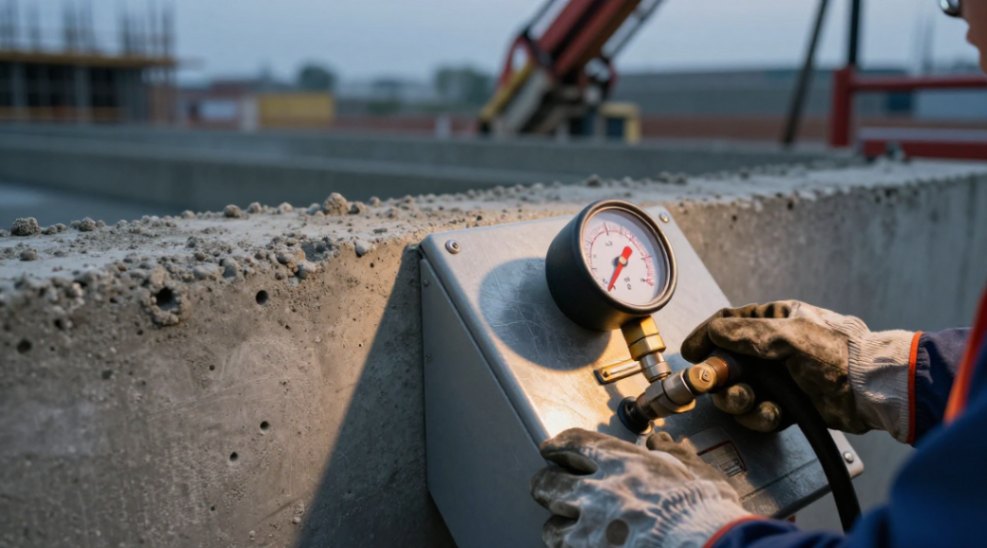
The Friction Multiplier: How Foam Sabotages Pumpability
We need to distinguish between air. Entrained air is intentional, stable, and beneficial for freeze-thaw resistance. Harmful foam is accidental, unstable, and destructive. In a pump line, think of foam as millions of tiny, slippery ball bearings that compress and expand. This compressibility steals energy from the hydraulic pressure meant to move concrete. Friction skyrockets. Pump pressure must increase to compensate, straining equipment and risking a line blockage or burst. The logic is simple: compressible air bubbles increase the effective volume you’re trying to push, but without providing any structural benefit.
Defoamer Chemistry: Not Just an Additive, a System Correction
A concrete defoamer is a specialized chemical admixture designed for one job: eliminate this harmful foam. It works through two primary mechanisms we rely on. First, film rupture. The defoamer spreads across the bubble film, destabilizing its surface tension. The film weakens and bursts. Second, bubble coalescence. The agent causes small, troublesome bubbles to merge into larger ones. These larger bubbles rise quickly to the surface and release their trapped air. The result is a denser, more homogeneous, and truly pumpable mix.
Selecting the Right Defoamer: The Critical Compatibility Test
This is where most mistakes happen. Grabbing any defoamer is a recipe for failure. You must consider system compatibility. A defoamer that works perfectly in one mix can be inert or even counterproductive in another. Why? Cement chemistry varies. Your primary water reducer, superplasticizer, or viscosity modifying admixture (VMA) interacts with the defoamer. An incompatible defoamer can get “swallowed” by other surfactants, rendering it useless. Or worse, it can cause excessive air loss, stripping away your carefully entrained, protective air. You must test.
The Non-Negotiable Pre-Job Trial Mix
Never introduce a new concrete defoamer for pumping mixes on a major project without a trial. Your trial proves three things: compatibility, optimal dosage, and the effect on total air content. Start with the manufacturer’s recommended dosage, typically given in milliliters per hundred kilograms of cement (ml/100kg of cement) or as a percentage of cement weight. Then, adjust. Measure your air content before and after defoamer addition with a reliable air meter. The goal is to reduce the large, harmful bubbles while preserving the necessary, stable micro-air.
Dosage, Timing, and Method: Precision Beats Guesswork
More is not better. Overdosing a defoamer can completely de-aerate the mix, destroying workability and freeze-thaw durability. Underdosing does nothing. You need the ‘sweet spot.’
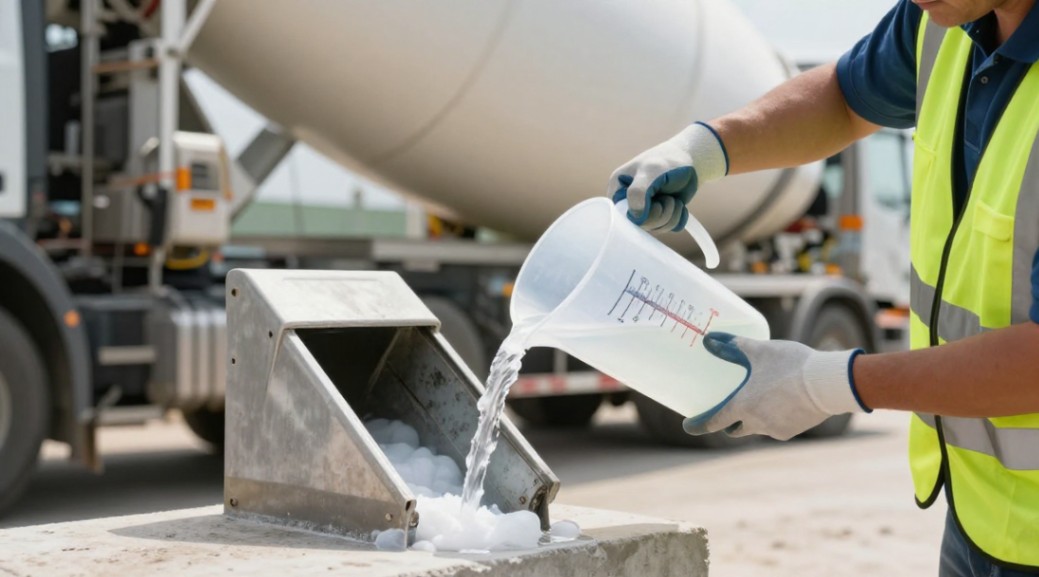
Timing is everything. For most plant-batched mixes, add the defoamer to the mixing water or with the other liquid admixtures during initial batching. This ensures even distribution. For site corrections—when you see excessive foam in the truck or pump hopper—a direct addition is possible but risky. It requires vigorous remixing, which isn’t always feasible. We treat site addition as an emergency fix, not standard practice.
| Action | Correct Approach | Common Mistake (The “Never Do This”) |
|---|---|---|
| Dosage Basis | Calculate based on cementitious material content (e.g., ml/100kg cement). | Adding a ‘glug’ or ‘splash’ per truckload based on guesswork. |
| Addition Point | At the plant, with mixing water or initial admixtures. | Dumping it into a half-full, static truck drum expecting even dispersion. |
| Mixing | Ensure full drum rotation for a minimum of 30-60 seconds after addition. | Adding and immediately discharging without adequate mixing. |
| Verification | Conduct air content tests pre- and post-addition during trial mixes. | Skipping the air test, relying only on visual ‘bubbly’ assessment. |
The Final Payoff: Beyond the Pump Line
The benefits of correctly using a concrete defoamer extend far beyond smooth pumping. Reduced friction means lower pumping pressure. This saves fuel, reduces wear on pump parts, and lowers the risk of costly line blockages. More importantly, you get a denser concrete. This density translates directly to higher compressive strength and, critically, a vastly improved surface finish. Those surface pinholes and bug holes? They are the ghosts of collapsed foam bubbles. Eliminate the foam, and you eliminate the defects. You get a hard, dense, blemish-free surface that’s easier to finish and more durable.
Our On-Site Logic for Pumpable Mix Success
After two decades, our best practice summary is straightforward. First, recognize that pumping mixes have unique air control needs. Second, select your defoamer as a system component, not an afterthought. Third, lock in your dosage and method through disciplined trial batching. Fourth, treat the defoamer with the same respect as any powerful chemical admixture—handle it safely, measure it precisely. By controlling the foam, you control the friction. You control the pressure. And ultimately, you control the quality of the placed concrete from the pump line all the way to the finished surface.
The next step is logic. Review your last pumping project that had issues. Was air content tested? Was a dedicated defoamer part of the mix design? If not, you’ve found your starting point for improvement.
Supplier
We are the global leader in lightweight concrete and advanced engineered foam solutions. Known globally for its commitment to research, innovation, and applied expertise, we have been providing engineered foam solutions since the early 2012’s.
We can supply high-quality concrete admixture and foam concrete related products all over the world.
The company has a professional technical department and quality supervision department, a well-equipped laboratory, and equipped with advanced testing equipment and after-sales customer service center.
If you are interested, please feel free and contact us.