Concrete-mesa | Concrete Admixtures, Tools, and Production Machines

How Advanced Admixtures Are Revolutionizing Fiber-Reinforced Concrete for Modern Siding
1. Introduction
Just 24 hours ago, James Hardie Industries announced a major expansion of its North American production capacity for fiber cement siding, citing surging demand for low-maintenance, fire-resistant, and aesthetically versatile home exteriors. This move underscores a broader industry shift toward engineered concrete products that rely heavily on advanced concrete admixtures to achieve performance and design goals.
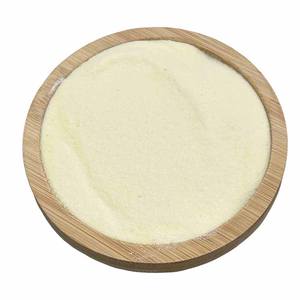
In this context, admixtures aren’t just additives—they’re enablers of innovation. From improving flow during manufacturing to boosting freeze-thaw durability in harsh climates, the right concrete chemicals transform ordinary cement into high-performance cladding. Let’s dive into how specific admixture types are reshaping fiber-reinforced concrete siding.
2. Why Fiber-Reinforced Concrete Siding Needs Specialized Admixtures
Fiber cement siding—often marketed as concrete fiber siding or fibercement siding—combines Portland cement, sand, water, and cellulose or synthetic fibers (like polypropylene fibre or steel fibers for concrete). Unlike traditional concrete, this composite must be thin, lightweight, and easily molded into wood-grain textures while resisting cracking, moisture, and UV degradation.
Achieving this balance demands precision in mix design. That’s where chemical admixture for concrete becomes essential. Without the best admixture for concrete tailored to this application, manufacturers would struggle with inconsistent curing, poor surface finish, or premature failure.
3. Key Admixture Types Powering Modern Concrete Siding
3.1 Superplasticizers: Enabling Flow Without Extra Water
Superplasticizer in concrete is arguably the most critical admixture used in concrete siding production. These high-range water reducers—often polycarboxylate ether (PCE) based—allow manufacturers to drastically cut water content while maintaining excellent workability. This results in denser, stronger panels with lower porosity.
For example, a PCE superplasticizer can reduce water by 30–40% without sacrificing flow, which directly improves early strength and reduces curing time. This is vital for fast curing concrete additives in high-volume precast operations like those at Certainteed or Hardie concrete siding plants.
3.2 Waterproofing Admixtures: Guarding Against Moisture Intrusion
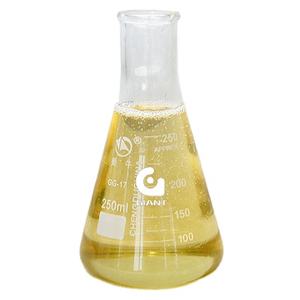
Concrete siding for homes must withstand decades of rain, snow, and humidity. Here, waterproofing admixture for concrete plays a starring role. Crystalline waterproofing admixture and integral waterproofer types react with cement to form insoluble crystals that block capillary pores.
Unlike surface sealers, these cement waterproofing additives become part of the matrix itself—offering permanent protection. This is especially important for concrete siding that looks like wood, where moisture-induced warping or mold would ruin the aesthetic illusion.
3.3 Air-Entraining Agents: Boosting Freeze-Thaw Resistance
In colder regions, air entraining concrete is non-negotiable. Air entraining admixture introduces microscopic air bubbles that act as pressure relief valves during freeze-thaw cycles, preventing spalling and cracking.
For fiber reinforced concrete exposed to outdoor elements, even a small dose of air entraining agent significantly extends service life—making it a standard in quality concrete cement siding formulations.
3.4 Retarders and Accelerators: Controlling Cure Time
Precise control over setting is crucial in automated siding production lines. Concrete retarder admixture delays initial set during hot weather or complex molding, while accelerating admixtures for concrete speed up demolding in controlled environments.
Modern facilities often use a combination: a surface retarder concrete for textured finishes paired with a concrete accelerator curing time reducer to maintain throughput. This balance ensures both visual fidelity and structural integrity.
4. The Role of Fibers and Supporting Additives
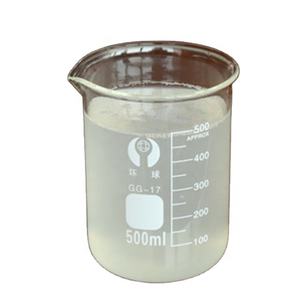
While fibers like polypropylene fibres for concrete or macro fibers provide tensile strength and crack control, they can hinder workability. That’s where plasticizer for concrete (also called concrete plasticiser or plasticizer admixture) steps in—improving dispersion and reducing friction between fibers and cement particles.
Additionally, additive for mortar and concrete additives fiber blends ensure uniform distribution, preventing clumping. Coconut fiber reinforced concrete is even emerging as a sustainable option, though it requires tailored admixture packages to manage organic variability.
5. Real-World Impact: Cost, Aesthetics, and Performance
Thanks to these advanced admixtures, today’s concrete siding cost has become competitive with premium wood alternatives—while offering far greater durability. Home Depot concrete siding options now include products with built-in waterproof admix and color-stable finishes, eliminating the need for painting.
Moreover, colored concrete techniques—using tinted concrete powders and release agents—allow stamped and colored concrete effects on rigid panels, giving homeowners the warmth of wood with the resilience of reinforced concrete.
6. Conclusion
From superplasticizer admixture enabling ultra-thin profiles to crystalline waterproofing admixture ensuring decades of weather resistance, concrete chemicals are the unsung heroes behind modern fibercement siding. As demand grows for sustainable, fire-safe, and beautiful exteriors, the synergy between fiber reinforcement and smart admixture selection will only become more critical. Whether you’re a builder, architect, or homeowner, understanding these concrete admixture types unlocks smarter, longer-lasting building solutions.
Our Website founded on October 17, 2012, is a high-tech enterprise committed to the research and development, production, processing, sales and technical services of ceramic relative materials such as How. Our products includes but not limited to Boron Carbide Ceramic Products, Boron Nitride Ceramic Products, Silicon Carbide Ceramic Products, Silicon Nitride Ceramic Products, Zirconium Dioxide Ceramic Products, etc. If you are interested, please feel free to contact us.