Concrete-mesa | Concrete Admixtures, Tools, and Production Machines

Hydroxypropyl Methyl Cellulose for Tile Adhesive: The Essential Guide to Improved Performance
Solving the Tiler’s Dilemma: Why Adhesive Consistency Matters
You have a wall to tile. You mix your adhesive, but it feels thin. It drips off your trowel. You apply it, and by the time you set your third tile, the bed has skinned over. The tile doesn’t bond fully. Later, you notice sag on a vertical surface. The job is slower, messier, and the results are uncertain. These are the daily frustrations that separate a professional finish from a problematic one. The root cause often lies in the modifying additives within the adhesive powder. Among these, Hydroxypropyl Methyl Cellulose (HPMC) stands as a non-negotiable component for high-performance tile adhesives. This cellulose ether is the silent workhorse that engineers rely on to ensure predictable, workable, and reliable bonding.
What is Hydroxypropyl Methyl Cellulose (HPMC) in Tile Adhesives?
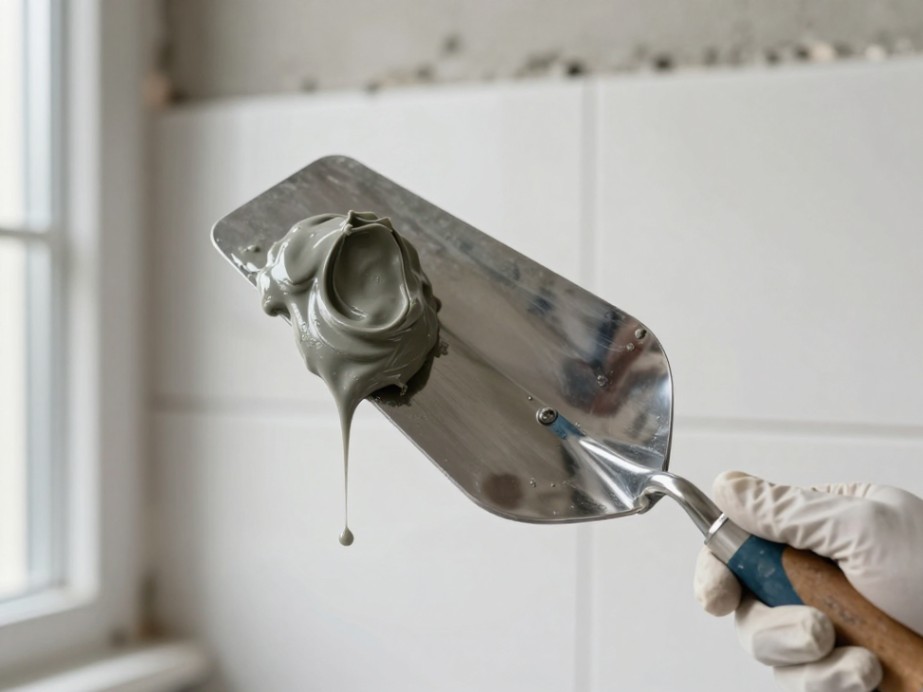
Hydroxypropyl Methyl Cellulose (HPMC) is a semi-synthetic, water-soluble polymer derived from cellulose. In tile adhesive formulations, it functions as a multifunctional additive. Its primary roles are as a thickener, water retention agent, and workability aid. When added to cement-based adhesive powders, HPMC dissolves upon mixing with water, forming a colloidal solution. This solution dramatically increases the viscosity of the mix water, which in turn thickens the entire adhesive mortar. More critically, it creates a protective colloid network that traps water, preventing it from being rapidly absorbed by the substrate or evaporated. This controlled water release is fundamental to the cement hydration process and the development of final adhesive strength.
The Core Functions of HPMC in Your Adhesive Mix
HPMC delivers a suite of performance benefits that directly address common application pain points:
- Superior Water Retention: HPMC forms a protective film around cement particles, drastically slowing water loss. This ensures full cement hydration, even on highly absorptive substrates like aerated concrete or old cement beds. Inadequate water retention leads to weak, crumbly adhesive and poor adhesion.
- Enhanced Workability and Open Time: The lubricating effect of HPMC creates a smooth, buttery consistency that is easy to trowel. It significantly extends open time-the period during which tiles can be adjusted after placement. This gives tilers more control, especially in large-format tile (LFT) installations or warm environments.
- Anti-Sag Performance: The thickening action provides immediate structural viscosity (stickiness). This allows the adhesive to hold its ridge profile on vertical surfaces without slumping or sliding, a critical feature for wall tiles.
- Improved Adhesion Strength: By ensuring complete hydration and reducing stress from rapid drying, HPMC contributes to higher ultimate tensile adhesion strength. It also enhances the bond to challenging substrates.
Technical Application and Formulation Guidelines
Success with HPMC is not automatic; it requires correct selection and use. The performance is highly dependent on viscosity grade, dosage, and mixing procedure.
Selecting the Right HPMC Viscosity Grade
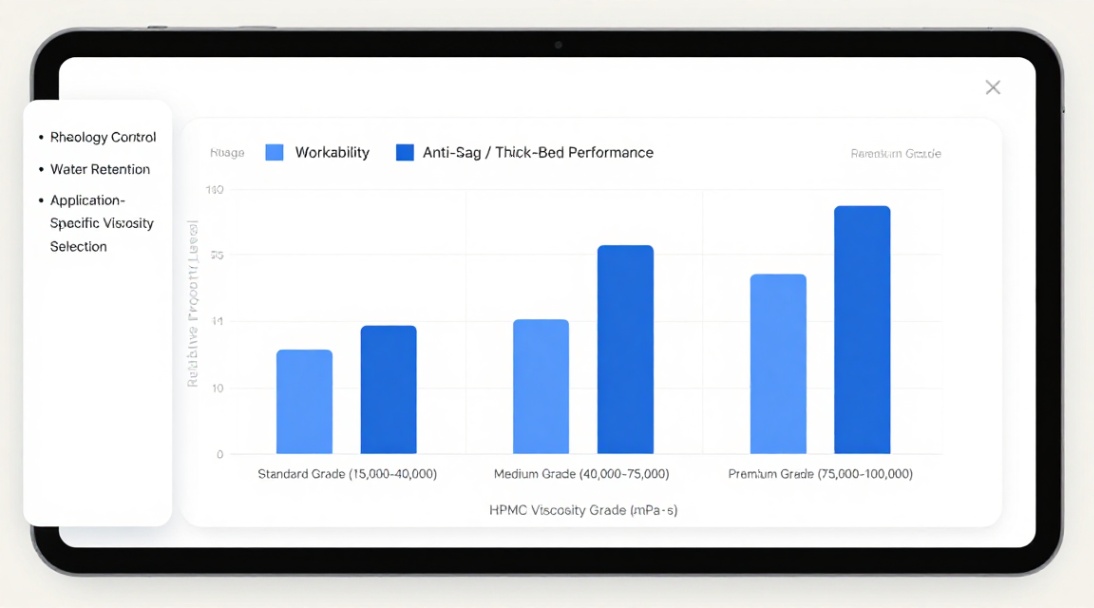
HPMC is characterized by its viscosity in aqueous solution, typically measured at 2% concentration. For tile adhesives, common grades range from 15,000 to 100,000 mPa·s (cps). A lower viscosity grade (e.g., 15,000-40,000) is often used for standard adhesives requiring good workability. Higher viscosity grades (e.g., 75,000-100,000) are specified for premium, high anti-sag, and thick-bed applications. The choice dictates the final rheology of the adhesive.
Optimal Dosage and Mixing Protocol
The typical dosage range for HPMC in cement-based tile adhesives is between 0.2% and 0.5% of the total dry powder weight. Exceeding this range can lead to over-thickening, reduced adhesion, and difficult mixing. A two-stage mixing procedure is best practice. First, add the HPMC-containing powder to the full amount of clean water and mix for 1-2 minutes until a homogeneous, lump-free slurry forms. Allow the mix to rest (slake) for 3-5 minutes. This rest period is crucial for the HPMC to fully hydrate and develop its viscosity. Finally, remix for 30-60 seconds before application. Skipping the slaking time is a primary cause of lumping and inconsistent performance.
Compatibility with System Components
HPMC exhibits excellent compatibility with other key ingredients in modern tile adhesives. It works synergistically with redispersible polymer powders (RDPs) like VAE or acrylics. The cellulose ether provides water retention and body, while the polymer enhances flexibility, adhesion, and shock resistance. HPMC is also compatible with most superplasticizers and defoamers, allowing formulators to fine-tune flow and eliminate air entrainment. Its stability across a wide pH range ensures consistent performance in cement’s alkaline environment.
Long-Term Benefits and Competitive Advantages
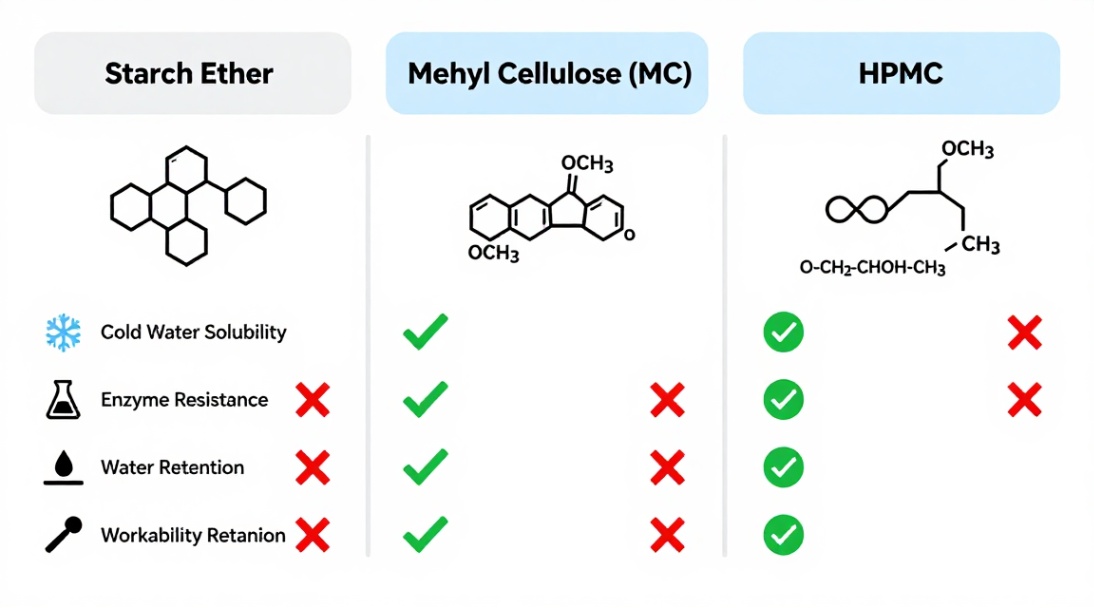
The inclusion of HPMC is an investment in the installed system’s durability. By promoting complete cement hydration, it reduces the risk of shrinkage cracks within the adhesive layer. This contributes to long-term dimensional stability and crack resistance. Compared to other cellulose ethers like Methyl Cellulose (MC), HPMC offers better solubility in cold water and improved resistance to enzyme-induced degradation. When benchmarked against simple thickeners like starch ether, HPMC provides far superior water retention and workability retention, leading to a more reliable and higher-strength bond. As Dr. Alina Kostova, a materials scientist specializing in construction polymers, states: “In rigorous testing, adhesives modified with optimally dosed HPMC consistently show a 15-25% improvement in wet adhesion strength and a 50%+ extension in adjustable time compared to unmodified counterparts. This data validates its role as a cornerstone additive.”
Achieving Flawless Results: Your Action Plan
Theoretical knowledge must translate to practical results. To eliminate the guesswork and frustration from your tile installations, you must start with an adhesive that is correctly formulated with high-quality HPMC. Do not compromise on this critical component. We strongly recommend you source your tile adhesives from manufacturers who transparently use premium-grade HPMC in their formulations. For contractors and installers, this means selecting products branded as “premium,” “professional,” or “high-performance,” which are more likely to contain the optimal type and amount of cellulose ether. Before your next project, review the technical data sheet of your chosen adhesive; look for references to cellulose ethers, water retention values (which should exceed 95%), and extended open time. Investing in the right adhesive is the single most effective step to ensure faster, easier, and permanently successful tile installations.
Supplier
We are the global leader in lightweight concrete and advanced engineered foam solutions. Known globally for its commitment to research, innovation, and applied expertise, we have been providing engineered foam solutions since the early 2012’s.
We can supply high-quality concrete admixture and foam concrete related products all over the world.
The company has a professional technical department and quality supervision department, a well-equipped laboratory, and equipped with advanced testing equipment and after-sales customer service center.
If you are interested, please feel free and contact us.