Concrete4U | Concrete Admixtures, Tools, and Production Machines

What is an RDP for EIFS? The Definitive Guide to Reliable Exterior Insulation Design
Picture this: a stunning new commercial building, clad in a sleek, modern EIFS facade. It looked perfect at the ribbon-cutting. Three years later, the owner stared at a growing stain of moisture on an interior wall. A contractor opened up a section. They found trapped water, degraded insulation, and the beginnings of structural rot. The problem wasn’t the EIFS itself. The failure stemmed from a gap in the plans-a missing set of specific, tested instructions for how to integrate the wall system with the roof, windows, and foundation. That missing piece is often the RDP.
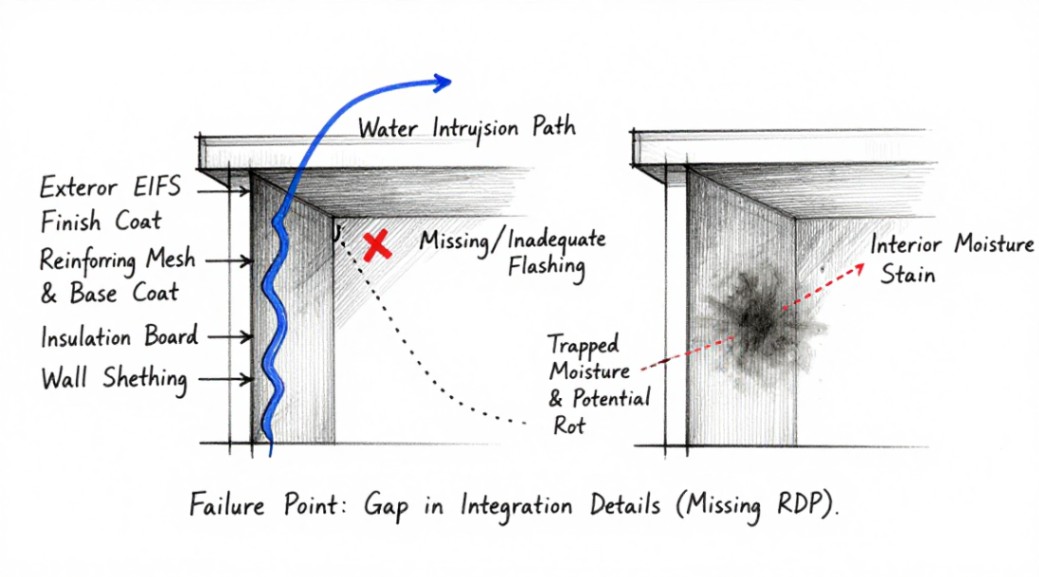
What Exactly is an RDP for Exterior Insulation and Finish Systems?
An RDP-or Research and Development Product-is the comprehensive technical blueprint for an EIFS installation. Think of it as the system’s DNA. It is not just a product data sheet. It is a detailed set of documents that defines <strong>every material, every layer, every connection, and every performance requirement. The RDP translates a manufacturer’s generic product into a site-specific, code-compliant wall assembly. It answers the critical “how” for architects, specifiers, and installers.
For EIFS, the RDP is non-negotiable. It transforms a collection of components into a guaranteed, high-performance building envelope.
The Core Purpose: Managing Moisture and Ensuring Durability
EIFS succeeds or fails on its ability to manage water. The RDP’s primary job is to provide a clear, defensible path for moisture to exit the wall assembly. It meticulously details two key approaches:
- Barrier EIFS: The classic system. The RDP specifies how to create a perfect, monolithic seal at the exterior face. Every joint, termination, and penetration receives exact detailing to prevent any water ingress.
- Water-Managed EIFS (Drainage EIFS): The modern standard. Here, the RDP details the creation of a drainage cavity behind the insulation board. It specifies the water-resistive barrier (WRB), flashing types, weep holes, and drainage mats. The document provides the engineered solution for water that inevitably gets behind the cladding to drain safely away.
Without this level of detail in the RDP, you rely on guesswork. Guesswork leads to leaks.
What’s Inside a Comprehensive EIFS RDP?
A robust RDP leaves no room for interpretation. It is the single source of truth for the project. Here are the critical components it must address:
1. Material Specifications and Performance Criteria
The RDP lists every component with exacting standards:
- Insulation Board: Type (EPS, mineral wool), density (e.g., 1.5 lb/ft³ for EPS), thickness (R-value), and required compressive strength.
- Adhesive and/or Mechanical Fasteners: Approved brands, coverage rates, fastener type, length, and pattern per square foot.
- Base Coat and Reinforcing Mesh: Polymer-modified cementitious mix, mesh weight (e.g., 4.5 oz/yd²), and embedment depth.
- Finish Coat: Acrylic polymer formulation, minimum dry film thickness (mils), and texture.
- Flashing and Sealants: Compatibility with the WRB and EIFS components, detailing for all termination points.
2. Step-by-Step Installation Guidelines
The RDP moves from theory to practice. It provides a clear sequence:
- Substrate Preparation: Specify acceptable substrates (concrete, sheathing) and required flatness tolerance (e.g., 1/4″ in 10 feet).
- Water-Resistive Barrier (WRB) Installation: Define the approved WRB product, lapping requirements (min. 4″ side/6″ head), and integration with flashing.
- Insulation Board Attachment: Detail the adhesive trowel notch size and the precise mechanical fastener schedule for wind load resistance.
- Detailing Reinforcements: Show exactly how to reinforce all corners, edges, and joints with mesh.
- Base and Finish Application: Dictate curing times between coats, application temperatures, and tooling methods.
3. Critical Details and Integration Points
This is where most field errors occur. A proper RDP includes cross-sectional drawings for:
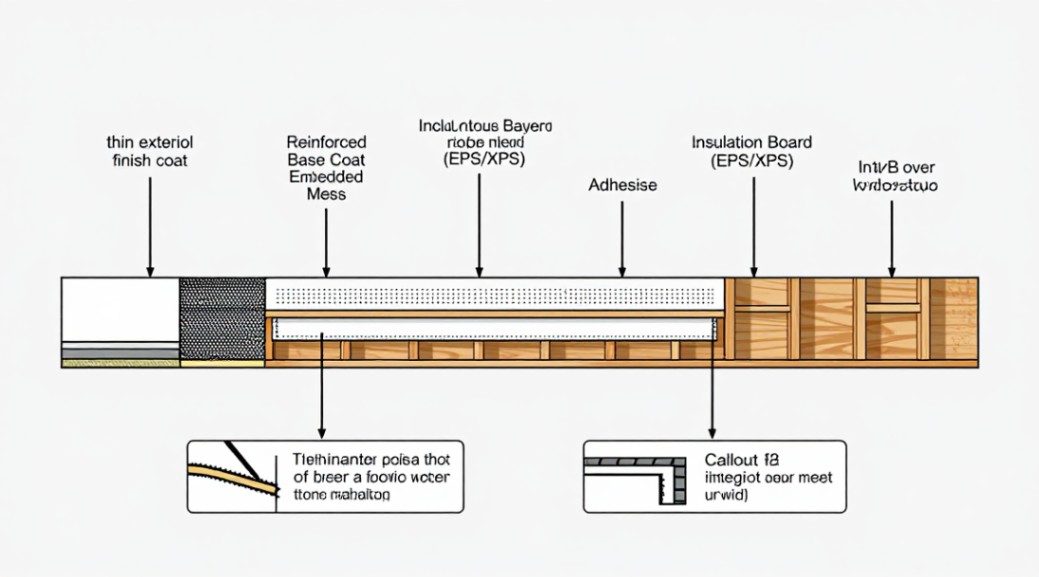
- Window and door perimeters (head, sill, jamb)
- Roof-to-wall intersections and parapets
- Deck and balcony connections
- Expansion and control joints
- Penetrations for pipes, conduits, and vents
Each detail shows how the EIFS layers tie into adjacent materials, ensuring continuity of the air and water barrier.
Why an RDP is Your Project’s Best Insurance Policy
Specifying an EIFS without a fully developed RDP is a major risk. The document provides concrete benefits:
Code Compliance Made Simple: Building codes reference standards like ASTM E2568 for EIFS. The RDP demonstrates compliance by referencing tested assemblies and specifying listed materials. It gives the building official confidence.
Eliminates Costly Ambiguity: Contractors cannot substitute cheaper, unapproved materials. Inspectors have a clear checklist. This prevents the single greatest cause of callbacks: deviation from the intended design.
Ensures Long-Term Performance: The RDP defines the complete system as the manufacturer intends it to perform. This protects the warranty and delivers the promised energy efficiency and durability for the building’s lifespan.
Facilitates Collaboration: It becomes the shared document for the architect, EIFS manufacturer’s consultant, and installer. Everyone works from the same playbook, reducing conflicts and change orders.
Do Not Leave Your EIFS Project to Chance
The difference between a high-performing, trouble-free EIFS facade and a problematic one often comes down to the quality and specificity of the RDP. It is the foundation of a successful installation. Do not rely on generic details or outdated specifications.
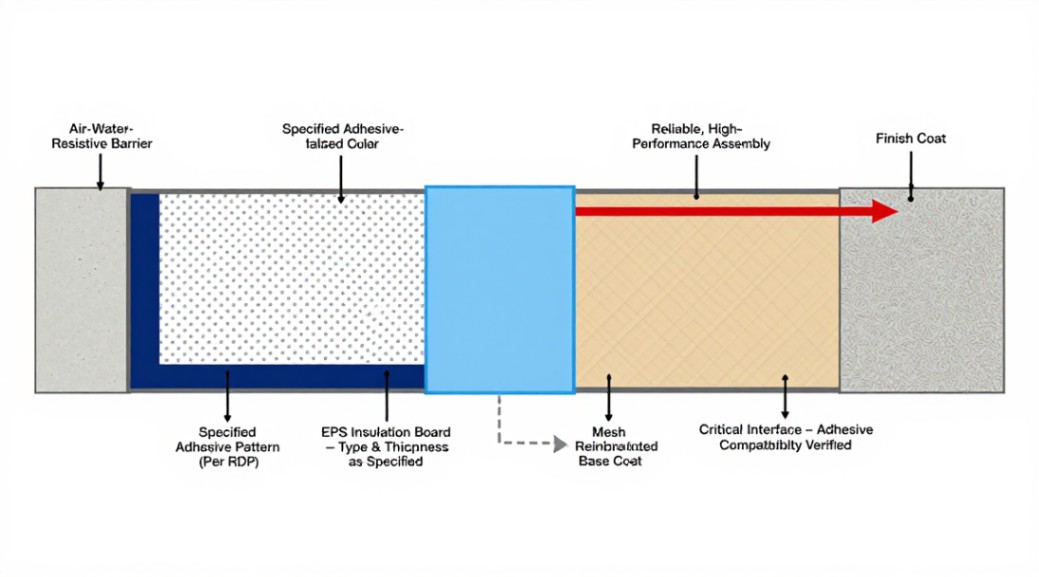
Your next step is non-negotiable. For your upcoming project, demand a complete, project-specific RDP from your EIFS supplier. If they cannot provide one, find a manufacturer who will. Insist that your architectural specifications reference and require the RDP by name and document number. Make it a binding part of the contract documents. This is the single most effective action you can take to guarantee a beautiful, durable, and dry building envelope. Your future self-and your client-will thank you.
Supplier
We are the global leader in lightweight concrete and advanced engineered foam solutions. Known globally for its commitment to research, innovation, and applied expertise, we have been providing engineered foam solutions since the early 2012’s.
We can supply high-quality concrete admixture and foam concrete related products all over the world.
The company has a professional technical department and quality supervision department, a well-equipped laboratory, and equipped with advanced testing equipment and after-sales customer service center.
If you are interested, please feel free and contact us.