Concrete4U | Concrete Admixtures, Tools, and Production Machines

Your Guide to Thermal Insulation Foamed Concrete: The Builder’s FAQ
Got a Thermal Bridge or Weight Problem? Let’s Talk Solutions.
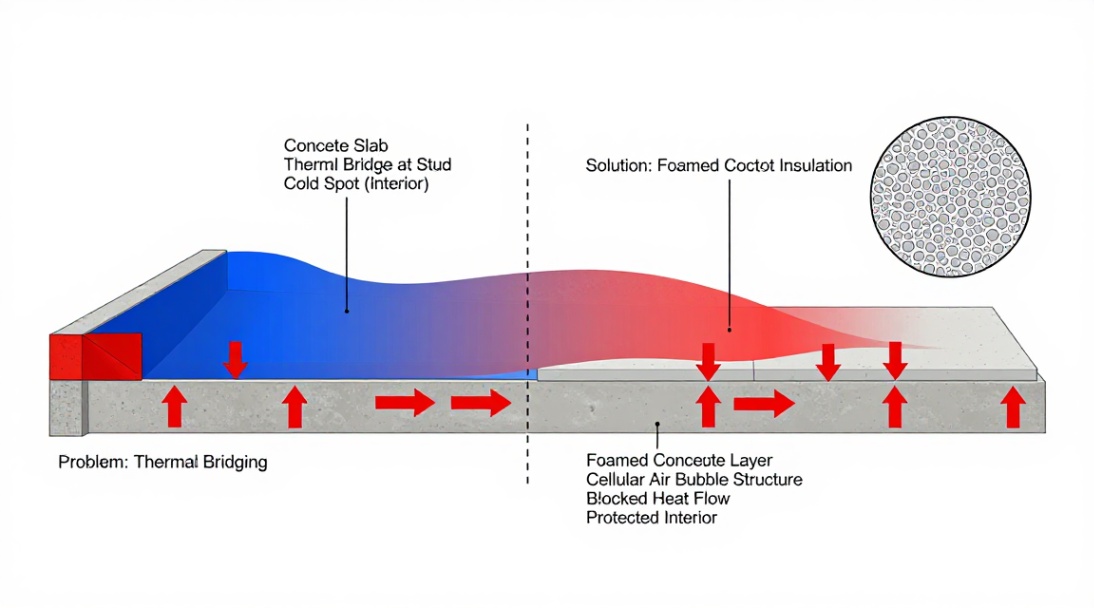
You know the frustration. You design a wall for energy efficiency, but thermal bridges create cold spots. You need lightweight fill for a slope, but traditional concrete is too heavy. The solution isn’t just another material; it’s a different approach. Thermal insulation foamed concrete mix offers a unique combination of low weight and high thermal resistance. It’s not magic. It’s physics and smart mix design. This guide answers your real questions, comparing it to the alternatives you use every day.
Your Questions, Answered by a 20-Year Pro
How does foamed concrete actually insulate better than regular concrete?
The secret is in the air. Traditional concrete is dense, with solid aggregate transferring heat. Foamed concrete contains millions of microscopic, closed air bubbles. Air is a poor conductor. These trapped air pockets create a powerful thermal barrier within the material itself. Think of it as a solid foam board you can pour. The result is a thermal conductivity (lambda value) that can be 5 to 10 times lower than standard concrete.
What are the core components of a reliable mix?
Every successful batch relies on four key parts working together. You need a cementitious binder (Portland cement, often with fly ash or slag), water, a high-quality synthetic foaming agent, and sometimes fine sand. The foaming agent is critical-it creates stable bubbles that won’t collapse during mixing or pouring. Precise control of the foam generator determines your final density, which directly controls strength and insulation.
Foamed Concrete vs. Traditional Insulation: Which should I choose?
Let’s compare based on common project goals.
For Roof Screeds & Floor Levelling:
- Foamed Concrete: Excellent choice. It’s lightweight (400-800 kg/m³), reducing structural load. It provides both leveling and insulation in one pour. It’s pumpable over long distances.
- Traditional Concrete + EPS Boards: Heavier, requires multiple trades: install insulation, then pour concrete. Risk of delamination or gaps.
For Wall Cavity Fill or Abandoned Tank Filling:
- Foamed Concrete: Superior flow fills every void, eliminating air pockets. It’s self-leveling and applies low lateral pressure. It provides structural fill with insulation benefits.
- Compact Granular Fill (e.g., Foamed Glass): Can settle over time, creating voids. Often requires compaction equipment in confined spaces.
For Primary Wall Insulation:
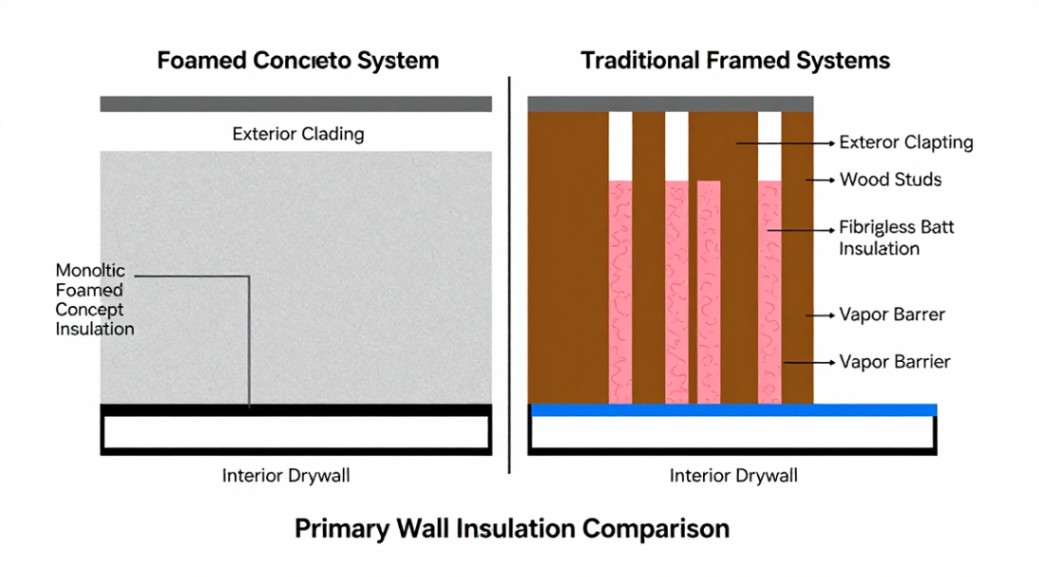
- Foamed Concrete: Best as part of a composite system. Its compressive strength (1-10 MPa) allows it to bear some load while insulating. Use it in ICF blocks or as insulated core fill.
- PIR/EPS Rigid Boards: Higher pure insulation value (lower lambda) for a given thickness. They are separate, non-structural elements that require a protective cladding layer.
Does the lower density mean it’s weak and won’t last?
Strength and density are linked, but durability is about more than just compressive strength. A well-made foamed concrete with a closed pore structure resists water penetration. This prevents freeze-thaw damage. The key is a stable foam and proper curing. We see projects from 20 years ago still performing perfectly because the mix design was right for the application. You don’t use a 500 kg/m³ mix for a foundation; you use it for insulation. You specify a 1200 kg/m³ mix for a load-bearing insulated wall. It’s about choosing the right tool.
I hear about “settling” and “cracking.” Are these real concerns?
These are symptoms of a poor mix or bad practice, not inherent flaws. Settling happens if the foam bubbles collapse, often due to a weak foaming agent or excessive mixing. Cracking occurs from improper curing-foamed concrete needs moisture retention just like regular concrete. The best defense is a qualified supplier with a proven mix and proper on-site supervision for placement and curing. Many users on contractor forums report success when they treat it as a specialized material, not just “lightweight concrete.”
What’s the real cost-benefit? It seems expensive per cubic meter.
Look at total installed cost and lifecycle value. Yes, the material cost is higher than plain concrete. But consider the savings: reduced structural framing costs due to lower weight, combined insulation and structural layers eliminating separate trades, and rapid installation with pumping. The biggest benefit is long-term energy performance, sealing thermal bridges that rigid boards can miss. For renovation, its flow ability solves problems other materials can’t touch.
How do I ensure quality on my site?
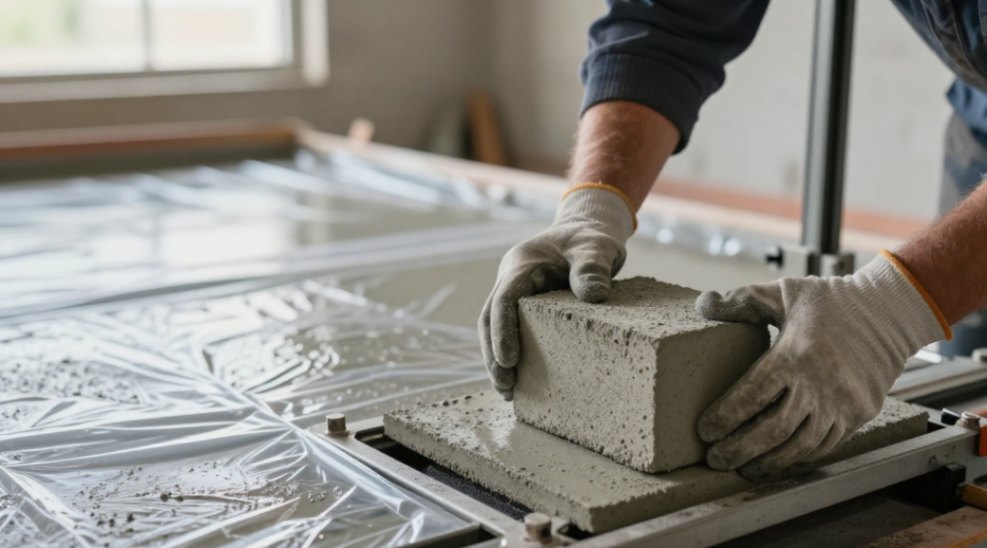
Control these three things. First, source from a reputable batching plant with experience in foamed concrete. Second, insist on a trial mix to verify fresh density and flow. Third, manage curing-keep it protected from wind and sun for at least 48 hours, using spray-on membranes if needed. Always test cast cubes for compressive strength. Good practice makes a durable product.
Where Do We Go From Here?
The future is in sustainability. Researchers are actively developing mixes with higher percentages of recycled materials like ground glass or industrial by-products. The goal is to lower the carbon footprint while maintaining performance. The core principle remains: using engineered air to create a lighter, more insulating building material. Start by evaluating one element on your next project-a roof screed, a void fill, an insulated wall core. Test it. Specify a performance-based requirement for density and strength, and let a trusted specialist deliver the mix. You might just find it solves several problems at once.
Supplier
We are the global leader in lightweight concrete and advanced engineered foam solutions. Known globally for its commitment to research, innovation, and applied expertise, we have been providing engineered foam solutions since the early 2012’s.
We can supply high-quality concrete admixture and foam concrete related products all over the world.
The company has a professional technical department and quality supervision department, a well-equipped laboratory, and equipped with advanced testing equipment and after-sales customer service center.
If you are interested, please feel free and contact us.