Concrete-mesa | Concrete Admixtures, Tools, and Production Machines

Stop Wasting Money on Foam Concrete: 5 Automatic Generator Mistakes That Will Cost You
Did you know that over 30% of foam concrete projects fail to meet specification? The culprit is rarely the cement. It’s the foam.
Poor quality, unstable foam destroys structural integrity and insulation value. Your choice of automatic concrete foam generator equipment dictates your success or failure. As a project manager, you need flawless performance. Let’s navigate the pitfalls.
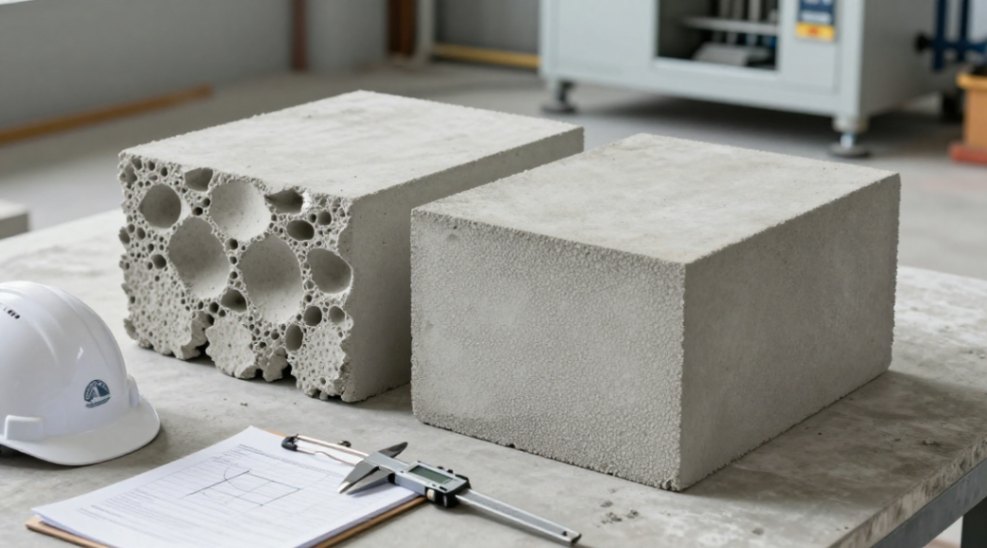
The 5 Deadly Sins of Automatic Foam Generator Operation
Here are the mistakes I see destroy budgets and compromise buildings every year. Avoid these at all costs.
1. Ignoring Foam Stability Before Density
This is the cardinal sin. Everyone obsesses over the target foam density number. They forget stability.
- Never assume a generator that hits a low density (e.g., 45 kg/m³) automatically produces stable foam.
- Warning: Unstable foam collapses when mixed with cement slurry. You get inconsistent cell structure. This leads to drastic strength loss and poor thermal performance. The foam disappears, and your lightweight concrete becomes dead weight.
- Do this instead: Test for drainage time and half-life. Good equipment provides consistent, minute-sized bubbles that resist collapse for the full mixing and pouring cycle.
2. Choosing Capacity Based on Hope, Not Math
Bigger is not better. It’s wasteful. Smaller is dangerous.
- Never buy a machine because “it’s the model we always get.” Your new CLC block line has different demands than a roof screed project.
- Warning: An undersized generator bottlenecks your entire batching plant. Production halts. An oversized unit wastes power, consumes excess foaming agent, and often runs inefficiently at low load.
- Do this instead: Calculate your maximum continuous foam output (liters per minute) based on your mix design and plant output. Add a 15-20% safety margin. That’s your target equipment capacity.
3. Treating the Foaming Agent as an Afterthought
The generator and the foaming chemical are one system. Ignore this at your peril.
- Never use a random, cheap foaming agent because it saved $0.10 per liter. Incompatible chemicals will not foam properly. They can corrode pump seals and clog lines.
- Warning: The wrong agent creates weak, large bubbles. It increases consumption by 200% or more. It destroys your profit margin and your concrete quality.
- Do this instead: Select your foaming agent first. Then choose automatic concrete foam generator equipment specifically designed and calibrated for that agent’s viscosity and concentration. The manufacturer should provide this compatibility data.
4. Assuming ‘Automatic’ Means ‘Unattended’
This misconception leads to catastrophic batch failures. Automation handles proportioning and mixing. It does not replace a skilled operator.
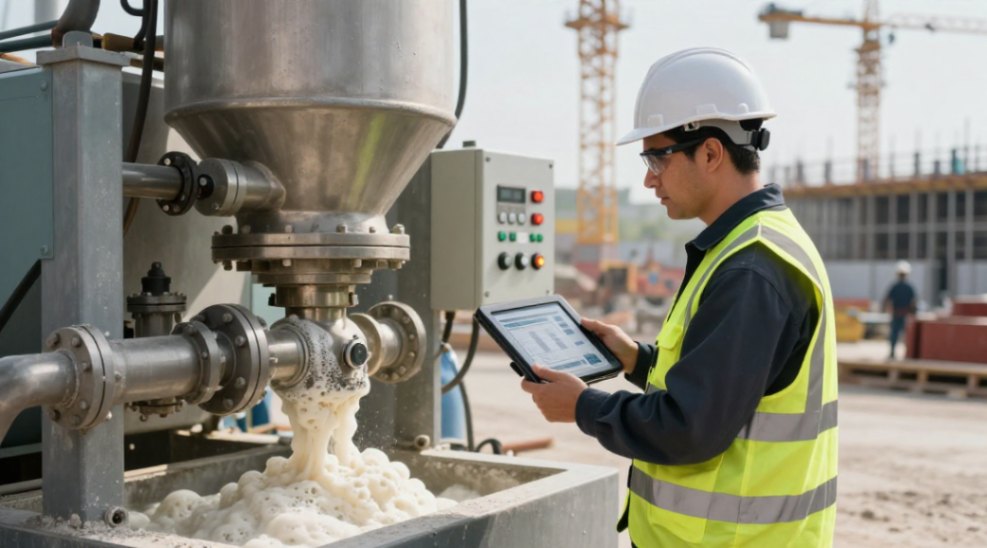
- Never walk away from the control panel just because the system is automated. Sensors can fail. Material quality can shift.
- Warning: A blocked inlet filter will starve the pump. The system will continue running, injecting air and water but no foaming concentrate. You produce worthless, wet foam that ruins an entire truckload of concrete.
- Do this instead: Respect the machine. Monitor pressure gauges and flow meters. Implement a strict daily checklist for nozzle inspection, filter cleaning, and solution tank levels. The automation gives you consistency. Your vigilance ensures reliability.
5. Negrating the Integration with Your Batching Plant
The generator is not an island. It’s a critical component of your material flow.
- Never install a generator as a standalone unit without planning its interface with your mixer and controls.
- Warning: Poor integration causes timing errors. Foam arrives too early and collapses in the mixer. Or it arrives too late, causing uneven distribution. Both scenarios create a non-homogeneous, weak final product.
- Do this instead: Demand a fully programmable controller that receives a trigger signal from your main batching system. Ensure foam injection points are strategically placed in the mixing cycle for optimal dispersion. This is what separates professional from amateur setups.
The Right Choice is a Logical Conclusion
You need stable foam. You need precise capacity. You need chemical compatibility. You need operator awareness. You need seamless integration. Fail any one point, and your project suffers.
The solution is clear. You need equipment engineered as a coherent system, not a collection of parts. You need a partner who understands these pitfalls and builds machines to avoid them.
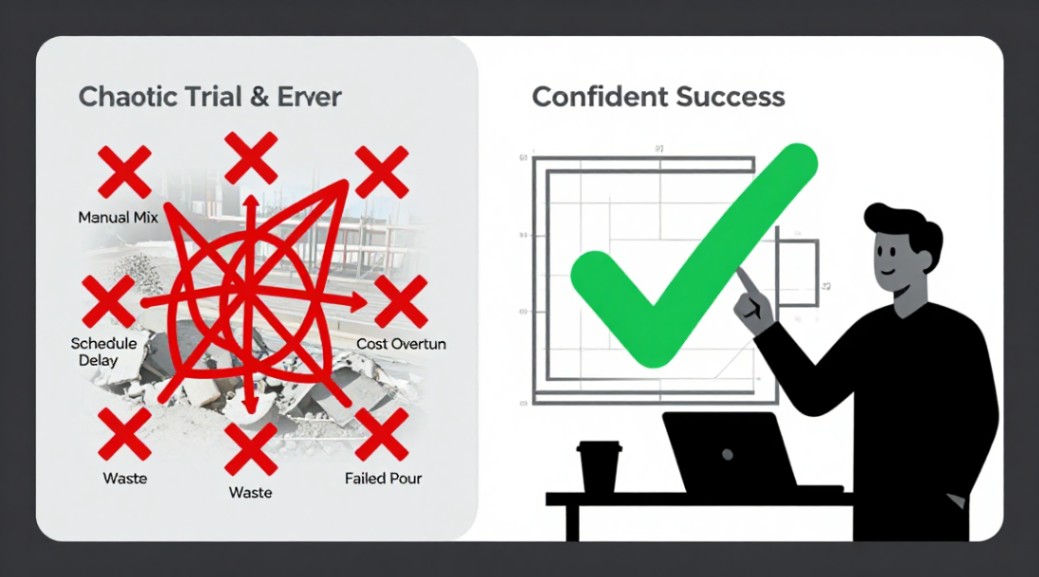
Stop Experimenting. Start Succeeding.
Your time is too valuable for trial and error. Why risk another project on guesswork?
Take definitive action now. I recommend the ProFoam Series 8000 automated generator system. It is the only equipment I specify for critical projects. Its closed-loop density control, hardened component pumps for any chemical, and PLC-based plant integration solve every mistake listed above. Visit the official product page for technical specifications and to schedule a live demo. See for yourself how the right equipment makes perfect foam concrete simple, reliable, and profitable.
Supplier
We are the global leader in lightweight concrete and advanced engineered foam solutions. Known globally for its commitment to research, innovation, and applied expertise, we have been providing engineered foam solutions since the early 2012’s.
We can supply high-quality concrete admixture and foam concrete related products all over the world.
The company has a professional technical department and quality supervision department, a well-equipped laboratory, and equipped with advanced testing equipment and after-sales customer service center.
If you are interested, please feel free and contact us.