Concrete-mesa | Concrete Admixtures, Tools, and Production Machines

Potassium Silicate vs. Other Concrete Sealers: How to Choose the Right Hardener
The Unvarnished Truth About Concrete Hardening
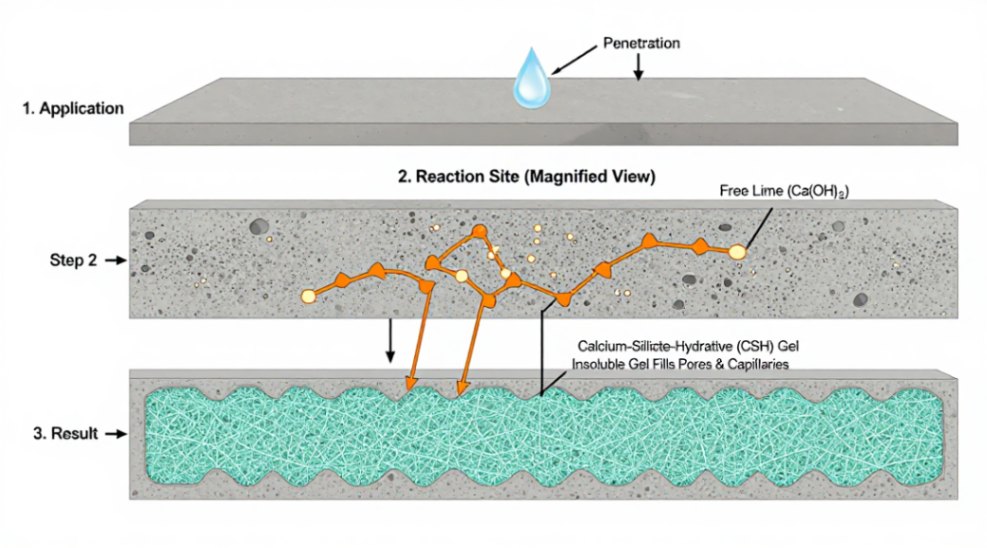
If your main goal is to permanently harden a concrete floor and stop it from dusting, a liquid potassium silicate for concrete hardener is often the most logical choice. The reason is simple chemistry. Unlike a film-forming sealer that sits on top, potassium silicate reacts with the concrete itself. It penetrates the surface and seeks out the free lime and calcium hydroxide that all concrete contains. When they meet, a chemical reaction creates an insoluble, calcium-silicate-hydrate (CSH) gel. This new gel fills the microscopic pores and capillaries within the slab. We’re not coating the surface; we’re literally growing a denser, harder version of the concrete from the inside out. The result is a surface that resists abrasion better and locks in the fine particles that cause dust, a problem that film-forming coatings simply cover up temporarily.
Why We Choose It Over the Alternatives
The decision to use a potassium silicate hardener typically comes down to comparing it to the other common options on the shelf. You’ve probably seen sodium silicate hardeners, acrylic sealers, and epoxy coatings. Each serves a purpose, but for pure hardening and dust-proofing, potassium often wins on a technical level. Let’s break it down. Sodium silicate works on a similar principle, but its reaction tends to be faster and less controlled. This can sometimes lead to a white, powdery residue called efflorescence or a hazy ‘bloom’ on the surface, which we then have to buff off. Potassium silicate reacts more slowly and completely, minimizing that risk. More importantly, the reaction products are generally more stable, offering slightly better long-term resistance to acids and sulfates, which is critical in warehouses or food processing plants.
Now, compare it to acrylic sealers. An acrylic forms a plastic film on the surface. It can look great initially and offers some protection, but it’s a sacrificial layer. Forklift traffic, chemical spills, and UV exposure will degrade that film. Eventually, it peels or wears through, and you must strip and reapply. A potassium silicate treatment doesn’t peel because there’s no film. Its performance is integrated into the top few millimeters of the slab. The trade-off? Acrylics can add a slight sheen and are often considered more of a ‘finish.’ Potassium silicate is a true hardener; it will not make old, ugly concrete look new, but it will make it dramatically more durable. It also won’t make the surface slippery when wet, a common complaint with some film-forming sealers.
Where It Shines and Where It Falls Short
We use liquid potassium silicate hardeners in very specific scenarios where their strengths are non-negotiable. Think of industrial warehouse floors that need to withstand years of pallet jack and forklift abrasion without creating silica dust. Or historical restoration projects where we need to consolidate and strengthen century-old concrete without altering its appearance or adding a glossy, modern film. It’s also a first line of defense in garages and manufacturing areas where occasional spills of mild acids or sulfates are a concern, as the densified surface slows chemical penetration.
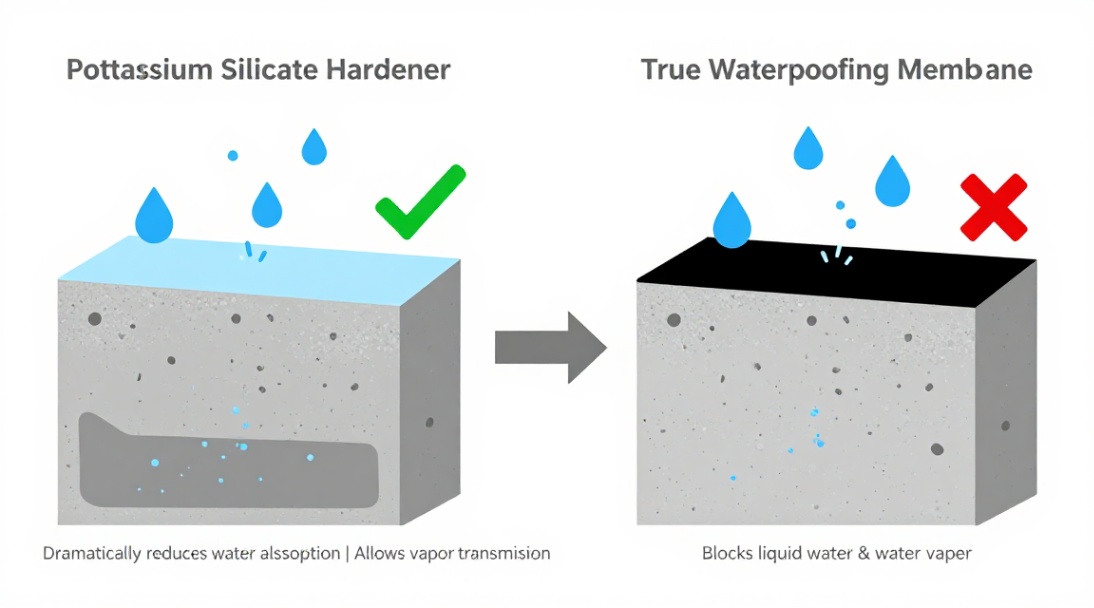
However, we must be brutally honest about its limitations. The most important one to remember: liquid potassium silicate is not a waterproofing agent. It dramatically reduces water absorption by filling pores, but water vapor can still transmit. If you need a waterproof barrier for a basement wall, you need a different product. Secondly, it demands rigorous surface preparation. Any existing sealer, paint, or contamination will block its penetration, rendering it useless. The concrete must be clean, sound, and open. This usually means diamond grinding or shot blasting to expose a fresh, porous surface. Finally, on very old, weak, or crumbling concrete, there may not be enough free lime left for a complete reaction, limiting its effectiveness.
How We Apply It: A Step-by-Step Process
The efficacy of a liquid potassium silicate concrete hardener hinges entirely on correct application. There is no shortcut. We start with a mechanically prepared surface, which for an existing slab means diamond grinding with a minimum 25-grit metal bond segment to remove laitance and open the pores. The surface must be vacuumed clean of all dust. For new concrete, we wait a full 28 days for the slab to cure and for sufficient free lime to be present.
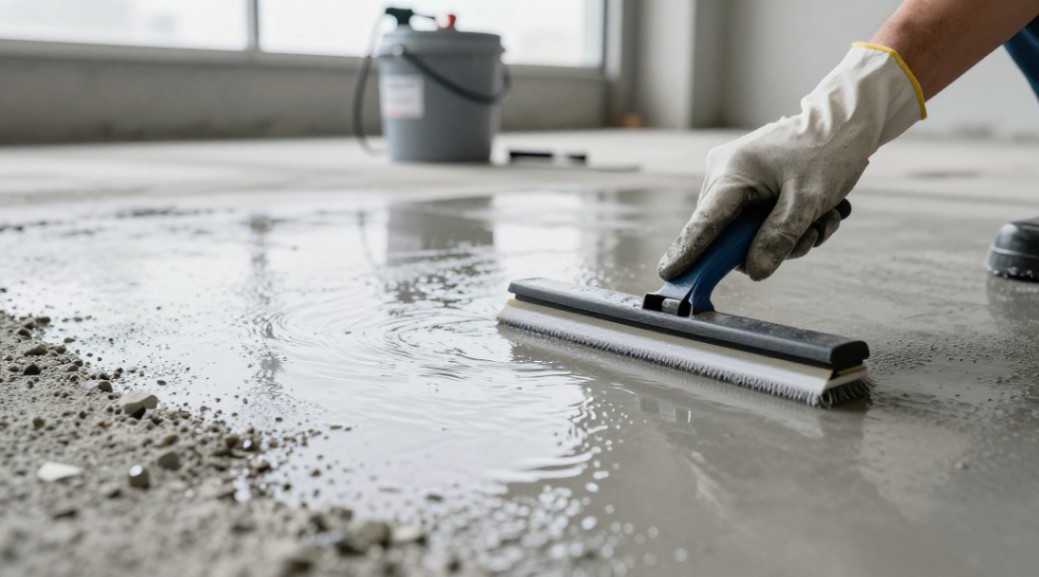
Next is the application itself. We always follow the manufacturer’s dilution ratio precisely. Some products are ready-to-use; others require mixing with water at a specific ratio, such as 1 part silicate to 3 parts water. We apply the diluted solution using a low-pressure sprayer, a roller, or a soft-bristle squeegee, ensuring a consistent, flood coat across the surface. The key is to keep the surface wet with the solution for a specified period, usually 20 to 40 minutes, reapplying as needed to maintain a sheen. This ‘dwell time’ is when the chemical reaction occurs. After the dwell time, we remove any excess liquid that has not soaked in with a squeegee or wet vacuum. Then, we rinse the surface thoroughly with clean water. This step is crucial to remove any unreacted silicate from the surface, preventing the white residue we want to avoid. Finally, the floor needs to dry and cure, which typically takes 24 to 72 hours depending on conditions, before you can put it back into light service.
| Step | Action | Key Details |
|---|---|---|
| 1. Preparation | Mechanical Profiling | Diamond grind (25+ grit) or shot blast. Remove all dust via vacuum. |
| 2. Mixing | Dilution | Follow manufacturer specs. Common ratio is 1:3 (silicate:water). |
| 3. Application | Initial Flood Coat | Apply evenly with sprayer, roller, or squeegee. |
| 4. Reaction | Dwell Time | Maintain a wet surface for 20-40 minutes. Reapply as needed. |
| 5. Clean-up | Removal & Rinse | Squeegee excess. Rinse thoroughly with clean water. |
| 6. Curing | Drying | Allow 24-72 hours to dry before light traffic. |
Making the Final Call
So, when do you pull the trigger on a potassium silicate hardener? Look at your project’s core requirements. You need a permanent, in-depth hardening solution for a sound concrete slab. Dust control and increased abrasion resistance are your primary goals. You’re not looking for a cosmetic high-gloss finish or a waterproof membrane. You’re willing to invest in proper surface preparation. And you value a solution that becomes part of the substrate, not another maintenance item to reapply every few years. If that checklist matches your situation, then testing a quality liquid potassium silicate for concrete hardener on a small, inconspicuous area is the logical next step. This test patch will confirm penetration, hardening, and the final appearance, giving you the confidence to proceed with the full project, knowing you’ve chosen the tool that aligns perfectly with the job’s demands.
Supplier
We are the global leader in lightweight concrete and advanced engineered foam solutions. Known globally for its commitment to research, innovation, and applied expertise, we have been providing engineered foam solutions since the early 2012’s.
We can supply high-quality concrete admixture and foam concrete related products all over the world.
The company has a professional technical department and quality supervision department, a well-equipped laboratory, and equipped with advanced testing equipment and after-sales customer service center.
If you are interested, please feel free and contact us.