Concrete4U | Concrete Admixtures, Tools, and Production Machines

Sodium Silicate as Alkali Activator for Geopolymers: Is It Your Best Choice or a Major Headache?
Your Geopolymer Is Underperforming
You followed the formula. You mixed the materials. Yet your geopolymer feels weak, sets too fast, or cracks for no good reason. The culprit is often the heart of the reaction: the alkali activator. You’ve heard sodium silicate, also called water glass, is the ‘standard.’ But is it the right standard for you, or a costly complication? Let’s cut through the hype and find out.
Silicate Activator Deep Dive
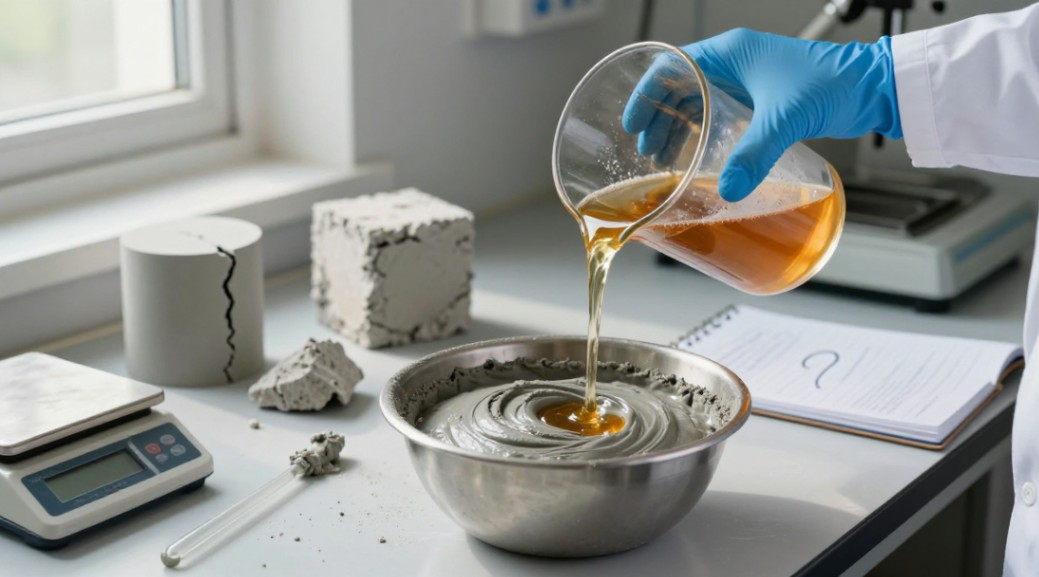
Forget vague terms. Sodium silicate delivers two critical components in one solution: alkali (Na2O) and soluble silica (SiO2). The alkali attacks the aluminosilicate source material. It dissolves it. The soluble silica immediately reacts with the freed aluminum and silicon, forming the strong, stable gel matrix that defines a geopolymer. This dual action is its core advantage.
The Critical Parameter: The Modulus
This is the master control. The modulus (SiO2/Na2O molar ratio) dictates everything. A low modulus means more alkali, faster dissolution, and a quicker, sometimes violent set. A high modulus means more silica, slower reaction, better long-term strength development, and improved durability. You must optimize this for your specific materials.
Comparing Your Options
Sodium Silicate vs. Plain Sodium Hydroxide (NaOH)
Why choose silicate over just a strong alkali?
- Silicate Wins on Strength & Durability: The soluble silica integrates directly into the geopolymer network, creating a denser, more cohesive structure. NaOH alone often leaves a porous, weaker matrix.
- Silicate Improves Workability: It acts as a lubricant. Fresh paste flows better. This is crucial for casting complex forms.
- NaOH Wins on Simplicity & Cost: It’s a simpler chemical. It’s often cheaper per ton. But you trade performance for that simplicity.
Deciding Between Them
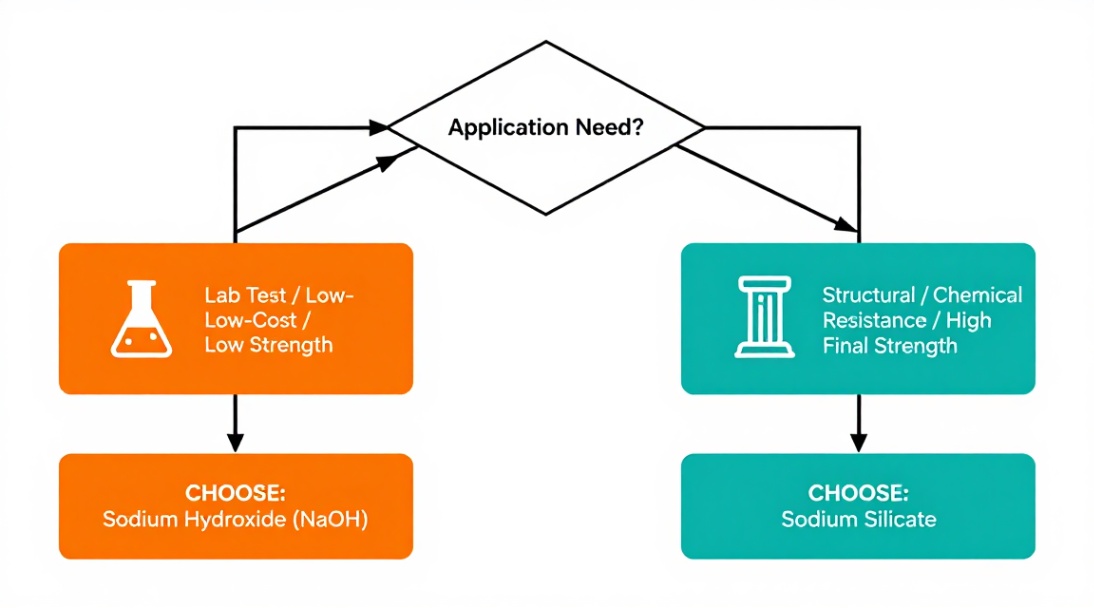
Use sodium hydroxide for preliminary lab tests or low-strength applications where cost is everything. Switch to sodium silicate for any structural application, for superior chemical resistance, or when you need reliable, high final strength. Do not use NaOH alone for serious work.
The Practical Challenges (The Ugly Truth)
Sodium silicate is not magic. It brings real headaches.
- Viscosity Nightmares: High-modulus silicates are thick. They’re glue. Mixing requires high-shear energy. Poor mixing guarantees weak spots.
- Rapid Setting: It can set in minutes. This kills large-scale placement. You often need retarders or careful modulus/blend control.
- Carbon Footprint & Cost: Manufacturing sodium silicate is energy-intensive. It has a higher embodied carbon than many assume. The price fluctuates with energy markets.
Mastering the Mix: Your Action Plan
Stop guessing. Follow this logic.
- Blend for Control: Rarely use pure silicate. Blend it with sodium hydroxide solution to adjust the modulus on-site. This gives you dial-in control over work time and final properties.
- Source Material is Key: The optimal modulus for fly ash differs from slag, which differs from metakaolin. Test. There is no universal perfect ratio.
- Temperature is a Lever: Heat accelerates silicate reactions dramatically. Control your curing temperature with precision. Ambient curing with silicate is a recipe for inconsistency.
Final Verdict
Sodium silicate is the high-performance choice, not the easy choice. It demands respect, understanding, and careful handling. For dump-and-stir projects, it’s overkill. For engineered geopolymers where performance dictates success, it is often indispensable. The question isn’t if it’s good. The question is if your team and process are prepared to harness its power without letting its complexities sabotage you.
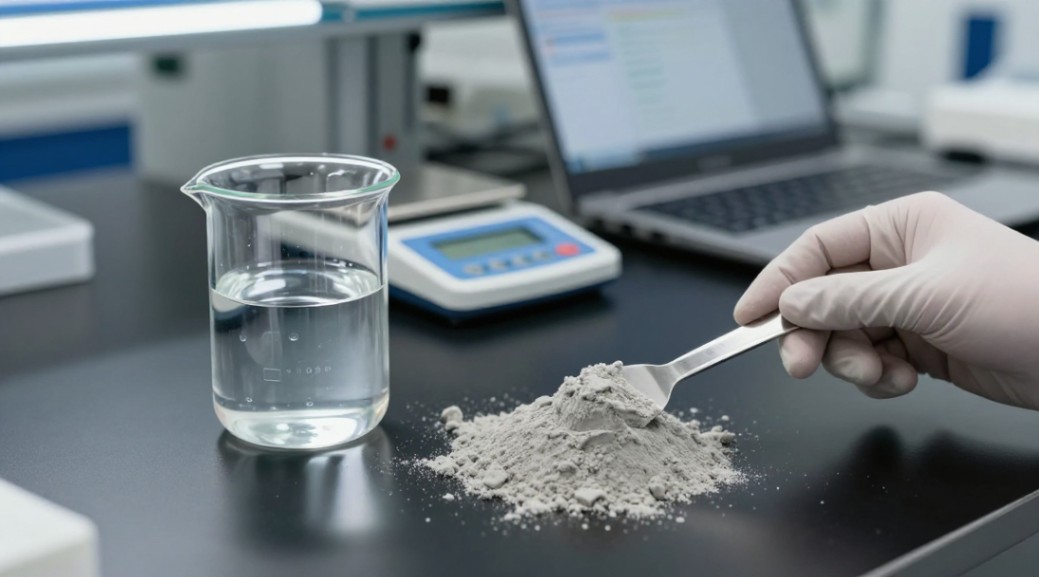
Stop compromising your material. If your goal is a durable, high-strength, chemically resistant geopolymer, you need the integrated silica network that sodium silicate provides. The learning curve is steep but non-negotiable. Start with controlled blends, master the modulus for your feedstock, and engineer your process around its kinetics. The alternative is a weaker product and constant frustration. Make the decision.
Supplier
We are the global leader in lightweight concrete and advanced engineered foam solutions. Known globally for its commitment to research, innovation, and applied expertise, we have been providing engineered foam solutions since the early 2012’s.
We can supply high-quality concrete admixture and foam concrete related products all over the world.
The company has a professional technical department and quality supervision department, a well-equipped laboratory, and equipped with advanced testing equipment and after-sales customer service center.
If you are interested, please feel free and contact us.