Concrete4U | Concrete Admixtures, Tools, and Production Machines

Liquid Water Reducing Admixtures: The Engine of Modern Concrete Performance
Liquid Water Reducers Are a Fundamental Optimization Tool
Every modern concrete mix requires a water reducing admixture. These chemical agents, delivered as liquids for precise dosing, are the primary lever for optimizing the water-cement ratio. This fundamental property dictates the ultimate strength, durability, and economic viability of concrete. Without them, producing consistent, high-performance concrete would be impossible.
1. The Core Mechanism and Primary Benefit
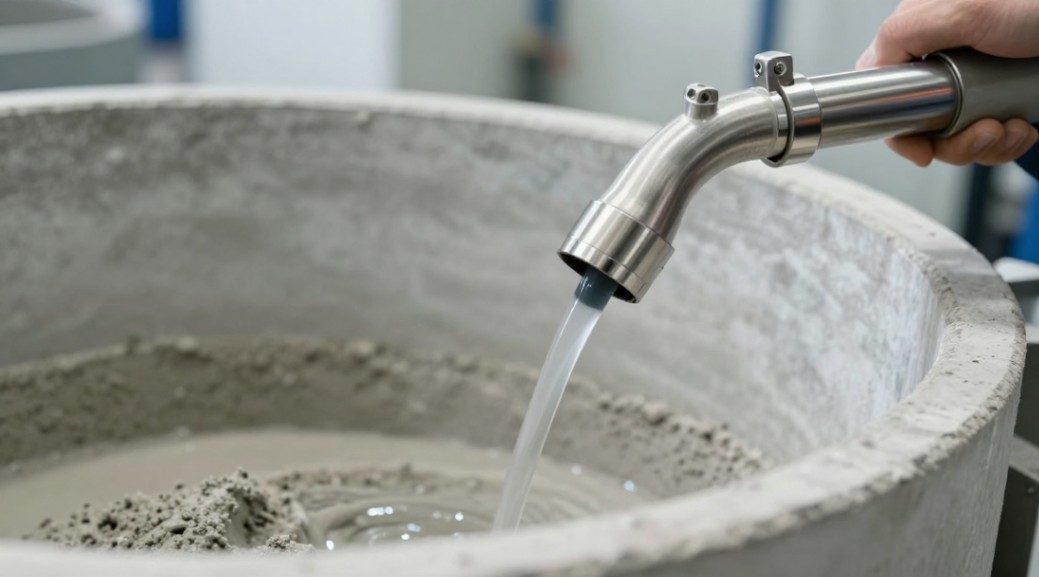
A liquid concrete water reducing admixture functions as a dispersant. When added to the mix, its active molecules adsorb onto the surface of cement particles. This imparts a negative electrostatic charge, causing the particles to repel each other. The result is a breakdown of flocculation.
- Flocculated cement traps water, requiring more water for a given slump.
- Dispersed cement releases this water, increasing particle mobility.
The primary and non-negotiable benefit is the reduction of the water-cement (w/c) ratio. For every unit reduction in water, you gain a corresponding increase in potential compressive strength. This direct correlation drives all other performance enhancements.
2. Classifying Water Reducers: Standard, Mid-Range, and High-Range
The industry classifies these admixtures by their water reduction capability and side effects. The classification dictates their application.
2.1. Standard Water Reducers (Plasticizers)
- Primary Chemistry: Lignosulfonates, hydroxylated polymers.
- Water Reduction: Typically 5-10%.
- Key Trait: Often act as mild retarders, slowing initial set by 1-3 hours.
- Best Use: General ready-mix applications where moderate workability improvement and cost-effectiveness are priorities.
2.2. Mid-Range Water Reducers (MRWR)
- Primary Chemistry: Modified lignosulfonates, polycarboxylates with lower molecular weight.
- Water Reduction: Typically 8-15%.
- Key Trait: Offer significant water reduction with minimal retardation. They may even slightly accelerate set.
- Best Use: The workhorse for most commercial projects, especially where tight delivery windows and consistent setting times are critical.
2.3. High-Range Water Reducers (HRWR / Superplasticizers)
- Primary Chemistry: Polycarboxylate ethers (PCE), sulfonated naphthalene or melamine formaldehyde condensates.
- Water Reduction: 15-30% or more.
- Key Trait: Provide extreme flowability at very low w/c ratios with precise control over set time.
- Best Use: High-strength concrete, self-consolidating concrete (SCC), and complex architectural precast where maximum durability and finish are required.
3. The Secondary Benefits Chain Reaction
Reducing water is the catalyst. The secondary benefits form a cascading sequence of improvements.
- Increased Strength & Durability: Lower w/c directly increases density, reducing capillary pores. This yields higher compressive and flexural strength while dramatically improving resistance to chloride ingress, sulfate attack, and freeze-thaw cycles.
- Enhanced Workability & Placeability: For a fixed w/c, adding a HRWR transforms a stiff mix into a flowing, self-leveling mass. This improves consolidation around rebar, reduces labour, and enhances surface finish.
- Cement Reduction for Sustainability: Because strength is maintained at lower cement content, you can design mixes with less Portland cement. This directly reduces the carbon footprint of the concrete, a primary driver in current specification trends.
4. Technical Application: Dosing, Batching, and Compatibility
Correct application is non-negotiable. The effectiveness of a liquid concrete water reducing admixture depends entirely on precise execution.
4.1. Dosing and Injection Protocol
Dosage is always specified as a percentage by weight of cementitious materials. Typical ranges are 0.2% to 3.0% solids. Injection timing is critical.
- For standard/mid-range admixtures: Add with the initial batch water to ensure uniform dispersion.
- For polycarboxylate-based HRWR: Delayed addition, after 30-90 seconds of mixing, often yields superior slump retention and efficiency.
Always meter the liquid admixture by mass (kilograms or pounds), not volume, to account for density variations. Use calibrated dispensing equipment.
4.2. Compatibility and Quality Control
Modern concrete rarely uses a single admixture. Compatibility with retarders, accelerators, and air-entraining admixtures (AEA) must be validated through trial batches. Polycarboxylates can sometimes reduce air content; adjusting the AEA dosage is often necessary.
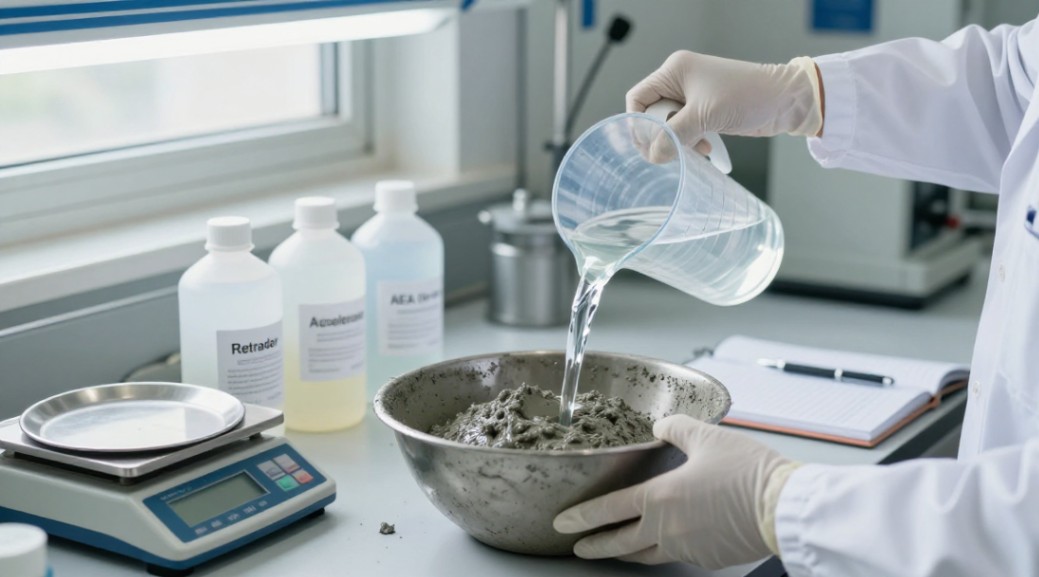
Establish routine quality control checks. Test the specific gravity of the delivered liquid admixture to confirm consistency. Monitor concrete temperature, as high temperatures can accelerate slump loss, especially with some HRWR chemistries.
5. Strategic Application Scenarios
The choice of water reducer type is a strategic decision based on the project’s demands.
5.1. Ready-Mix Concrete
Mid-range water reducers dominate. They provide the ideal balance of water reduction, slump retention over standard transit times, and predictable set characteristics for on-site placement.
5.2. Precast and Prestressed Concrete
High-range water reducers are essential. They enable very low w/c ratios for high early strength, allowing rapid form turnover. The high flowability ensures perfect consolidation in dense reinforcement cages and superior surface finish right off the mold.
5.3. High-Performance and Decorative Concrete
Specialty polycarboxylates are used. For SCC, they provide the necessary viscosity modification and flow. For architectural concrete, they ensure uniform colour and minimize surface defects. Sustainability-driven mixes use them to enable high volumes of supplementary cementitious materials.
6. The Logical Path Forward
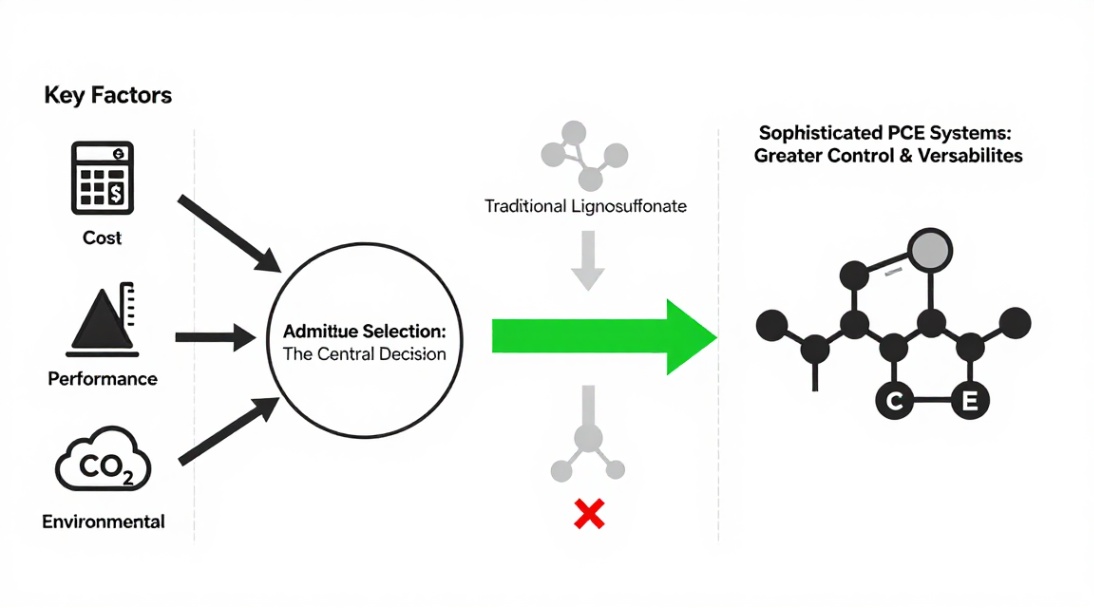
The analysis is clear. The liquid concrete water reducing admixture is not an optional additive; it is the central component for rational mix design. Its selection dictates cost, performance, and environmental impact. The industry trend is moving decisively towards more sophisticated polycarboxylate-based systems that offer greater control and versatility.
To implement this, you must move beyond generic specifications. Partner with a technical supplier who can provide the specific admixture chemistry your project requires. Conduct full-scale trial batches to confirm performance, compatibility, and dosing before production begins. This logical, data-driven approach is the only way to reliably achieve the strength, durability, and sustainability targets that define modern concrete construction.
Supplier
We are the global leader in lightweight concrete and advanced engineered foam solutions. Known globally for its commitment to research, innovation, and applied expertise, we have been providing engineered foam solutions since the early 2012’s.
We can supply high-quality concrete admixture and foam concrete related products all over the world.
The company has a professional technical department and quality supervision department, a well-equipped laboratory, and equipped with advanced testing equipment and after-sales customer service center.
If you are interested, please feel free and contact us.