Concrete4U | Concrete Admixtures, Tools, and Production Machines

The Brutal Truth About Sodium Silicate Solutions for Concrete Hardening: 5 Industry Myths Debunked
Are You a Victim of Concrete Dust and Premature Wear?
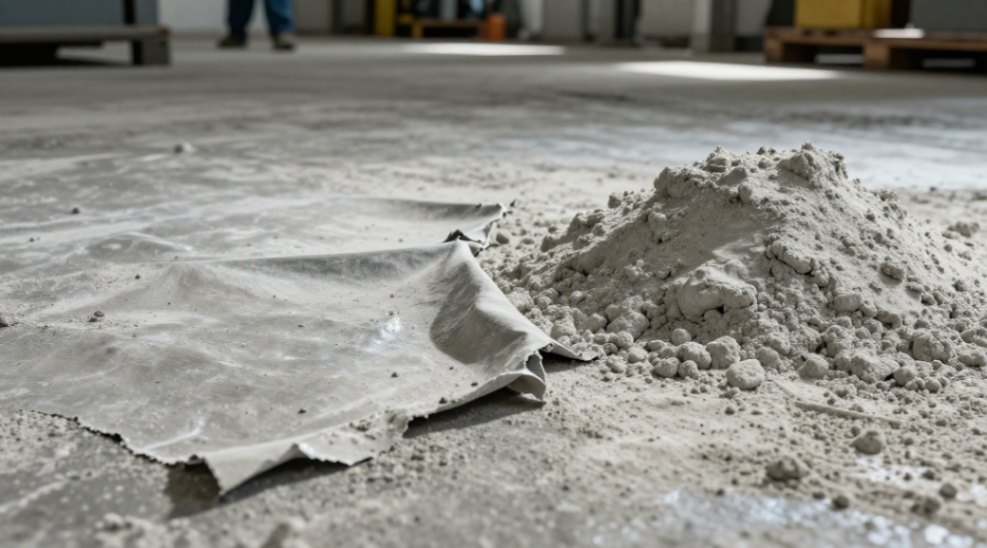
You pressure-washed the floor. You applied that miracle sealer. Yet, six months later, you’re still sweeping up that fine, grey talcum powder that ruins machinery, contaminates products, and screams “cheap construction.” You’re losing the battle against abrasion, staining, and the relentless degradation of your slab’s surface. The core problem isn’t the sealer you chose; it’s likely the fundamental chemistry you ignored. Let’s cut through the marketing fog.
1. Sodium Silicate 101: Water Glass Isn’t Magic Varnish
Forget ‘coating.’ This is chemical surgery. Sodium silicate solution, often called water glass, is an alkaline, inorganic liquid. Its key components are silica (SiO2) and soda (Na2O) dissolved in water. Its value lies in what it doesn’t do: it doesn’t sit on top of the concrete. Instead, it penetrates and reacts from within.
1.1 The Reaction That Actually Hardens Concrete
The mechanism is straightforward but poorly executed by most contractors. The alkaline solution penetrates the concrete‘s capillary network. There, it reacts with two key components:
- Free Lime (Calcium Hydroxide): This byproduct of cement hydration is water-soluble and weak. Sodium silicate reacts with it to form calcium silicate hydrate (C-S-H).
- Divalent Cations (Ca++, Mg++): These ions, present in the concrete, cause the silicate to gel and precipitate.
This new C-S-H is nearly identical to the glue that holds concrete together. You aren’t adding a layer; you are growing more of the concrete’s original binder. This fills pores and densifies the matrix from the inside out.
2. The Industry’s Dirty Secret: Application is 90% of the Battle
Most failures stem from a flawed process. Here’s the non-negotiable sequence.
2.1 Surface Prep: The Step Everyone Rushes
- Cleaning is Non-Negotiable: Oil, grease, and curing compounds create an impermeable barrier. Use industrial degreasers and mechanical scrubbing. A surface must be chemically receptive.
- Opening the Pores: On old, smooth, or heavily troweled floors, light abrasion (shot blasting, diamond grinding) is critical. You must open a pathway for the solution. Applying it to a sealed surface is flushing money down the drain.
- Moisture Condition: The concrete must be damp, not wet. A saturated slab won’t absorb the solution. A bone-dry slab will suck it up too quickly, limiting penetration. Dampen, let the surface sheen disappear, then apply.
2.2 Application: Flood, Don’t Mist
- Use a low-pressure sprayer or a soft broom to flood the surface. Maintain a wet edge.
- The solution should dwell for 20-45 minutes, staying visibly wet. If it dries too fast, the concrete is too thirsty-apply a second coat immediately.
- Remove all excess solution before it dries into a glossy, sticky residue. This residue is unreacted silicate and is a sign of poor practise. A clean squeegee or wet vacuum is essential.
3. Benefits vs. Hype: What You Really Get
The results are tangible but specific.
- Dustproofing: This is the primary and most reliable benefit. By binding loose particles at the surface, dusting ceases. It’s immediate and effective.
- Surface Hardening & Abrasion Resistance: Expect a moderate increase-typically 10-30% on a Mohs scale. It improves resistance to foot and light wheel traffic. It will not turn a 3000 PSI slab into tool steel. For brutal forklift traffic, you need lithium-based densifiers or toppings.
- No Gloss, No Slickness: It does not create a film. The natural concrete appearance remains, which is a safety and aesthetic benefit in industrial settings.
4. The Harsh Comparison: Sodium Silicate vs. “Better” Alternatives
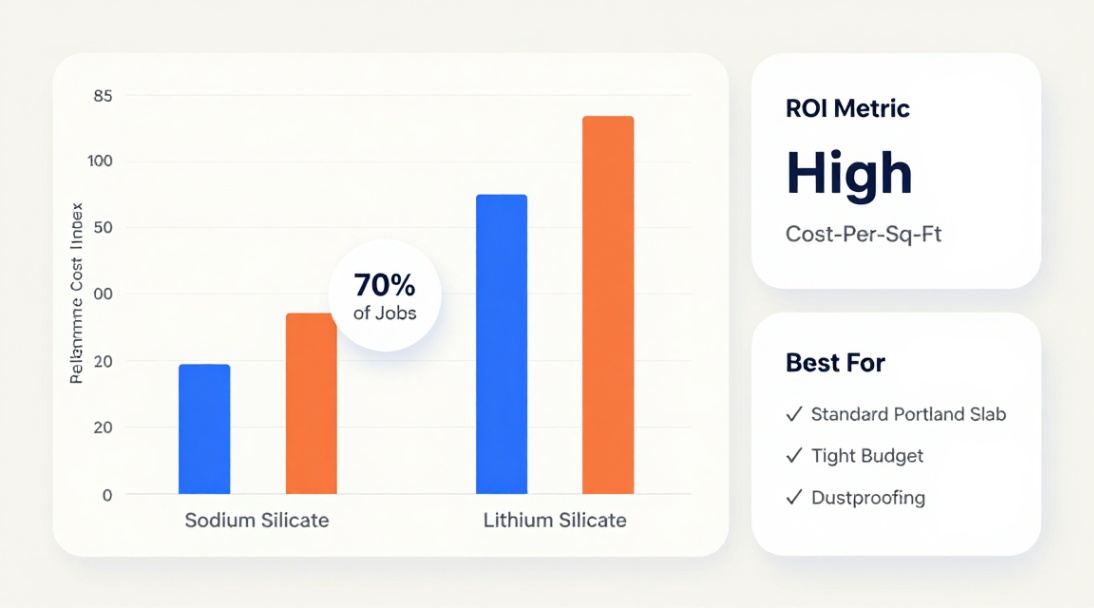
Industry chatter pushes lithium silicates and nano-colloidal silica as superior. Often, they are. But they cost 2-5x more. The brutal truth? For 70% of industrial warehouse and old concrete renovation jobs, a properly applied sodium silicate solution for concrete densification offers the best return on investment. Why? The cost-per-square-foot is low, and the performance gain for dustproofing and moderate hardening is sufficient. Lithium silicates react more completely and don’t require free lime, making them better for low-cement or hard-troweled floors. But if your slab is standard Portland cement and your budget is tight, sodium silicate is the pragmatic, chemically sound choice. Don’t overpay for performance you don’t need.
5. Ideal Use Cases and Critical Limitations
This isn’t a universal fix. Know its domain.
5.1 Where It Excels
- Dust-proofing new or old concrete slabs in warehouses, storage facilities, and garages.
- Providing a sound, clean substrate for epoxy or urethane coatings (it must be fully cured and residue-free).
- Moderately hardening surfaces subjected to foot traffic and light cart wheels.
- Renovating old, dusty concrete where major abrasion resistance isn’t the top priority.
5.2 Where It Fails (And You’ll Be Sorry)
- Chemical Resistance: It provides zero protection against acids. The reaction products are acidic salts. Acid spills will etch the surface aggressively.
- Waterproofing: It reduces water permeability, but does not stop it. It is not a waterproofing agent. For below-grade or wet areas, use a dedicated hydrophobic sealer.
- Highly Abrasive Environments: Foundries, scrap yards, areas with metal-on-concrete dragging? Look elsewhere.
- Stain Prevention: It offers minimal protection against oil or dye stains. The densified surface is still porous.
6. Longevity, Maintenance, and the ROI Reality
A single, proper application can last the life of the slab for dustproofing. Abrasion resistance will wear over years in high-traffic lanes, requiring reapplication. Maintenance is simple: clean with neutral pH cleaners. Avoid acid-based cleaners at all costs. The return on investment is calculated in reduced cleaning costs, improved air quality, and protected inventory from dust-not in creating an indestructible super-surface. For under $0.25 per square foot in material cost, it solves the dust problem permanently. That’s its value proposition.
7. Safety & The Final Verdict
Wear goggles and gloves. The solution is alkaline and can irritate skin and eyes. Ensure good ventilation during application. It is not flammable.
The Final Take: Sodium silicate is not a high-tech wonder product. It’s a fundamental, century-old chemistry that works when understood and applied with discipline. It solves concrete dust definitively and cost-effectively. It provides a modest, durable hardness boost. Stop treating it like a superficial coating. Treat it as a chemical reactant, prepare the surface like a surgeon preps the field, and you will get predictable, lasting results. For your next warehouse floor or garage slab, master this basic tool before reaching for the expensive, over-engineered alternative. Sometimes, the conventional wisdom is wrong because it forgot the fundamentals.
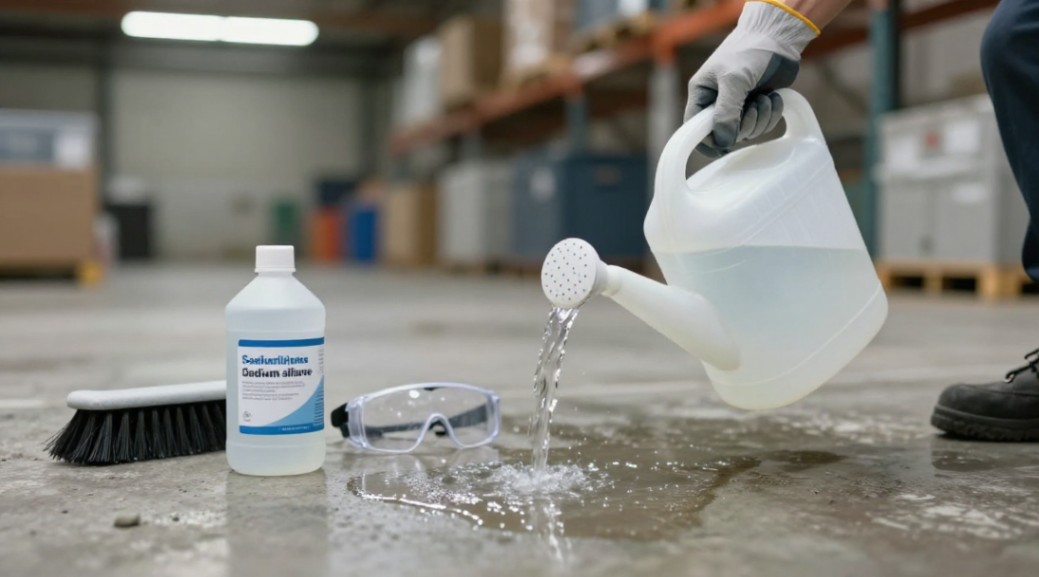
To evaluate if a sodium silicate solution for concrete densification is right for your project, start with a simple test patch on the prepared surface. The results in 72 hours will tell you more than any sales brochure.
Supplier
We are the global leader in lightweight concrete and advanced engineered foam solutions. Known globally for its commitment to research, innovation, and applied expertise, we have been providing engineered foam solutions since the early 2012’s.
We can supply high-quality concrete admixture and foam concrete related products all over the world.
The company has a professional technical department and quality supervision department, a well-equipped laboratory, and equipped with advanced testing equipment and after-sales customer service center.
If you are interested, please feel free and contact us.