Concrete-mesa | Concrete Admixtures, Tools, and Production Machines

Stop Concrete Cracks Before They Start: The Microfibers vs. Traditional Methods Guide
The Hidden Cost of Tiny Cracks
A single hairline crack in a concrete slab isn’t just an eyesore. It’s an open door for water, chlorides, and freeze-thaw damage. Industry studies suggest that for every $1 spent on proactive shrinkage control, you can save up to $10 in future repair costs and extended service life. That’s the power of getting it right from the start. Let’s explore how micro fibers for shrinkage reduction in concrete stack up against traditional methods.

How Shrinkage Cracks Form and How Microfibers Fight Back
Concrete shrinks as it loses moisture. This creates tensile stresses. When those stresses exceed the concrete’s low tensile strength, it cracks. Micro fibers for shrinkage reduction work on a physical, mechanical level. They are millions of tiny reinforcing elements randomly distributed throughout the mix. As micro-cracks begin to form, the fibers bridge across the crack face. They hold the material together, transferring stress and preventing those micro-cracks from widening and linking up into a visible, damaging crack. This mechanism is most critical during the first few hours to combat plastic shrinkage cracking.
Microfibers vs. Traditional Reinforcement: A Head-to-Head Comparison
1. Rebar and Welded Wire Mesh (WWF)
These are structural reinforcements. They are designed to carry significant loads and resist major bending forces. For shrinkage control, they are less efficient.
- Advantages: Unmatched for structural capacity. Governed by well-understood codes. Ideal for beams, columns, and structural slabs.
- Disadvantages for Shrinkage: They provide localized, line-based reinforcement. They do nothing to inhibit the formation of random plastic shrinkage cracks between the bars. Placement is labor-intensive and adds time to the schedule.
2. Microfibers (Synthetic, Glass, Steel)
These are secondary or crack-control reinforcements. Their primary purpose is to improve durability and serviceability by controlling cracking from the moment concrete is placed.
- Advantages: Provide three-dimensional, isotropic reinforcement throughout the entire concrete mass. Excellent at controlling early-age plastic shrinkage and reducing long-term drying shrinkage crack widths. They simplify placement-just add to the mix. Also improve abrasion resistance and impact tolerance.
- Disadvantages: Do not replace structural rebar. Improper dosage or mixing can lead to balling. The initial material cost is a direct add to the mix price.
Choosing Your Microfiber: A Materials Breakdown
All microfibers control shrinkage, but their properties differ. Selecting the right type is crucial for your project’s specific demands.
Synthetic (Polypropylene, Nylon, PVA): The most common choice for general shrinkage reduction in concrete. They are chemically inert, corrosion-proof, and cost-effective. Polypropylene is the workhorse for interior slabs and flatwork. PVA (Polyvinyl Alcohol) offers higher tensile strength and better bond with the cement matrix, often specified for thin overlays and repair mortars.
Micro Steel Fibers: Provide higher stiffness and post-crack load-bearing capacity than synthetics. They are excellent for floors subjected to heavy abrasion or impact. Their metallic nature requires careful consideration in corrosive environments.
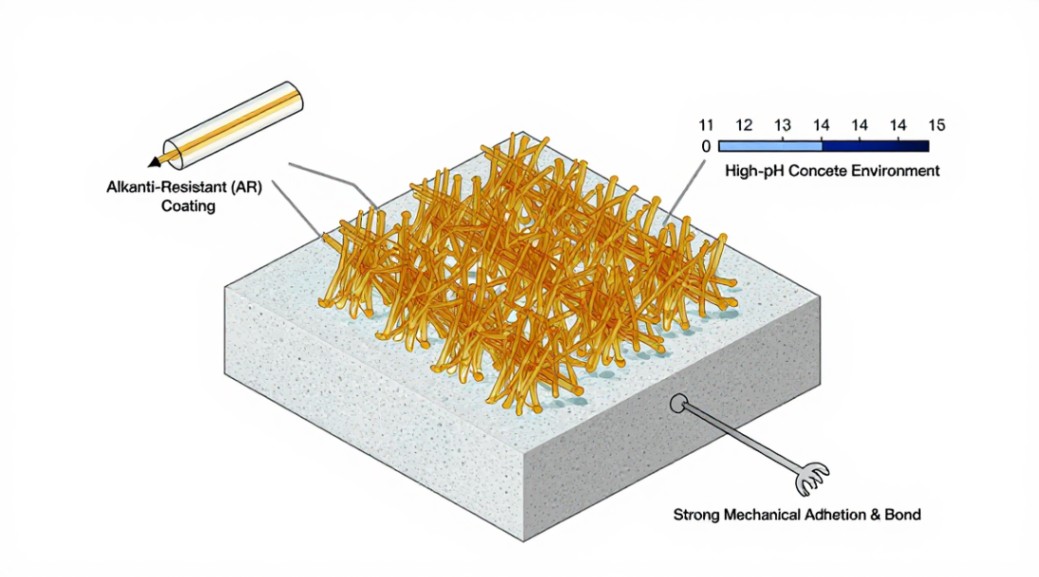
Glass Fibers: Used in specific precast applications or for architectural concrete where a very fine finish is required. They require alkali-resistant (AR-glass) coating to survive the high-pH concrete environment.
Best Practices for Using Microfibers Successfully
To unlock the full benefit of micro fibers for shrinkage reduction, you must respect the process. Here is your field guide.
Dosage and Incorporation
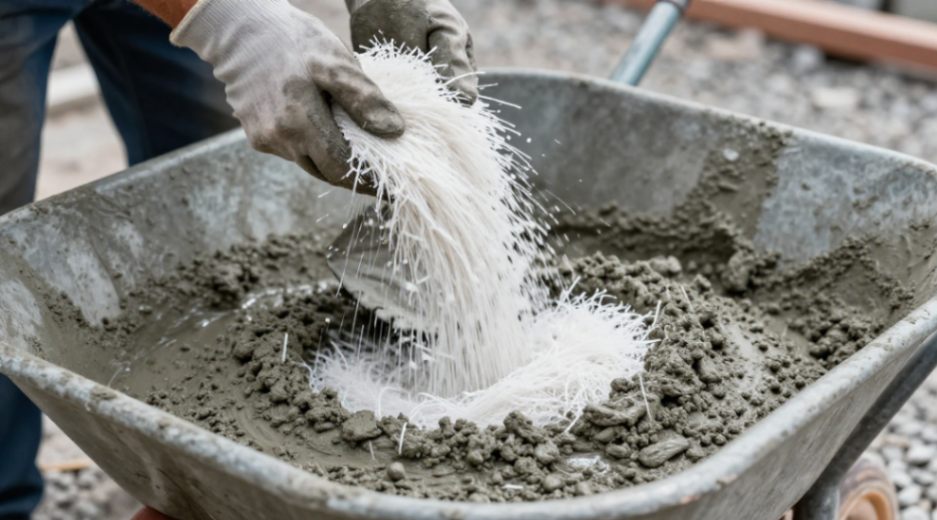
Dosage is typically specified by the manufacturer in pounds per cubic yard (lb/yd³) or kilograms per cubic meter (kg/m³). For general shrinkage control, synthetic microfibers often range from 0.5 to 1.5 lb/yd³. Always follow the supplier’s data sheet. The golden rule for mixing: add the fibers to the mix after the aggregates and some water have combined. This disperses them evenly and prevents balling. Mix for a full 5 to 10 minutes at normal drum speed to ensure uniform distribution.
Key Application Areas
- Slabs-on-Grade & Flooring: The prime application. Reduces random cracking, curling, and joint spalling. For industrial floors, a synthetic-steel fiber hybrid is a powerful solution I often recommend.
- Overlays & Toppings: Essential for thin sections (1-3 inches). PVA microfibers dramatically reduce plastic shrinkage in these vulnerable applications.
- Exterior Flatwork: Drastically improves durability against freeze-thaw cycles by keeping cracks tight and minimizing water ingress.
The Ultimate Decision: Making the Right Choice for Your Project
This isn’t about ‘either/or.’ It’s about selecting the right tool for the job, and often using them together. Use this simple framework.
For a structural slab (e.g., a parking deck), you need both: rebar for load capacity and microfibers to control shrinkage cracks that would otherwise corrode that rebar.
For a non-structural slab-on-grade (e.g., a warehouse floor), a higher dosage of synthetic or micro-steel fibers often provides superior crack control and toughness compared to wire mesh alone, with less labor.
For a 50mm concrete overlay, synthetic (especially PVA) microfibers are not just an option; they are a necessity to prevent plastic shrinkage failure.
What should you do next? Start with a clear conversation with your ready-mix supplier and fiber manufacturer. Bring your project specs. Ask for mix designs with different fiber options and compare performance data like shrinkage reduction percentages and residual strength. Consider a test pour for critical applications. Investing this time in material selection is the single most effective step you can take to ensure a durable, crack-resistant concrete structure for decades to come.
Supplier
We are the global leader in lightweight concrete and advanced engineered foam solutions. Known globally for its commitment to research, innovation, and applied expertise, we have been providing engineered foam solutions since the early 2012’s.
We can supply high-quality concrete admixture and foam concrete related products all over the world.
The company has a professional technical department and quality supervision department, a well-equipped laboratory, and equipped with advanced testing equipment and after-sales customer service center.
If you are interested, please feel free and contact us.