Concrete4U | Concrete Admixtures, Tools, and Production Machines

Foamed Concrete Density for Fill Applications: 5 Data-Driven Insights To Optimize Your Next Project
Hit a wall with traditional fill? You’re not alone.
Remember that utility trench that settled six months after you closed it? How about the slab subgrade that required costly over-excavation because the planned fill material was too heavy? We’ve been there. Traditional granular fill has its place, but its limitations create headaches: unpredictable compaction, lateral pressure on adjacent structures, and labor-intensive placement in tight spaces. That’s why more of our peers are turning to a different solution. Let’s get straight to the point: foamed concrete density for fill applications isn’t just a niche product. It’s a fundamental shift in how we approach sub-surface space.
1. What Exactly Is Fill-Grade Foamed Concrete?
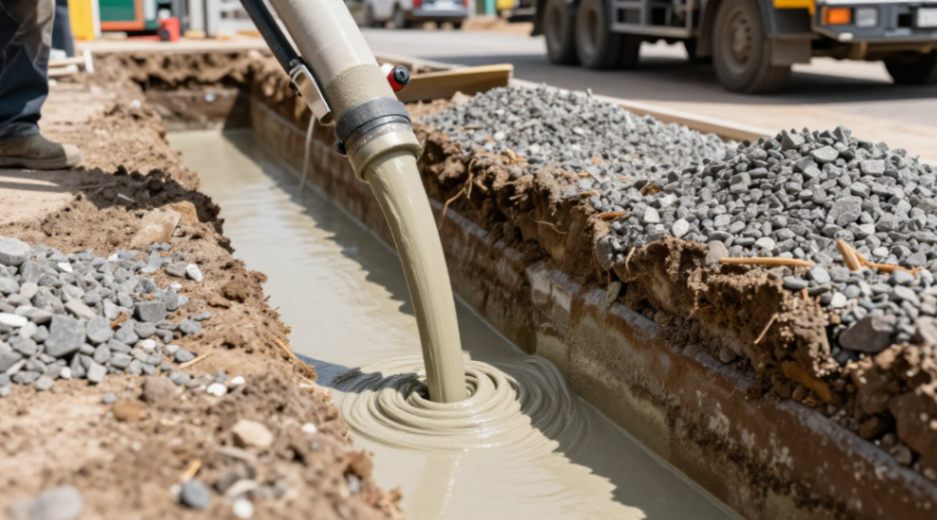
Think of it as engineered fill, not structural concrete. We create it by injecting a stable, pre-formed foam into a cement-based slurry. The result is a cellular matrix. For fill applications, we prioritize flow and weight over compressive strength. It’s a controlled, semi-fluid material designed to displace air and conform to complex voids without mechanical compaction.
Key Composition Points:
- Base Slurry: Typically cement, water, and sometimes fly ash or slag.
- Foam Agent: Synthetic or protein-based surfactants generate billions of microscopic, stable bubbles.
- No Large Aggregate: The absence of coarse aggregate is what gives it its flowable, self-leveling character.
2. The Density Decision: Finding the Sweet Spot
Density is the primary control knob. It dictates everything from load-bearing capacity to cost. For foamed concrete density for fill applications, we operate in a specific range. Going too low compromises stability; going too high negates the lightweight benefit.
- Typical Fill Density Range: 30 to 50 pounds per cubic foot (pcf) or 480 to 800 kg/m³.
- Ultra-Lightweight (30-35 pcf / 480-560 kg/m³): Ideal for abandonment of old tanks, pipes, or cavities where minimizing dead load is critical.
- Standard Fill (35-45 pcf / 560-720 kg/m³): The workhorse for utility trench backfill, culvert encasement, and slab subgrades.
- Higher Density (45-50+ pcf / 720-800+ kg/m³): Used where some structural interaction is needed, like lightweight embankments over soft soils.
3. The Core Trade-Off: Strength vs. Density (And Why It’s Okay)
We must be clear: this is a fill material, not a footing. The compressive strength at these densities is low, often between 50 and 300 psi. That’s the point. Its engineering value comes from other properties.
What You Gain by Accepting Lower Strength:
- Dramatic Weight Reduction: At 40 pcf, it’s about one-third the weight of compacted soil. This reduces load on underlying soils and adjacent structures.
- Perfect Flowability: It fills every nook, eliminating voids and compaction-related settlement. No more vibratory plates in deep, narrow trenches.
- Self-Levelling: Creates a uniform, stable platform with minimal labour.
- Sustainability Leverage: We can incorporate high volumes of industrial by-products like fly ash. It also reduces the need for imported quarry materials.
4. The Make-or-Break Factor Everyone Misses: Subgrade & Placement
This is where projects succeed or fail. On forums, we see the same post: “Our foamed concrete fill washed out/separated/settled.” The issue is rarely the material itself. It’s the process.
Non-Negotiable Steps:
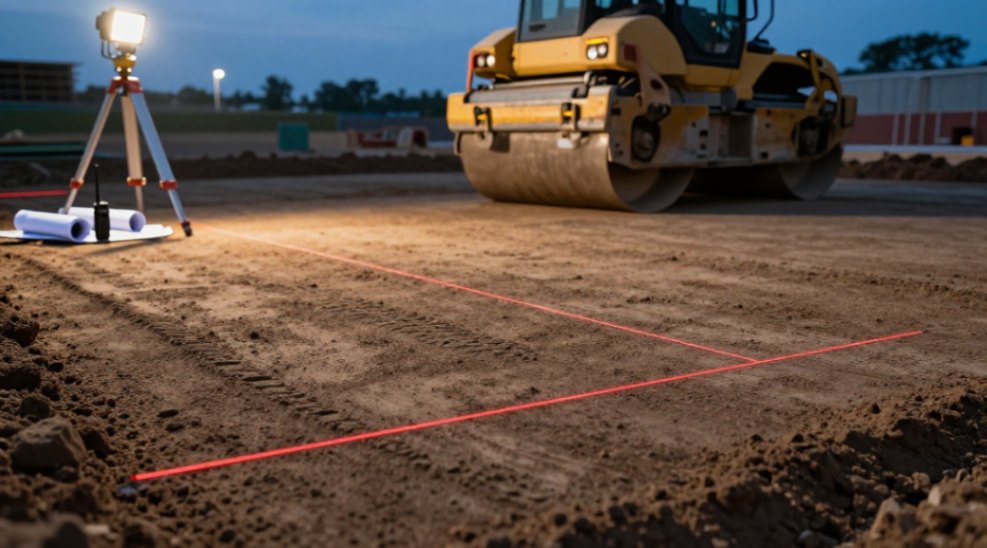
- Water is the Enemy: The subgrade must be free of standing water. A stable, firm platform is essential. Pump it dry.
- Controlled Placement: Pour from the lowest point, allowing it to flow and rise evenly. Avoid free-fall drops over 3 feet to prevent foam collapse and segregation.
- No Over-engineering: Don’t try to vibrate or compact it. You’ll destroy the foam structure. Place it and let it cure.
5. Beyond Theory: Real Project Applications & Long-Term Performance
Where does this data and these trends actually play out? Let’s look at the most common and effective uses.
Top Project Types:
- Utility Trench Backfill: Protects pipes from point loads, allows future excavation with hand tools, and prevents surface settlement.
- Culvert & Bridge Abutment Backfill: Eliminates unbalanced lateral earth pressure. It flows completely under the haunch.
- Slab-on-Grade Subgrades: Creates a uniform, stable, and lightweight base over poor or variable soils. Reduces differential settlement.
- Abandonment of Underground Structures: Fills old sewers, tanks, and mines quickly and safely.
Durability & Cost Considerations:
Long-term, a properly placed foamed concrete fill is inert and stable. It won’t decompose or settle. The initial cost per cubic yard is higher than cheap borrow soil. But you must factor in the total installed cost: less over-excavation, zero compaction costs, faster placement, and no return visits for settlement repairs. The math often favors foamed concrete.
Your Specification Checklist: Getting It Right
To lock in these benefits, your project specs need clarity. Vague requirements lead to problems.
Key Spec Parameters for Engineers:
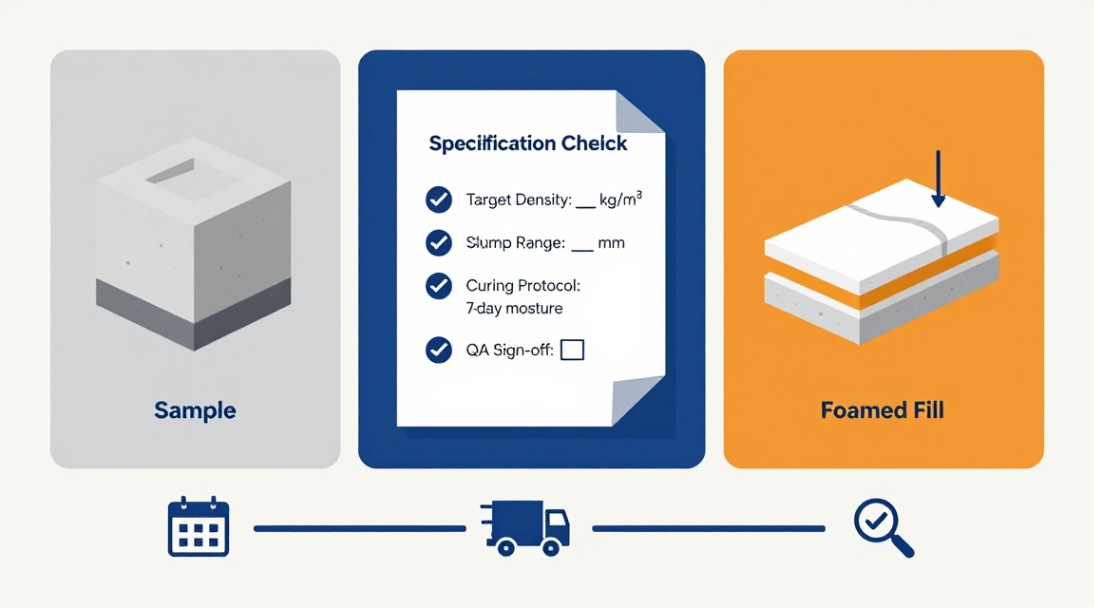
- Wet Density: Specify the required range at the point of placement (e.g., 40 ± 2 pcf).
- Flow Consistency: Define a slump flow or spread measurement to ensure proper fluidity.
- 28-Day Compressive Strength: Set a minimum (e.g., 100 psi) that aligns with the fill purpose.
- Onsite QC Testing: Mandate daily density checks using a pressurized mud balance or nuclear gauge. Require sample cylinders for lab strength verification.
The Bottom Line for Your Next Fill Project
The conversation is moving beyond “Can we use it?” to “What density gives us the optimal performance-to-cost ratio?” The trend is toward precision. By treating foamed concrete density for fill applications as a primary design variable, we solve old problems with modern, data-backed methods. Don’t just replace soil. Engineer the void. Start your next project review by analyzing the subgrade conditions and load requirements, then work backward to specify the density that makes sense. That’s how we build more resilient, cost-effective infrastructure.
Supplier
We are the global leader in lightweight concrete and advanced engineered foam solutions. Known globally for its commitment to research, innovation, and applied expertise, we have been providing engineered foam solutions since the early 2012’s.
We can supply high-quality concrete admixture and foam concrete related products all over the world.
The company has a professional technical department and quality supervision department, a well-equipped laboratory, and equipped with advanced testing equipment and after-sales customer service center.
If you are interested, please feel free and contact us.