Concrete-mesa | Concrete Admixtures, Tools, and Production Machines

The Strategic Advantages of Soap-Based Concrete Formwork Oil: A Technical Deep Dive for Construction Pros
Demystifying Soap-Based Formwork Oil: Beyond the Basics
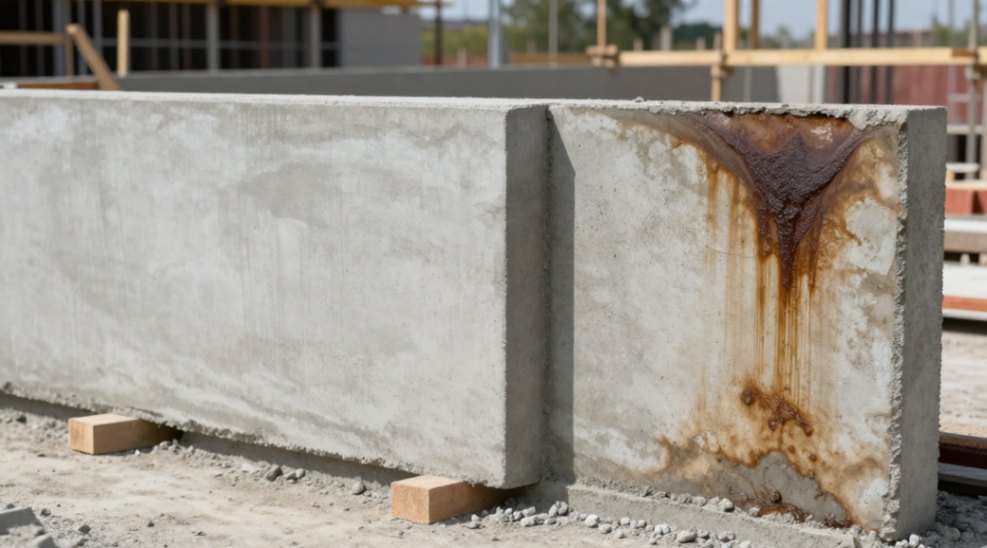
You’ve spent hours setting up a critical pour. The formwork is perfect. Yet, after stripping, you’re left with a mess of stuck concrete and a surface marred by oily residue. This frustration is the daily reality for crews using outdated petroleum-based release agents. Soap-based concrete formwork oil offers a fundamentally different solution. It is not merely a “greener” alternative; it is a chemically engineered system designed to optimize the demolding process. This article provides a data-driven analysis of its operational advantages and industry adoption trends.
How Soap-Based Oil Outperforms Traditional Agents
The core mechanism is a chemical reaction, not just lubrication. Traditional oils rely on creating a physical barrier. Soap-based formulations leverage saponified fatty acids. These molecules align on the form face, creating a dense, monomolecular layer with hydrophilic (water-loving) heads oriented towards the concrete. This layer attracts moisture from the fresh concrete, forming a microscopic slip plane. The form releases cleanly. Industry feedback on professional forums consistently highlights this key benefit. As one project superintendent noted on a construction management thread, “The switch eliminated form cleaning time by about 70% on our bridge abutment project. The finish was consistently better, with no pitting.”
Comparative Performance Analysis
| Performance Metric | Petroleum-Based Oil | Soap-Based Formwork Oil |
|---|---|---|
| Release Mechanism | Physical barrier, can be inconsistent | Chemically-induced slip plane, highly reliable |
| Concrete Surface Finish | Often stained, hydrophobic film can affect curing | Virtually stain-free, allows normal hydration |
| Form Cleanup Labour | High; requires solvent degreasing | Low; typically water-rinsable |
| Material Compatibility | Can degrade certain plastics/rubbers | Generally inert to steel, aluminum, plastic, and composite forms |
| Environmental/Safety Profile | High VOC, flammable, soil contaminant risk | Biodegradable, low VOC, non-flammable |
| Long-Term Form Life | Petroleum can cause wooden forms to rot, attracts dirt | Prevents wood rot, does not attract abrasive particulate buildup |
Application and Operational Best Practices
Effective use requires a shift in technique. The goal is a thin, even film. Over-application wastes product and can cause runs. Apply using a low-pressure sprayer, maintaining a consistent distance of 30-45 cm from the form face. Cover the surface with a uniform, wet sheen. The product should not pool. For intricate forms or heavily textured surfaces, a brush-on method ensures coverage in corners and details. Apply the agent to clean, dry forms. Always consult the manufacturer’s technical data sheet for specific dilution ratios and cure time before pouring.
Step-by-Step Application Protocol
- Form Inspection & Preparation: Ensure form faces are clean, dry, and free of old concrete, rust, or previous release agent residue.
- Product Agitation: Gently stir or shake the soap-based oil container to ensure uniform consistency.
- Equipment Setup: Use a dedicated, clean sprayer calibrated for a fine mist. Set pressure to 15-20 psi (1.0-1.4 bar).
- Application: Hold spray nozzle 30-45 cm (12-18 inches) from form. Apply using smooth, overlapping passes to achieve complete, thin coverage.
- Cure Time: Allow the applied film to dry to a clear, tack-free state. This typically requires 10-20 minutes, depending on ambient conditions.
- Concrete Placement: Proceed with standard concrete placement and vibration procedures.
- Stripping & Cleanup: After concrete achieves sufficient strength, strip forms. Rinse forms with water to prepare for next use.
Analyzing the Total Cost of Ownership
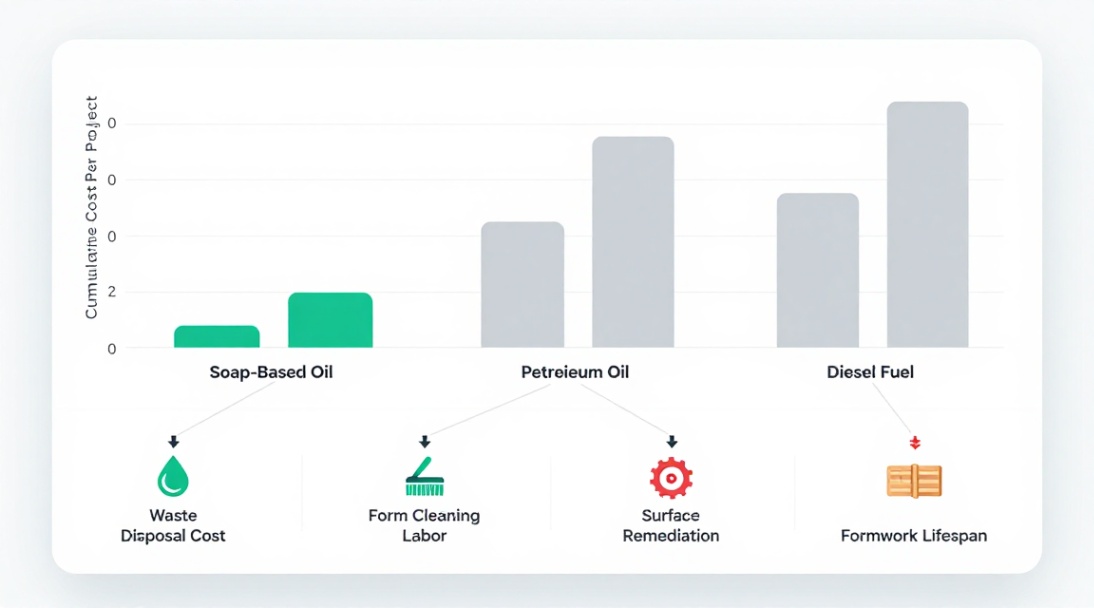
The initial cost per liter of soap-based oil may be higher than basic diesel fuel or petroleum oil. This perspective is misleading. A true cost analysis includes direct and indirect factors. Labor for form cleaning drops significantly. Disposal costs for contaminated wash water and solvent-soaked rags are minimized. Project finishes improve, reducing the need for remedial surface grinding or patching. Form life extends due to the absence of corrosive and wood-rotting components. Over a multi-project timeframe, the total cost of ownership for soap-based systems consistently undercuts traditional methods. The value proposition is not the product in the drum, but the reduced labour, waste, and risk on the job site.
The Verdict on Performance and Sustainability
Soap-based concrete formwork oil represents a mature, performance-driven technology. Its adoption is driven by tangible bottom-line benefits: reduced labour hours, superior finish quality, and extended asset life. The environmental and safety advantages are significant, aligning with modern regulatory and corporate responsibility goals, but they are complementary to the core operational gains. For superintendents and project managers focused on efficiency, predictability, and cost control, it is a strategic tool. Evaluate it not as a simple commodity, but as a process-enhancing chemical system. The data from the field confirms its role in modern, efficient construction.
For project-specific evaluation, review case studies from similar structural applications. Test the product on a non-critical section of formwork to observe its behavior with your specific concrete mix design and form material. The results will dictate the scale of implementation.
Supplier
We are the global leader in lightweight concrete and advanced engineered foam solutions. Known globally for its commitment to research, innovation, and applied expertise, we have been providing engineered foam solutions since the early 2012’s.
We can supply high-quality concrete admixture and foam concrete related products all over the world.
The company has a professional technical department and quality supervision department, a well-equipped laboratory, and equipped with advanced testing equipment and after-sales customer service center.
If you are interested, please feel free and contact us.