Concrete4U | Concrete Admixtures, Tools, and Production Machines

How to Master Portable Foaming Equipment for Concrete: A Step-by-Step Field Guide
I remember watching a crew pour a lightweight fill for a sewer trench on a tight, muddy site downtown. They wrestled with a generator the size of a small car, hoses snaking everywhere, and the constant roar of a diesel compressor. The pour was supposed to take four hours. It took ten. The foam density was all over the place. The project manager’s face said it all-defeat, frustration, a blown budget. That scene, repeated a thousand times, is why the industry’s blind reliance on stationary, over-engineered systems is flawed. The future, the solution, lies in understanding the tool that brings the plant to the project: portable foaming equipment for concrete. This isn’t about a fancy gadget. It’s about operational freedom.
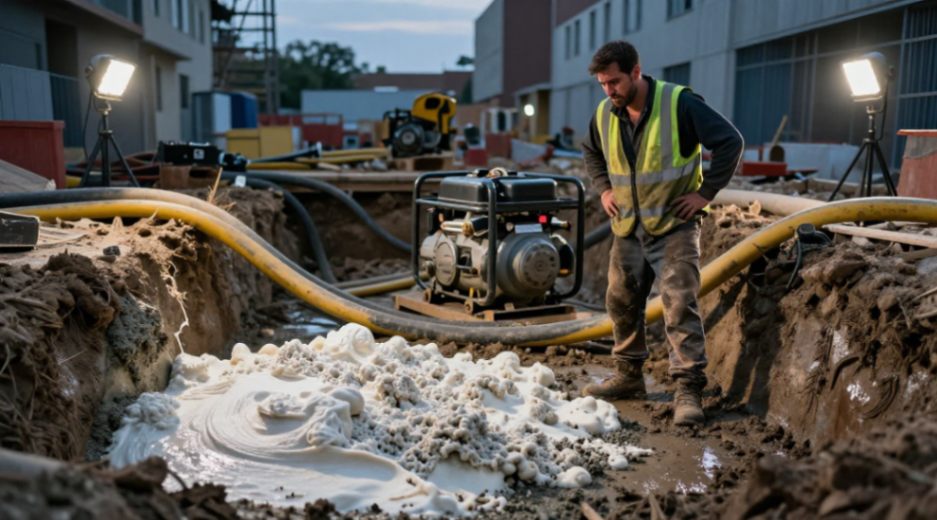
The Core of a Portable Generator: Your Mobile Foam Factory
Forget complexity. A portable foam generator’s brilliance is in its brutal simplicity. Think of it as a self-contained, pressurized mixing loop. You have a reservoir for the foaming agent, typically a 5-gallon or 10-gallon tank. A pump-a durable, diaphragm or centrifugal type-draws the agent and pushes it. A clean, dry air supply from a standard jobsite compressed air system (a 60 to 100 CFM compressor is typical) meets the liquid stream under pressure. They collide violently in a mixing chamber, often a simple but precisely engineered pipe section or vortex block. That’s it. No magic. Just controlled turbulence turning a chemical soup into a billion microscopic, stable bubbles. This entire assembly mounts on a wheeled cart or skid. Portability isn’t a feature; it’s the entire philosophy. It means your foam quality is no longer hostage to the distance from a stationary plant.
The Unfair Advantage: Why Portability Changes Everything
Why does this matter? Because time and access are money, and traditional setups waste both. A portable unit sets up in minutes, not hours. You wheel it off the truck, connect three things: air, power, and the foaming agent line. You’re producing foam in under five minutes. This is critical for contractors juggling multiple, scattered job sites. It’s non-negotiable for remote locations where trucking in pre-made foam concrete is economically insane. I see forums filled with contractors complaining about foam consistency from delivered loads. A Reddit user in the concrete subreddit recently lamented, ‘By the time the truck got to my site, the top half of the load was collapsing. We had to pour it anyway.’ With a portable foaming generator on-site, you produce exactly what you need, when you need it. Density control is immediate. You adjust on the fly. The comparison isn’t even close. Stationary systems are for mass production at a fixed point. Portable equipment is for solving real-world problems where the work actually happens.
The Step-by-Step Field Process: From Setup to Perfect Foam
Let’s walk through the job. Theory is useless without practice.
Step 1: Rigging and Pre-Flight Cheque
Position the unit on stable, level ground close to your standard concrete mixer or pumping system. Connect your air hose to the generator’s inlet. This requires a minimum pressure, usually 80 PSI, but confirm with your manual. Power up the unit. Electric motors are common for quiet operation; small gas engines work where power is absent. Now, fill the foaming agent tank. This is your first critical control point. Never guess the ratio. The concentrate must be diluted with water to the manufacturer’s specified percentage-often between 2% and 5% by volume. Use a graduated container. Mix it thoroughly in a separate pail before adding it to the tank. An improperly diluted agent will not foam correctly. It will either be too weak and collapse or be too rich and waste money.
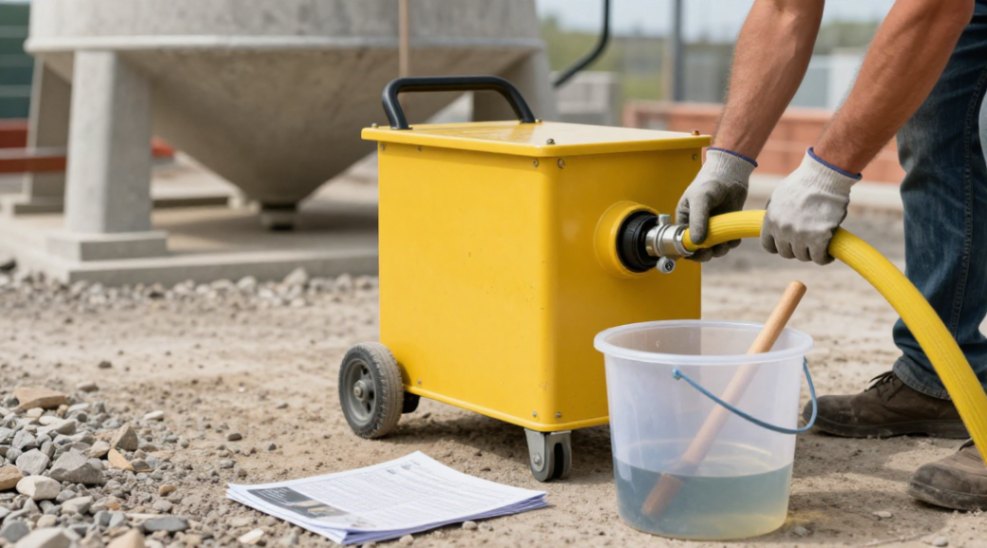
Step 2: Dialing in the Density
Start the generator. Open the air valve fully first to establish maximum flow. Then, slowly open the liquid agent valve. You will hear the sound change from a hiss to a wet, frothy rush. The foam will begin to discharge. This is where you work. Your target density-say, 30 pounds per cubic foot for a lightweight fill-is controlled by the ratio of air to liquid. More air, lighter foam. More liquid, heavier, wetter foam. You adjust this with the valves, but for consistency, you use a simple field test: a known-volume container, like a 0.5 cubic foot box. Fill it, weigh it, and calculate the density. Tweak the valves. It takes practice, but within three tests, you should be within +/- 1 pcf. Record your valve positions for repeatability. This direct, tactile control is what makes on-site production so powerful.
| Step | Action | Key Parameter / Tool | Goal |
|---|---|---|---|
| 1. Positioning | Place unit on level ground near mixer/pump. | Stable base | Safe, efficient hose routing. |
| 2. Air Connection | Connect hose from compressor to generator inlet. | Minimum 80 PSI supply | Provide dry, pressurized air. |
| 3. Agent Preparation | Dilute foaming agent concentrate with water. | Manufacturer’s ratio (e.g., 3% by volume) | Correct chemical strength for stable foam. |
| 4. System Prime | Start generator, open air valve, then slowly open liquid valve. | Audible/visual foam production | Establish flow and initial foam output. |
| 5. Density Calibration | Fill a known-volume container, weigh, calculate. | 0.5 cu ft box, scale | Achieve target density (e.g., 30 pcf). |
| 6. Valve Lock-in | Adjust air/liquid valves to hit target, note positions. | Repeatable valve settings | Consistent production for duration of pour. |
Step 3: Integration and Pour
Direct the foam discharge hose into the mixer containing your cement, sand, and water slurry, or into the hopper of a pumping system. The foam must integrate uniformly. For mixer integration, add the foam over 30 to 60 seconds while the mixer runs. You are literally folding air into the concrete matrix. The result is a flowing, homogeneous cellular concrete mix. Now, place it. For lightweight fills and utility backfill, you can often pour directly from the mixer or pump it hundreds of feet. For roof screeds and insulation pours, precision and finish are paramount, so control your placement rate.
Keeping Your Edge: Maintenance and Selection Truths
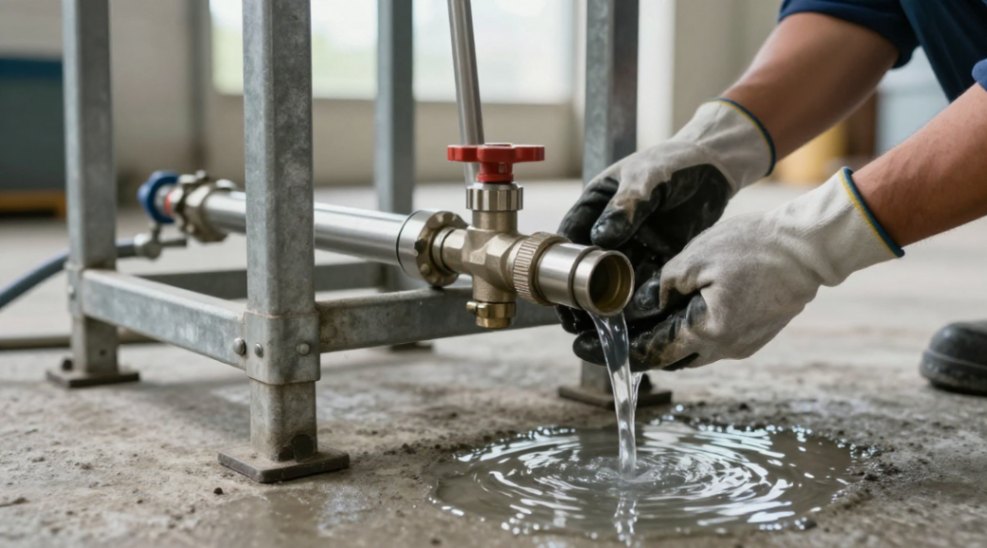
This equipment lives a hard life. Dust, vibration, moisture. Durability isn’t an option; it’s the primary selection factor. Look for welded frames, stainless steel or hardened plastic fluid paths, and industrial-grade valves. After every use, you must flush the system. Run clean water through the liquid side for two minutes. This prevents the foaming agent from crystallizing and clogging the tiny orificies in the mixing chamber. It’s a five-minute task that saves a four-hour breakdown. Every month, check pump seals and air filters. This is not glamorous work. It’s the discipline that separates professionals from hobbyists.
So, is it worth the investment? For a contractor doing more than a handful of lightweight concrete jobs a year, absolutely. The control, the eliminated transport risk, the scheduling freedom-it pays for itself. For the occasional user, rental is a smart path. But don’t rent the cheapest unit. Rent one built like the tool it is. Finally, the trend is clear: smarter, integrated controls. Future units will have digital flow meters and preset density buttons. But the core principle remains. You are bringing a fundamental part of the batching process to the point of use. That is a permanent shift. Start by getting your hands on a unit. Run water through it. Understand its rhythms. Then take it to a job and reclaim control from the chaos of the site. That’s where the real work begins.
Supplier
We are the global leader in lightweight concrete and advanced engineered foam solutions. Known globally for its commitment to research, innovation, and applied expertise, we have been providing engineered foam solutions since the early 2012’s.
We can supply high-quality concrete admixture and foam concrete related products all over the world.
The company has a professional technical department and quality supervision department, a well-equipped laboratory, and equipped with advanced testing equipment and after-sales customer service center.
If you are interested, please feel free and contact us.