Concrete-mesa | Concrete Admixtures, Tools, and Production Machines

What Is a Concrete Foaming Agent? Your Guide to Lightweight Cellular Concrete
Have You Ever Mixed a Batch That Felt Like a Lead Blanket?
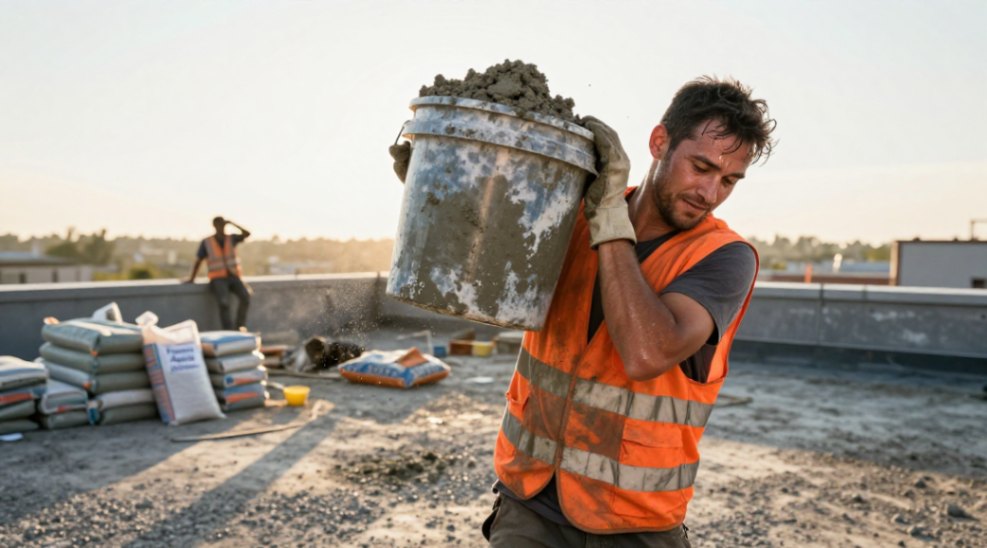
We’ve all been there. You’re working on a project—maybe a rooftop screed or a trench backfill—and you’re dragging around buckets of heavy concrete. Your back hurts. Your crew is tired. You start wondering: There has to be a better way.
That better way is a concrete foaming agent. We’re talking about the magic ingredient that turns dense, heavy concrete into a lightweight, workable, insulating material. If you have ever wanted to reduce structural weight or improve thermal performance without sacrificing strength, this is your answer.
We get it. Figuring out the right foaming agent, the proper dilution, and the correct mixing technique can feel overwhelming. Let’s cut through the noise together.
1. What Exactly Is a Concrete Foaming Agent?
Think of a concrete foaming agent as the soap in a bubble machine. It’s a surfactant that, when diluted with water and forced through a foam generator, creates stable, millions of tiny air bubbles. Those bubbles replace heavy aggregates in a cement paste.
The result is foamed concrete (also called cellular lightweight concrete). It is not aerated autoclaved concrete (AAC). AAC uses chemical reactions to create air pockets. Foamed concrete uses mechanical foam.
Here is how the magic happens:
- You mix your base slurry: water + special cement + superplasticizer (a concrete water reducer).
- In a separate machine, you mix the foaming agent with water and compressed air. That machine is a foam generator.
- You inject the preformed foam into the cement slurry.
- You mix gently. You pour. You cure.
It’s that simple. And that clever.
2. Synthetic vs. Protein-Based: Which Foaming Agent Wings?
Not all foaming agents are created equal. You will encounter two main families. Pick the wrong one and your foam collapses before you can pour. Pick the right one, and you get light, stable concrete.
| Feature | Synthetic Foaming Agent | Protein-Based Foaming Agent |
|---|---|---|
| Foam Bubble Size | Smaller, more uniform bubbles | Larger, irregular bubbles |
| Stability | Good for high-density mixes | Excellent for low-density, high-volume mixes |
| Resistance to cement | Lower; can collapse if overmixed | Higher; tolerates stronger cement pastes |
| Cost | Lower per liter of concentrate | Higher per liter of concentrate |
| Best Use Case | Precast blocks, floor screeds, trench backfill | Thermal insulation, void filling, low-density pours |
We suggest testing both. Many users on Reddit report switching to synthetic for routine blocks because it is cheaper and easier to dose. For thick insulation layers, protein-based wins every time.
3. Getting the Dose Right: Dilution Ratios That Work
This is where most beginners mess up. They guess. They pour in extra agent thinking more bubbles = lighter concrete. Wrong. Too much foam, and your concrete dries with giant voids. Too little, and it is still heavy.
Here is a repeatable process we use on site:
- Step 1: Determine your target wet density. For floor screeds, we aim for 1000–1200 kg/m³. For insulation, we drop to 400–600 kg/m³.
- Step 2: Calculate foam volume needed. Formula: (Base slurry weight) / (Target density) – 1 = Foam volume fraction.
- Step 3: Dilute your concrete foaming agent concentrate. Typical dilution: 1 part agent to 20–40 parts water. Check your manufacturer data sheet.
- Step 4: Run the diluted solution through your foam generator. Adjust air pressure to get a stiff, shaving-cream-like foam.
- Step 5: Mix foam into cement slurry. Use a slow, gentle mixing speed. High shear destroys bubbles.
Pro Tip: Always measure your foam density before mixing. A good foam has a density of 50–80 g/L. If it is above 100 g/L, your bubbles are too big. Adjust air or agent concentration.
4. Where Do We Use Foamed Concrete? (Real Applications)
Foamed concrete is not a niche material anymore. We use it everywhere. Here are the common jobs:
- Thermal Insulation: Roof screeds, underfloor heating systems. The air bubbles trap heat. It is like wrapping your structure in a blanket.
- Void Filling: Abandoned tanks, old pipes, tunnels. Pumping foamed concrete fills every gap without exerting huge pressure on walls.
- Precast Blocks: Lightweight blocks that are easy to lift and cut. One person can carry a block that used to require two.
- Floor Screeds: Leveling old, uneven floors. Light enough for wooden joists, strong enough for tiles.
- Trench Backfill: Utility trenches. Foamed concrete reduces settlement on the road surface above very well.
5. The Real Benefits: Why We Switched From Traditional Concrete
We have been in this game for years. We have seen foamed concrete save projects. Here is why we keep coming back:
- Reduced structural weight: Up to 80% lighter than standard concrete. Your foundations thank us.
- Improved thermal insulation: R-values comparable to some insulation boards.
- Acoustic dampening: Foamed concrete absorbs sound. Great for multi-story buildings.
- Cost-effective material savings: You use less aggregate, cement, and water. The foaming agent is cheaper than the aggregate it replaces.
- Faster construction: Pumpable, self-leveling, no compaction needed. We pour faster.
One major benefit people miss: environmental. Foamed concrete uses low embodied energy. It is recyclable. It reduces raw material consumption. It is a greener choice.
6. Mixing with Other Additives: The Compatibility Guide
Foamed concrete is not just cement, water, and foam. Often, we need other chemicals. But not all play nice.

Here is what we know works:
- Superplasticizer (Concrete Water Reducer): Essential for low water-cement ratios. Use a polycarboxylate-based type. Do not use lignosulfonates; they can destabilize foam.
- Early Strength Agent: Works if added after foam incorporation. Add before and the foam collapses.
- Fiber: Polypropylene fibers (6–12 mm) control shrinkage cracks. Glass fibers add tensile strength.
- Concrete Defoamer: Avoid. That defeats the purpose entirely.
- Hydroxypropyl Methyl Cellulose (HPMC) or Hydroxyethyl Cellulose (HEC): These thickeners improve foam stability in the mix. Use at 0.1–0.3% by weight of cement.
- Redispersible Polymer Powder: Improves bond strength and flexibility. Good for thin overlays.
- Sodium Silicate / Potassium Silicate: Accelerates setting. Works well for cold weather pours.
- Nano-modifier: Advanced option. Improves strength and reduces permeability.
Caution: Always test compatibility. Mix a small trial batch. Watch the foam. If it deflates within 2 minutes, that additive is a concrete defoamer in your mix, not a friend.
7. How to Test Your Foam: Quality Checks That Save Your Batch
We trust nothing. We test everything. Here is our standard quality protocol:
- Foam Collapse Rate: Fill a graduated cylinder with foam. Measure the liquid that drains to the bottom after 10 minutes. Acceptable: less than 10% drainage. Excellent: less than 5%.
- Foam Density: Weigh a 1-liter container full of foam. Target: 50–80 g/L.
- Wet Density of Foamed Concrete: Weigh a fixed volume of fresh foamed concrete. Compare to your target density.
- Dry Density: After 28 days of curing, weigh a dry cube. Should match your design specification.
- Foam Drainage Test: Mix a small batch of slurry. Pour a known volume. Measure the bleed water after 30 minutes. High bleed = poor stability.
It takes 15 minutes. It saves a truckload of concrete. Worth it.
8. Common Pitfalls: What We Have Learned the Hard Way
We have made mistakes. You can learn from ours.
- Over-foaming: Pouring too much foam into too little paste. Result: concrete crumbles like dry cake. Rule: never exceed 70% foam volume in the final mix.
- Collapse during mixing: Using a high-speed mixer. Foam hates shear. Use a paddle mixer at slow speed (under 100 RPM).
- Incorrect water-cement ratio: Too much water, foam floats to top. Too little, mix is unworkable. Target water-cement ratio of 0.40–0.55 for dense foam concrete.
- Wrong cement type: Using rapid-hardening cement without adjusting retarder. Foam sets mid-air and leaves voids. Use special cement like Portland or sulfate-resisting, with proper set control.
Also: do not add the foam before all other admixtures are already dissolved in the water. Mix the slurry first, then add foam last.
9. Industry Standards: The Rules We Follow
Foamed concrete is not a cowboy material. There are standards. We adhere to them for safety and performance.
- BS EN 15580 (former BS 8110): For structural lightweight concrete.
- ASTM C495: Standard test method for compressive strength of lightweight cellular concrete.
- ACI 523.1R: Guide for cellular concrete above 800 kg/m³ density.
- ISO 16929: Plastics – Determination of foaming characteristics. Some use this for reference.
If your project requires a specific density class or compressive strength, check the local building code. Your foaming agent and mix design must match those specs.
10. Foamed Concrete vs. AAC and EPS Concrete: The Clear Comparison
We often get asked: why not just use AAC blocks or EPS beads? Here is our honest take:
| Alternative | Vs. Foamed Concrete |
|---|---|
| Aerated Autoclaved Concrete (AAC) | AAC requires autoclave kilns. High cost. Long lead times. Foamed concrete is cast in place. No factory needed. AAC is stronger for walls. Foamed concrete wins for in-fill and screeds. |
| Expanded Polystyrene (EPS) Concrete | EPS beads are separate from paste. They create weak points. Foam bubbles are uniform and create a homogenous structure. EPS concrete has poor fire resistance. Foamed concrete uses inorganic bubbles, so it is fire-resistant. |
| Normal Lightweight Aggregate Concrete | Uses pumice or expanded clay. Heavier than foamed concrete. No thermal uniformity. Foamed concrete is easier to pump and self-levels. |
We choose foamed concrete for most infill and insulation jobs. It is simpler and more consistent.
Our Honest Take: Should You Switch to Foamed Concrete?
We have been mixing concrete for a long time. We have seen the benefits firsthand. Foamed concrete is not a gimmick. It is a proven solution for reducing weight, improving insulation, and saving money.
If you are tired of heavy concrete, start small. Buy a sample of concrete foaming agent. Test it with your local foam generator. Run a trial batch. Measure your results. Talk to your crew. See how much easier the day becomes.
We do not sell foaming agents. We do not profit from your choices. We just want you to avoid the headaches we faced. Test first. Start with a superplasticizer and a low water-cement ratio. Use gentle mixing. Your future self will thank you.
If you need detailed technical data sheets or specific mixing guides, ask your supplier. Look for suppliers like TRUNNANO or others who provide clear documentation. Demand data. Do not accept vague answers.
Now go make some light concrete. Your back will be grateful.
Supplier
We are the global leader in lightweight concrete and advanced engineered foam solutions. Known globally for its commitment to research, innovation, and applied expertise, we have been providing engineered foam solutions since the early 2012’s.
We can supply high-quality concrete admixture and foam concrete related products all over the world.
The company has a professional technical department and quality supervision department, a well-equipped laboratory, and equipped with advanced testing equipment and after-sales customer service center.
If you are interested, please feel free and contact us.