Concrete4U | Concrete Admixtures, Tools, and Production Machines

What Are the Best Admixtures for Modern Concrete Projects?
1. Introduction
Just 24 hours ago, a major infrastructure report released by the American Society of Civil Engineers (ASCE) highlighted that over 40% of U.S. bridges are now over 50 years old—and many rely on advanced concrete admixtures to extend service life and improve resilience. This renewed focus underscores how critical admixtures have become in modern construction. Whether you’re pouring a driveway, building a high-rise, or waterproofing a basement, the right concrete admixture can dramatically enhance performance, durability, and workability.
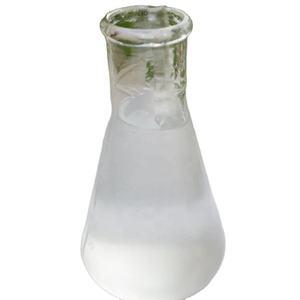
Admixtures—also called concrete additives or chemical admixtures for concrete—are ingredients added to concrete besides cement, water, and aggregates to modify its properties. From improving flow with a superplasticizer to speeding up curing with a concrete accelerator, these compounds solve real-world challenges on job sites every day.
2. Superplasticizers: The Game-Changer in Workability
Among all admixture types, superplasticizers (or high-range water reducers) stand out for their ability to drastically reduce water content while maintaining or even enhancing fluidity. Two dominant chemistries dominate this category: naphthalene-based superplasticizers and polycarboxylate ether (PCE)-based superplasticizers.
Naphthalene sulfonate formaldehyde condensates (often called SNF) were the industry standard for decades. They offer strong water reduction (15–25%) and are cost-effective, making them popular in precast and ready-mix applications. However, they suffer from faster slump loss and aren’t ideal for long-haul deliveries.
In contrast, PCE-based superplasticizers—modern polycarboxylate superplasticizers—deliver superior performance: up to 40% water reduction, excellent slump retention, and compatibility with supplementary cementitious materials. They’re the go-to choice for self-consolidating concrete (SCC) and high-strength mixes. Though pricier, their efficiency often justifies the cost, especially in complex pours.
- Naphthalene superplasticizer: affordable but limited slump retention
- Polycarboxylate ether superplasticizer: high performance, ideal for modern mixes
3. Setting Time Control: Accelerators vs. Retarders
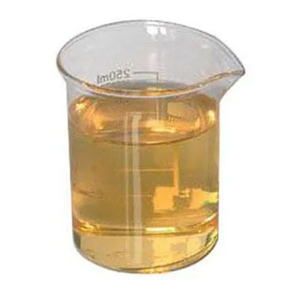
Controlling when concrete sets is crucial. In cold weather or fast-track projects, accelerating admixtures for concrete—like calcium chloride or non-chloride alternatives—shorten curing time and boost early strength. These are essential for fast curing concrete additives used in emergency repairs or winter pours.
On the flip side, concrete retarder admixtures delay hydration, useful in hot climates or large placements where workers need extra time. Surface retarder concrete products even allow decorative finishes by slowing the top layer’s set while the bulk hardens.
Choosing between an admixture accelerator and retarder depends entirely on ambient conditions and scheduling—not one is universally ‘best.’
4. Air Entraining and Waterproofing Additives
Air entraining concrete improves freeze-thaw resistance by creating microscopic air bubbles. An air entraining admixture (or air entraining agent) is mandatory in regions with harsh winters. Without it, water expansion during freezing can crack concrete from within.
For moisture-prone areas, waterproofing admixtures are indispensable. Options include integral waterproofer systems like crystalline waterproofing admixture—which reacts with moisture to form insoluble crystals that block pores—and cement waterproofing additives that repel water at the molecular level. Unlike surface sealers, these work from within, offering long-term protection as part of the concrete matrix itself.
5. Fiber Reinforcement: Beyond Steel Rebar
Fiber reinforced concrete is gaining traction as a complementary or alternative reinforcement method. Fibers for concrete come in many forms: polypropylene fibres for concrete control plastic shrinkage cracks; steel fibers for concrete enhance impact resistance in industrial floors; and even coconut fiber reinforced concrete is being explored for sustainable builds.
Macro fibers and microfibers serve different purposes—macro fibers (like steel or synthetic) improve post-crack toughness, while microfibers (e.g., PP fiber concrete) reduce early-age cracking. Brands like Hardie concrete siding and CertainTeed concrete siding use fiber cement technology (a blend of cement, sand, and cellulose or synthetic fibers) to create durable, wood-like cladding.
6. Specialty Additives: Foaming Agents, Colorants, and Release Agents
Beyond structural performance, admixtures also enable aesthetic and functional versatility. Concrete foaming agents—protein-based or synthetic—are key in producing lightweight foam concrete (aircrete) for insulation blocks. Meanwhile, colored concrete relies on pigments and stamped concrete colors paired with release agents (powder or spray) to achieve realistic wood, stone, or brick patterns without compromising surface integrity.
White cement and white concrete mixes, often enhanced with superplasticizer for workability, are trending in modern architecture for countertops and facades. And don’t overlook form release agents—essential for smooth demolding without surface defects.
7. Choosing the Best Admixture for Concrete
There’s no single ‘best admixture for concrete’—it depends on your goals. Need high flow? Go with a PCE superplasticizer. Building in Minnesota? Prioritize air entraining. Pouring in summer heat? A concrete retarder admixture saves the day. Always consider compatibility, dosage, and environmental factors.
Leading manufacturers like Chryso admixture offer tailored solutions, but even generic concrete chemicals from Home Depot can suffice for small DIY jobs—if used correctly.
8. Conclusion
From superplasticizer in concrete to fiber reinforcement and crystalline waterproofing, modern admixtures empower builders to push the limits of what concrete can do. Understanding admixture types—whether mineral admixture, chemical admixture for concrete, or specialty additives—ensures smarter, more resilient construction. As infrastructure demands grow, so too will our reliance on these invisible yet transformative ingredients.
Our Website founded on October 17, 2012, is a high-tech enterprise committed to the research and development, production, processing, sales and technical services of ceramic relative materials such as What. Our products includes but not limited to Boron Carbide Ceramic Products, Boron Nitride Ceramic Products, Silicon Carbide Ceramic Products, Silicon Nitride Ceramic Products, Zirconium Dioxide Ceramic Products, etc. If you are interested, please feel free to contact us.