Concrete-mesa | Concrete Admixtures, Tools, and Production Machines

Why Your CLC Block Plant Needs an Industrial Foam Generator
The single biggest factor determining the profitability and quality of your CLC block operation isn’t the cement or the sand-it’s the quality and consistency of the foam you inject. An industrial foam generator for CLC blocks isn’t an accessory; it’s the core component that dictates structural integrity, insulation value, and your final material cost. Everything else depends on it.
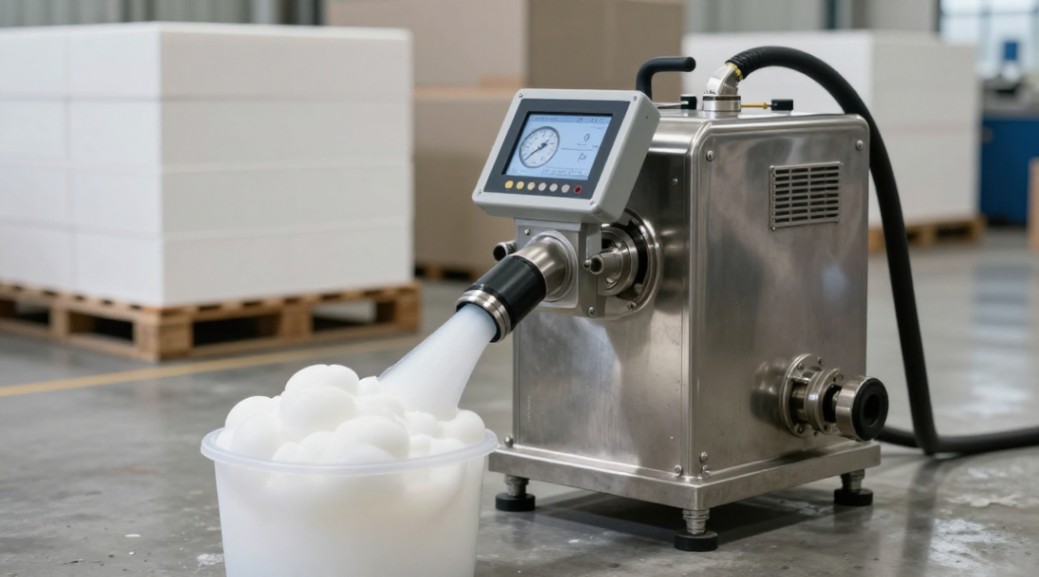
We’ve spent decades watching startups and established plants alike struggle with inconsistent densities and weak blocks. The culprit is almost always the foam. Hand-mixed foam or undersized generators create bubbles that are too large, too fragile, or simply inconsistent from one batch to the next. The result is a product that fails to meet specifications, leading to wasted materials, rejected loads, and a damaged reputation. The transition from a ‘foam maker’ to a purpose-built industrial foam generator represents the leap from a craft to a controlled, repeatable science.
The Core Principle: Stability Over Volume
Anyone can make bubbles. The challenge is making millions of identical, strong, stable micro-bubbles that can survive being mixed into a cement slurry and maintain their structure as the block cures. This is the sole purpose of an industrial foam generator. It works on a simple but precise principle: it meters a precise ratio of high-grade foam concentrate (typically 2-5%) and water, then uses a high-shear pump or compressed air vortex to forcefully inject ambient air into the stream. This action creates a homogeneous, wet foam with a density typically between 40-80 grams per litre. The machine’s design-the mixing chamber geometry, the pressure, the flow rates-is engineered to produce this specific, stable foam structure every single time the motor starts.
Think of it like baking. You can mix flour and water with a fork, or you can use a stand mixer with a dough hook. One method gives you a lumpy, inconsistent paste. The other gives you a smooth, elastic dough, batch after batch. The industrial foam generator is your stand mixer for foam. It ensures each bubble has a strong, resilient film of surfactant that can withstand the alkaline and abrasive environment of cement. This stability is what prevents foam collapse, which manifests as uneven block texture, weak spots, and unpredictable shrinkage.
The Direct Link to Block Performance
This foam stability directly translates into every promised benefit of CLC blocks. Let’s connect the dots.
- Precise Density Control: The foam is the lightweight aggregate. By controlling the foam’s density and the volume injected per cubic metre of slurry, you control the final block density with an accuracy of +/- 5%. A 600 kg/m³ block is a 600 kg/m³ block, not a 550 or a 650. This predictability is impossible with unstable foam.
- Uniform Cell Structure: Stable micro-bubbles distribute evenly throughout the mix. This creates a homogeneous matrix of closed air voids. This uniformity is the source of consistent compressive strength-no weak zones-and predictable thermal insulation (R-value). A block with large, irregular voids is a poor insulator and a structural liability.
- Material Efficiency: Every cubic meter of stable foam displaces a significant volume of cement and sand. This is where your real cost savings materialize. You use less of the expensive binder (cement) while achieving a lighter, more functional product. An unstable foam collapses, losing volume and forcing you to use more base material to fill the mold, erasing your profit margin.
Selecting the Right Industrial Workhorse
Not all generators are equal for CLC. You need a system built for the construction industry’s pace and punishment. We evaluate them on four non-negotiable criteria.
1. Output Capacity & Integration: Your generator must keep up with your batching plant’s cycle time. Calculate your needed foam volume: (Target Wet Density of Slurry – Target Dry Density of Block) x Daily Production Volume. A generator with a 500-1000 litre per minute output is typical for small to mid-sized plants. It must integrate seamlessly, often via a direct pipe to your central mixing pan, with solenoid valves controlled by the batching plant’s PLC for fully automated operation.
2. Foam Quality Consistency: The machine must produce the same foam from the first minute of operation to the last, day after day. Look for generators with precision proportioning pumps for the foam concentrate and corrosion-resistant, wear-resistant internal components (stainless steel or specialized polymers). Inline generator systems, which create foam on-demand as it’s needed, generally provide more consistent results than batch-type foam makers with holding tanks.
3. Durability & Ease of Maintenance: Cement plants are harsh. The unit must have a sealed motor, robust fittings, and easy-access points for cleaning. A daily flush with clean water is mandatory to prevent concentrate residue from hardening and clogging the system. A poorly maintained generator will fail you at the worst possible moment.
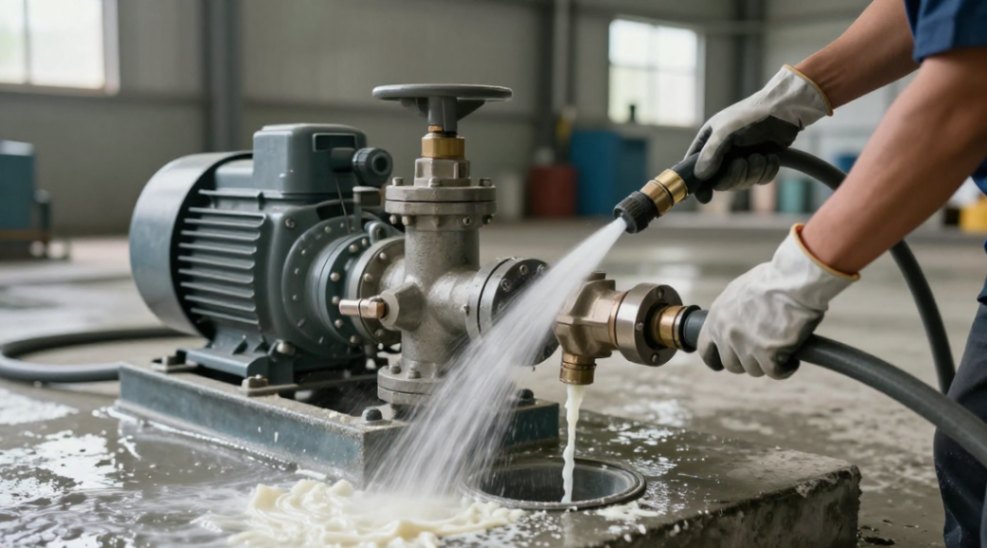
4. Critical Support Systems: The generator is just the heart. You need the full circulatory system: a dedicated, agitated tank for the foam concentrate solution to prevent settling; high-quality, flexible delivery hoses; and most importantly, a foam testing kit. You must be able to regularly check the foam density with a graduated cylinder and scale. This is your only true quality control checkpoint before the foam enters the mix.
The Operational Reality
Implementing an industrial foam generator changes your workflow. It becomes a precise, controlled process. You establish a standard operating procedure: mix the concentrate to the manufacturer’s exact specification, calibrate the water and concentrate pumps weekly, perform a foam density test at the start of each production run and every two hours thereafter, and flush the system thoroughly at the end of the day. This discipline is what separates professional CLC from hobbyist attempts. The machine gives you the capability; the procedure ensures you realize it consistently.
The common challenges-density drift, foam that looks ‘dry’ or collapses quickly, block shrinkage-almost always trace back to a failure in this system. Either the concentrate ratio is wrong, the pump is worn and under-dosing, the concentrate has degraded, or the generator internals are fouled. The solution is never to guess. It’s to follow the diagnostic checklist your machine’s process inherently provides.
Here is a breakdown of the core operational parameters for a typical CLC foam generation cycle:
| Process Stage | Key Parameter | Typical Value/Range | Critical Control Point |
|---|---|---|---|
| Solution Preparation | Foam Concentrate Dilution Ratio | 2% to 5% by volume in water | Use calibrated containers; ensure complete mixing in agitated tank. |
| Foam Generation | Output Foam Density | 40 g/L to 80 g/L | Measure using 1L graduated cylinder and scale at point of use. |
| System Integration | Injection Flow Rate | 500 L/min to 1000 L/min | Must match batching plant cycle time to avoid production delays. |
| Quality Assurance | Test Frequency | At startup and every 2 hours of continuous operation | Record density values to track consistency and identify drift. |
| Preventive Maintenance | System Flush | 5-10 minutes with clean water post-operation | Prevents curing of residual concentrate inside pipes and pump. |
The Bottom Line for Your Business
The conversation about CLC block quality starts and ends with foam. You cannot out-engineer a bad foam with extra cement or a different sand gradation. The cellular structure *is* the product. An industrial foam generator provides the foundational control to manufacture that product reliably, profitably, and to a market-ready standard. It is the piece of equipment that allows you to promise-and deliver-specific performance characteristics to your customers.
If you are serious about CLC block manufacturing, this is your first major capital investment after the mixer itself. Do not compromise here. Do not try to retrofit a car wash foam cannon or a low-output laboratory unit. You need a generator built for industrial-scale, continuous-duty construction material production. Your block strength, your insulation ratings, and your profit margin depend on it.
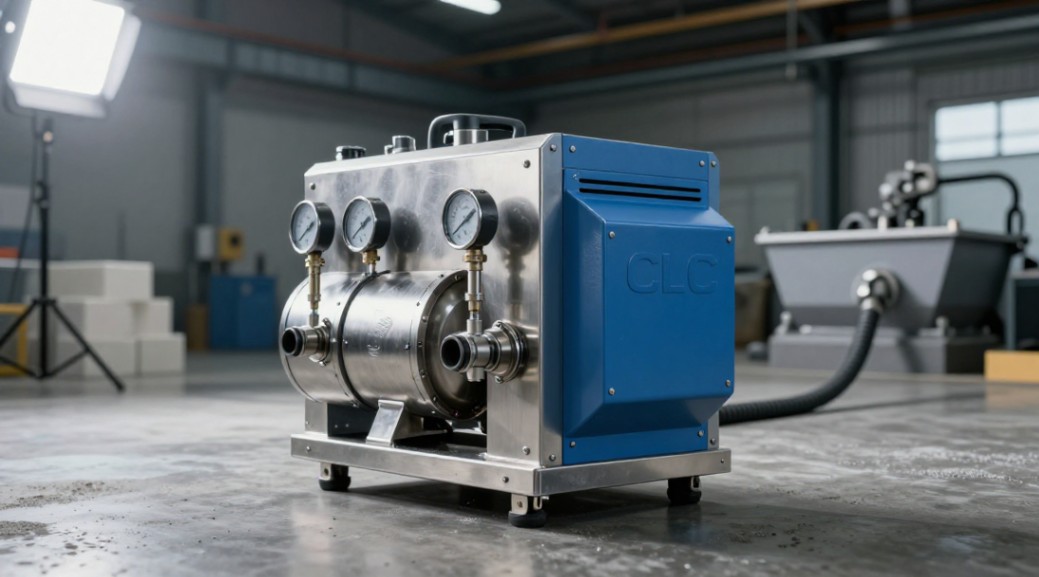
The next step is non-negotiable. You must partner with a specialist who understands CLC chemistry and production line integration. We strongly recommend you consult with an equipment supplier who can analyze your specific production targets, slurry mix design, and plant layout to specify the correct industrial foam generator system. Request a live demonstration using your actual foam concentrate. Test the resulting foam for stability over time. Your future in lightweight concrete depends on the quality of the bubbles you make today.
Supplier
We are the global leader in lightweight concrete and advanced engineered foam solutions. Known globally for its commitment to research, innovation, and applied expertise, we have been providing engineered foam solutions since the early 2012’s.
We can supply high-quality concrete admixture and foam concrete related products all over the world.
The company has a professional technical department and quality supervision department, a well-equipped laboratory, and equipped with advanced testing equipment and after-sales customer service center.
If you are interested, please feel free and contact us.