Concrete4U | Concrete Admixtures, Tools, and Production Machines

5 Critical Mistakes to Avoid When Using a Water Reducer for High Strength Concrete
A Lesson From the Field: The Case of the Segregated Slab
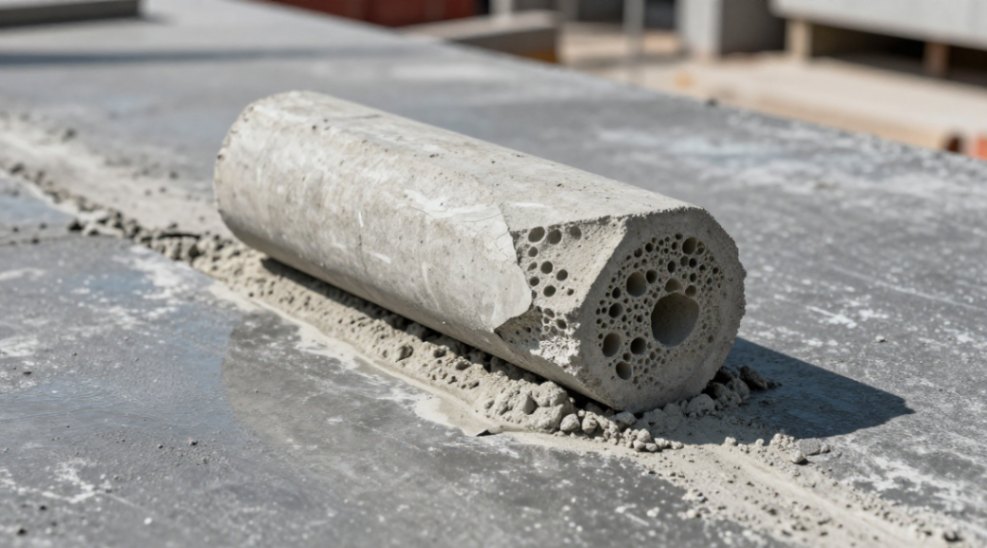
I once reviewed a project where the high-strength floor slab failed to meet its 10,000 psi design strength. The on-site technician had aggressively dosed a polycarboxylate-based water reducer for high strength concrete to chase an extra inch of slump. The initial pour looked fluid and cooperative. Hours later, the surface bled excessively. Core samples revealed a weak, porous layer of paste at the top and a honeycombed mess around the rebar. The issue wasn’t the admixture’s quality. It was a fundamental misunderstanding of its purpose and limitations. This story underscores a vital truth: when used correctly, a high-range water reducer is the most powerful tool for achieving high-performance concrete. Used incorrectly, it becomes the fastest route to failure.
The Core Principle: It’s Not Just a Plasticizer
The primary, non-negotiable purpose of a high-range water reducer (HRWR) or superplasticizer in high-strength concrete is to enable a drastic reduction in the water-cement ratio. This is not a secondary benefit; it is the entire objective. By dispersing cement particles more effectively, these admixtures break up flocs that trap water. This action frees up water for lubrication, granting high workability at a w/c ratio that would otherwise produce a stiff, unplaceable mix. The result is a denser, more homogeneous cement paste. This density directly translates to higher compressive strength development, improved early-age strength gains, and a dramatic reduction in permeability. Never use an HRWR primarily as a slump recovery tool. That is a recipe for segregation and compromised durability.
Critical Errors and How to Sidestep Them
1. Misjudging Dosage: More is Not Better
HRWRs have an optimal dosage range, typically provided by the manufacturer. Exceeding this range is a profound error. Over-dosing can lead to severe segregation, where coarse aggregate settles and paste rises. It can also cause excessive retardation, delaying set times by hours and jeopardizing finishing schedules and early strength. The correct approach is to determine the dosage through systematic trial batches that replicate your exact materials and environmental conditions. Start at the manufacturer’s recommended mid-point and adjust incrementally, measuring slump, air content, and setting time at each step.
2. Ignoring the Batching Sequence
The order in which you introduce a water reducer for high strength concrete into the mixer is not a trivial detail. Adding it with the initial mixing water is often ineffective. The standard best practise is the “delayed addition” method: batch most of the mixing water, aggregates, and cement first. Mix for 60-90 seconds to begin hydration. Then, introduce the HRWR with the remaining water. This sequence allows the admixture to interact with already-wetted cement particles, maximizing dispersion efficiency and often reducing the required dosage by 20-30%.
3. Overlooking Compatibility with Other Components
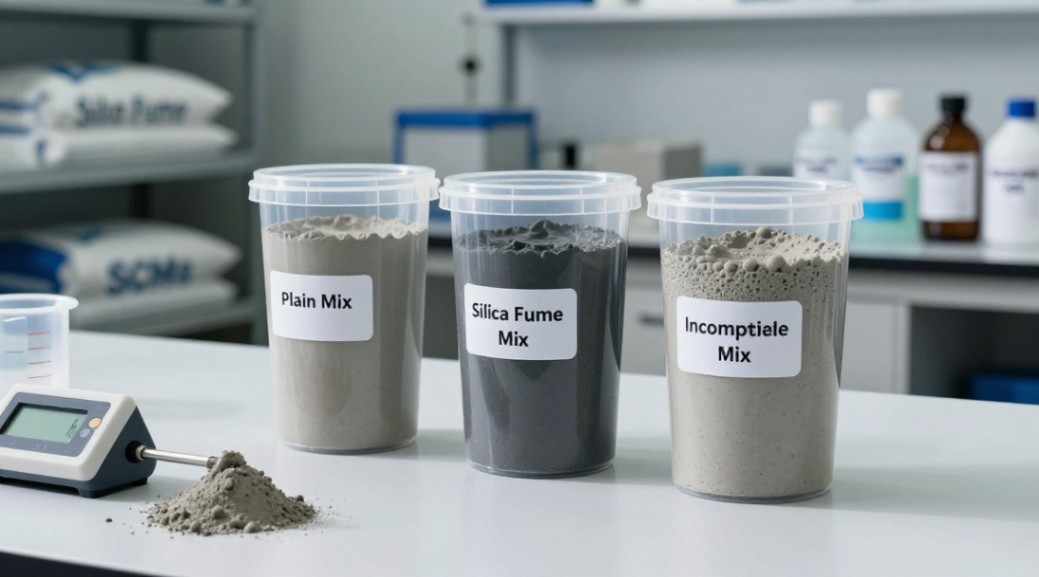
High-strength concrete mixes frequently incorporate supplementary cementitious materials like silica fume and other admixtures like viscosity-modifying agents (VMAs) or retarders. Chemical incompatibility is a real risk. A superplasticizer that works perfectly with a plain cement mix may cause flash set or rapid slump loss when silica fume is present. You cannot assume compatibility. Always conduct compatibility tests with your full suite of materials before proceeding to production. Observe the mix for at least 60-90 minutes to assess slump retention for pumping or long-distance transportation.
4. Selecting the Wrong Chemical Type
Not all water reducers are equal. For high-strength applications, you are almost certainly using a high-range product, but the chemistry matters. Older lignosulfonate or naphthalene-based (SNF) superplasticizers offer good water reduction but poorer slump retention. Modern polycarboxylate ether (PCE)-based polymers provide superior water reduction and excellent slump retention, but they are more sensitive to mix water chemistry and sulfate content. Your selection must be driven by project specifications: required flow, placement complexity, ambient temperature, and required open time.
5. Neglecting Environmental and Production Variables
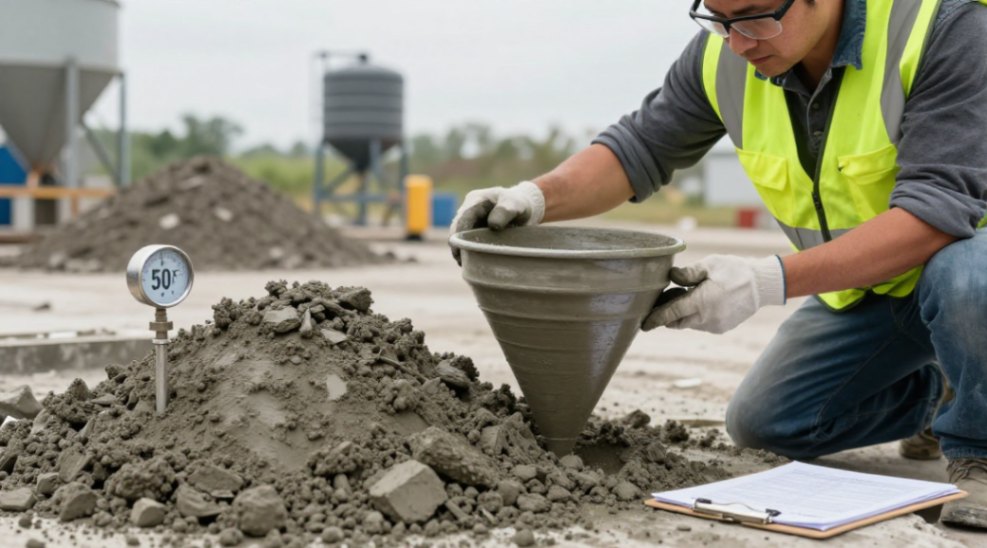
Concrete is not mixed in a laboratory. Cement temperature, aggregate moisture content, ambient temperature, and mixer efficiency all influence HRWR performance. A dosage calibrated for a 70°F day may cause severe retardation on a 50°F day or rapid slump loss on a 90°F day. Batch-to-batch consistency of your raw materials is paramount. Implement rigorous quality control and testing procedures. Perform frequent slump and air tests, and make timely, measured adjustments based on observed conditions, not on a fixed recipe from a past project.
The Path Forward: A Discipline of Precision
Avoiding these pitfalls requires shifting your mindset. A water reducer for high strength concrete is not an additive; it is a fundamental component of the mix design. Treat it with the same rigor as your cement specification. Its successful application hinges on understanding its chemical role, respecting its dosage limits, and validating its performance within your unique material ecosystem through disciplined testing. The goal is not just fluid concrete. The goal is a dense, impermeable, and immensely strong matrix that will perform for decades. That outcome is only possible with knowledge, caution, and respect for the chemistry at play.
Supplier
We are the global leader in lightweight concrete and advanced engineered foam solutions. Known globally for its commitment to research, innovation, and applied expertise, we have been providing engineered foam solutions since the early 2012’s.
We can supply high-quality concrete admixture and foam concrete related products all over the world.
The company has a professional technical department and quality supervision department, a well-equipped laboratory, and equipped with advanced testing equipment and after-sales customer service center.
If you are interested, please feel free and contact us.